
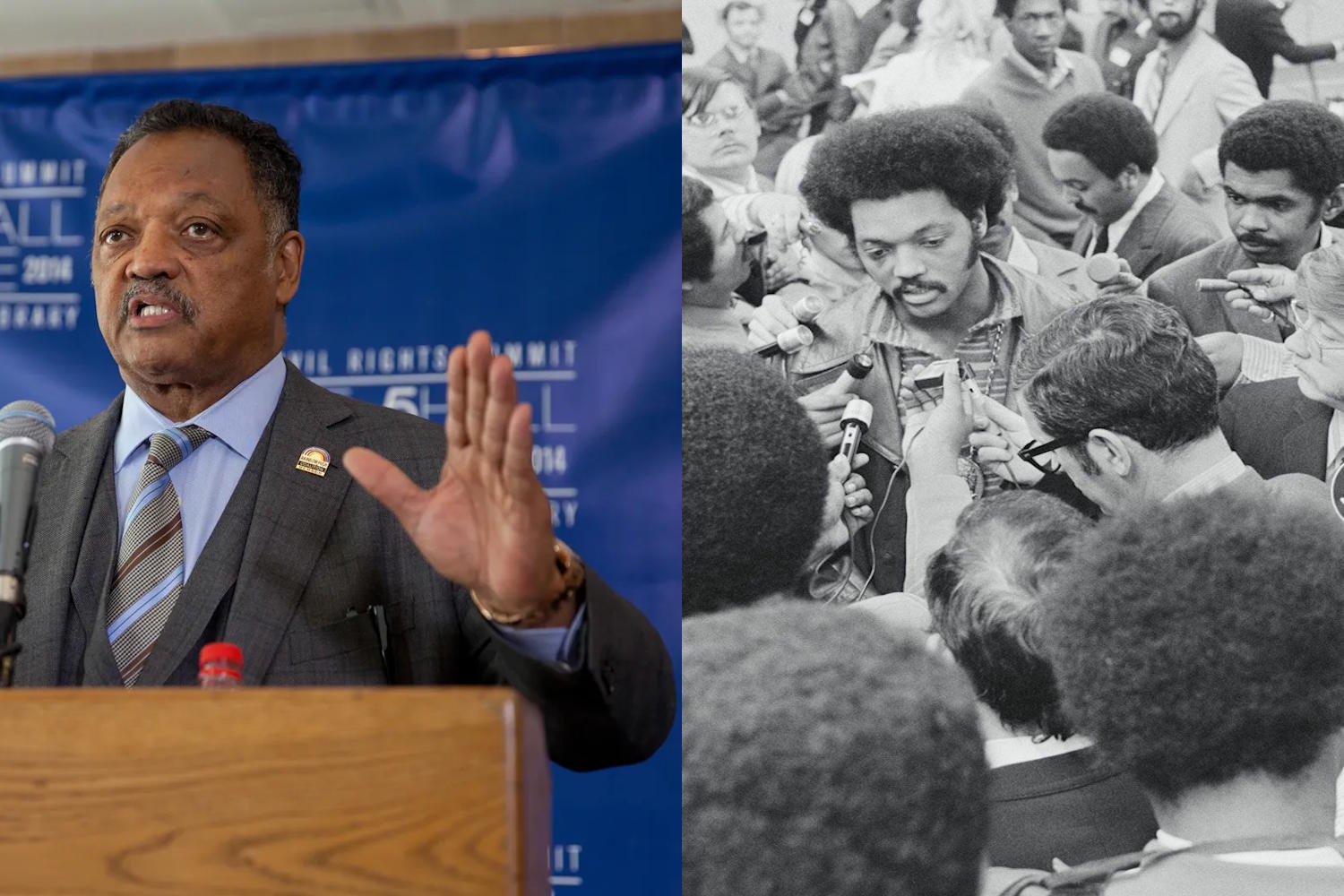
Goodbye to Jesse Jacksonone of the central figures of the civil rights movement in the United States, protagonist of the fight for racial equality alongside Martin Luther King Jr. and then a political leader capable of influencing entire generations of American progressives.
From its birth in the segregationist South to the non-violent protests of the 1960s, up to the founding of the Rainbow PUSH Coalition and two presidential campaigns in the 1980s, his career has intertwined social activism, political ambition and strong personal charisma.
A charismatic but divisive figure, Jackson has been present in civil battles virtually to this day, from historical commemorations to Black Lives Matter protests.
Jesse Jackson’s childhood and education
Jesse Jackson was born on October 8, 1941 in Greenville, South Carolina as Jesse Louis Burnsson of sixteen-year-old Helen Burns and Noah L. Robinson, an already married neighbor. When Jesse was about a year old, his mother married Charles Jackson, whose last name she later took. He remained close to both father figures, stating upon Robinson’s death in 1987:
They say I had a father shortage, but in reality I had a surplus of fathers.
Raised in the racially segregated South, where he had to pass a white school to reach the segregated one he attended, Jackson began his activism early. In 1960, he led a group of students – later called the “Greenville Eight” – in a peaceful protest at the city’s segregated library. He attended the University of Illinois on an athletic scholarship, then transferred to North Carolina Agricultural and Technical College, where he graduated with a degree in sociology in 1964. There he met Jacqueline Lavinia Brown, whom he married in 1962. They moved to Chicago, where Jackson studied theology without finishing his degree. He was ordained a Baptist minister in 1968, after King’s death.
In 1965 he participated in the Selma marches together with Martin Luther King Jr., who put him in charge of Operation Breadbasket, an economic initiative of the Southern Christian Leadership Conference. Jackson’s management, however, aroused criticism, especially over financial matters: it would not be the last time that his leadership style was questioned.
Jackson was in Memphis on the evening of April 4, 1968 when King was assassinated. His behavior after the tragedy has always remained the subject of conflicting interpretations: sincere trauma or an attempt to collect the political legacy of the slain leader?
The PUSH era
In 1971 he founded his own organization: Operation PUSH (“People United to Save Humanity”, then “Serve Humanity”), to help young African Americans in difficulty and fight discriminatory commercial practices, promoting boycotts against large companies such as Coca-Cola, Burger King and Revlon.
In 1984 he also created the National Rainbow Coalition, committed to the rights of African Americans, women and the LGBTQ+ community. In 1996 the two entities joined together in the Rainbow PUSH Coalition.
After two presidential campaigns in the 1980s, Jackson continued activism in the decades that followed, participating in commemorations of civil rights marches and Black Lives Matter protests following the killing of George Floyd in 2020. His progressive ideas influenced political figures such as Bernie Sanders and Alexandria Ocasio-Cortez.
His legacy remains complex: a leader symbol of social justice, but also a controversial personality. With his death, one of the most important seasons in the history of American civil rights ends, leaving an imprint that contributed to making possible the rise of new progressive leadership in the United States.
