
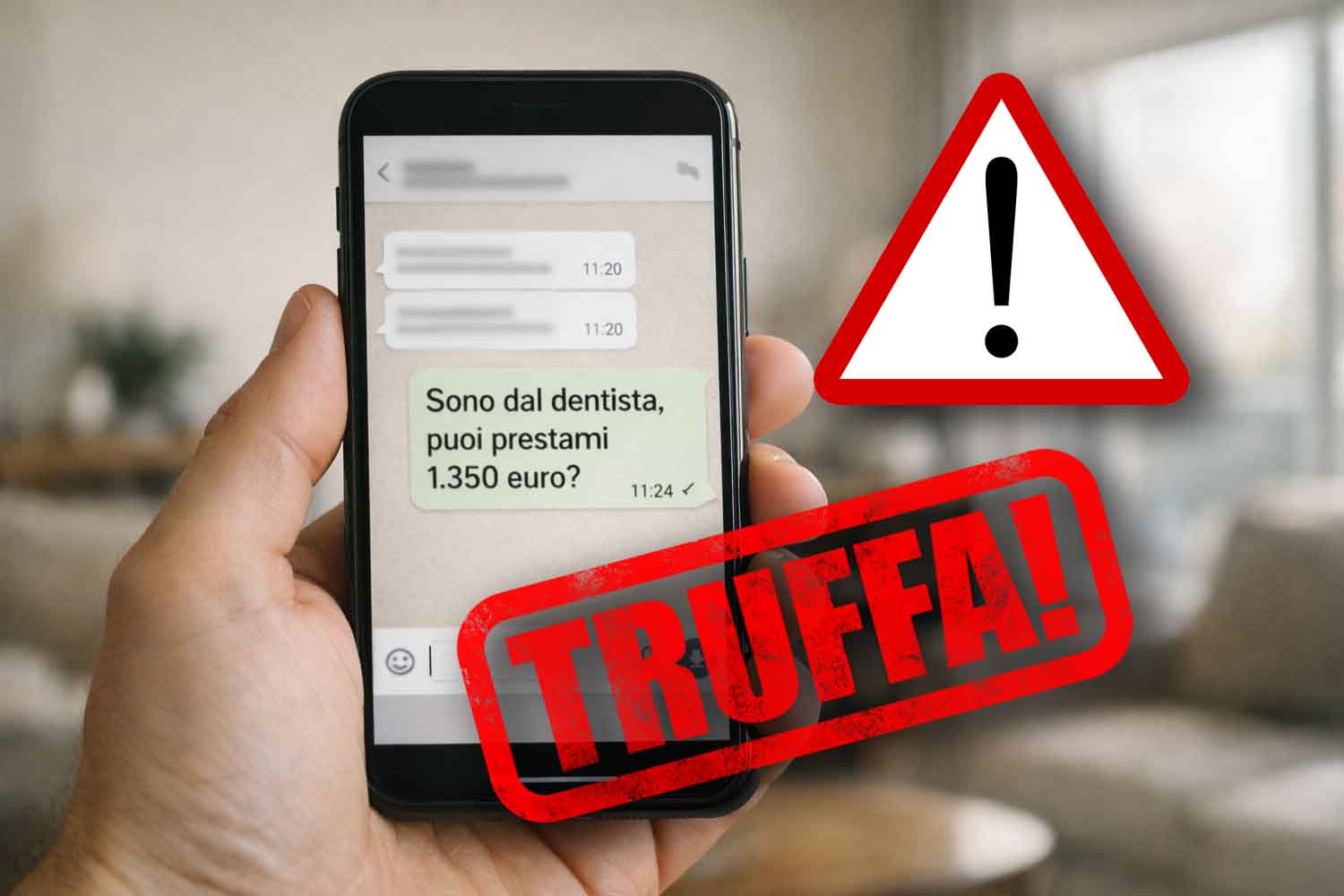
A short message, written with apparent naturalness, which comes from a contact saved in the address book and which, for this very reason, manages to immediately lower the defenses:
Hi, can you lend me 1,350 euros? I’m at the dentist, I have a problem with my card. I’ll give them back to you tonight.
It may seem like a credible health emergency, a technical unexpected event and a promise of rapid return that makes the request almost reasonable. This is how the new one looks Dentist WhatsApp scam (closely connected to the dancer scam), a scam that has been spreading throughout Italy in recent weeks and which is striking precisely because it seems normal.
How the trap is sprung
The mechanism is built with great attention to detail and is based on a very precise psychological dynamic: creating an emergency situation in which the recipient almost feels obliged to intervene quickly, without taking the time necessary to reflect or verify.
The message comes from a known number, with a coherent and familiar tone, and leverages a context that is rarely questioned, such as a visit to the dentist with a payment to be made immediately. If you try to call to confirm, the answer doesn’t take long to arrive, but always and only via chat: “I can’t talk, I’m under anesthesia”, or “I’ll call you as soon as the effect wears off”.
It is a perfect justification, because it is plausible, and precisely for this reason it manages to nip any attempt at direct control in its tracks. Immediately afterwards, an Iban is sent, often Italian, and an instant bank transfer is requested, with the invitation to send confirmation of payment as soon as possible.
In this tight sequence, in which urgency and pressure chase each other, the recipient is pushed to decide quickly, without stopping to do that simple but decisive check that could dismantle the entire deception.
How is it possible that the message comes from a known contact?
This is the question that makes the story even more disturbing: if the message comes from a real contact, how can it be a scam? The answer lies in the fact that that person’s WhatsApp account has been compromised, often through now widespread techniques that exploit carelessness and good faith. Remember the so-called “dancer scam“, the one where you were asked to vote for a girl for a dance competition via a link?
In many cases the mechanism begins right there. The link takes you to a page that asks you to enter your phone number and a verification code received via SMS, with the excuse of completing your vote. That code, however, is actually WhatsApp’s authentication system. By placing it on an external site, you give scammers access to your account.
From that moment, digital criminals can connect the profile to their device, read the chats and write to all the contacts in the address book, starting the most visible and damaging phase of the scam, i.e. the request for urgent money.
The scam therefore often represents the second act of a mechanism that began elsewhere, with a distracted click that seemed harmless and which instead opened the door to digital identity theft.
How to defend yourself
The first rule remains the simplest and most effective: never send money based on a message received exclusively via chat, even if it comes from a known and apparently reliable contact.
A direct phone call, a voice message or contact via another channel are fundamental tools to verify the real situation. If a person really finds himself in difficulty, he will understand prudence; if, however, you insist on remaining exclusively in chat with the excuse of anesthesia or an inability to speak, you need to stop and reflect.
It is equally important to never enter verification codes received via SMS on external sites and activate two-step verification on WhatsApp, so as to make unauthorized access more difficult. Periodically checking the devices connected to your account can also help identify possible intrusions.
There fraud it is not based on unattainable technological tools, but on a profoundly human element: trust. And it is precisely by slowing down, even for just a few minutes, that a mechanism designed to make us act on impulse can be interrupted.
