
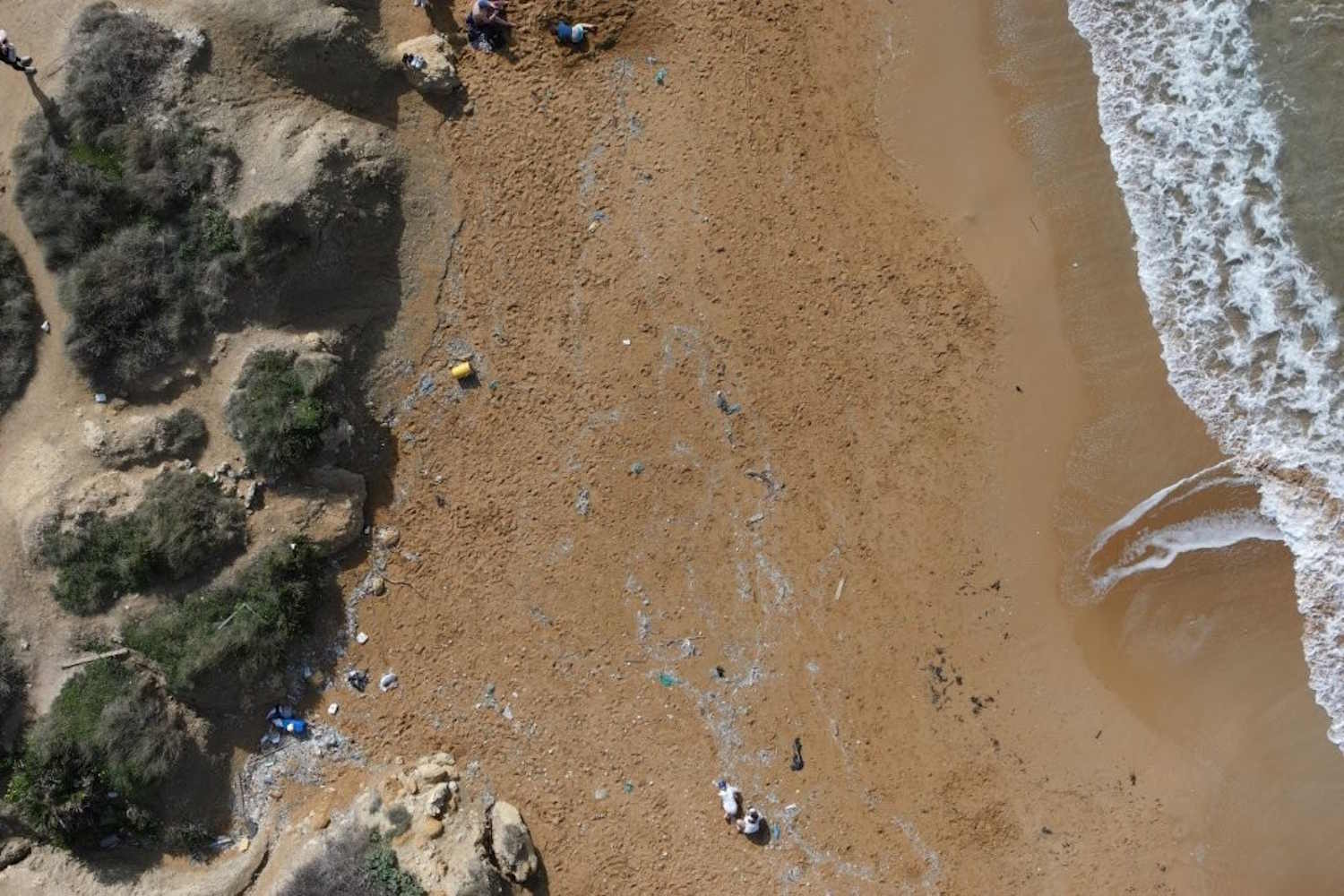
The Mediterranean represents just 1% of the world’s sea water, but concentrates around 7% of the microplastics it contains. The reason? It is a semi-closed basin where the plastic that enters – and we are talking about over 100 thousand tons per year – then struggles to leave, accumulating rather along the coasts and on the seabed. From here, then, the very long degradation times inevitably cause damage to marine organisms and, indirectly, to human health.
It is now well known, in fact, that microplastics can release toxic additives, carry pollutants, pathogens and antibiotic resistance genes, and, once ingested by marine fauna and also by humans through the food chain, are difficult to eliminate.
But what are the routes followed by plastic particles and how do sea currents, winds and coastal circulation processes influence their movement and accumulation in specific marine areas?
MAESTRI, acronym for “Predictive models of microplastic accumulation in coastal marine areas, effects on biodiversity and strategies to reduce pollution”, a project conceived and coordinated by the University of Palermo which will develop the first predictive model of microplastic accumulation in the central Mediterranean.
The model will be able to describe, simulate and predict the distribution of microplastics over the next ten years in this area, identifying the coastal areas most vulnerable to accumulation and clarifying the dynamics that determine their concentration.
The Mediterranean Sea is now one of the world’s hotspots for microplastic pollution. With MAESTRI, thanks to the multidisciplinarity that integrates skills from geology, marine biology, engineering and chemistry, we want to provide concrete scientific tools to predict where microplastics will accumulate. Understanding the transport and concentration dynamics of plastics is essential to identify the most vulnerable areas, estimate the permanence times of plastic in the sea and anticipate its entry into food networks, so as to be able to evaluate and mitigate ecological and health risks, explain the project coordinators.
The pilot areas
Coastal monitoring will involve 8 km of the coasts of south-eastern Sicily (Isola delle Correnti and Vendicari) and 9 km of the Maltese coasts (Ghadira Bay, Golden Bay, Riviera Bay, Gnejna Bay, Ramla Bay and Salina Bay).
Technology and field research
During the first year (from May 2025 to May 2026) data will be collected with high-tech tools and advanced calculation methodologies:
Over 200 sediment samples and more than 100 water samples will be collected from which the microplastics will be extracted to be chemically studied (with spectroscopic methods) in order to identify the various types and trace their origin. The plastisphere (microbial communities that colonize plastic surfaces) will be studied for a census of the bacteria and fungi that appear to be capable of degrading plastic polymers.
The project’s activities also include the collection of data on benthic (live in contact with the seabed) and planktonic (live in the water column) organisms to quantify the presence of polymers in these organisms and understand how MPs interfere with their physiological and metabolic processes.
Finally, a monitoring system with high-resolution cameras will also be installed in one of the Maltese sites to study the arrival and accumulation of plastic waste after storm surges, fundamental data for validating the forecast models.
Understanding where and how microplastics accumulate is the first step to stopping them before they finally enter our food chain.
