
A 5,000-year-old antibiotic-resistant bacterium has reemerged from Romania’s ice. It is not the plot of a dystopian series, but a real scientific discovery that intertwines the climate crisis, global health and biotechnology. And it forces us to ask ourselves an uncomfortable question: what is coming back into circulation with the melting of the ice?
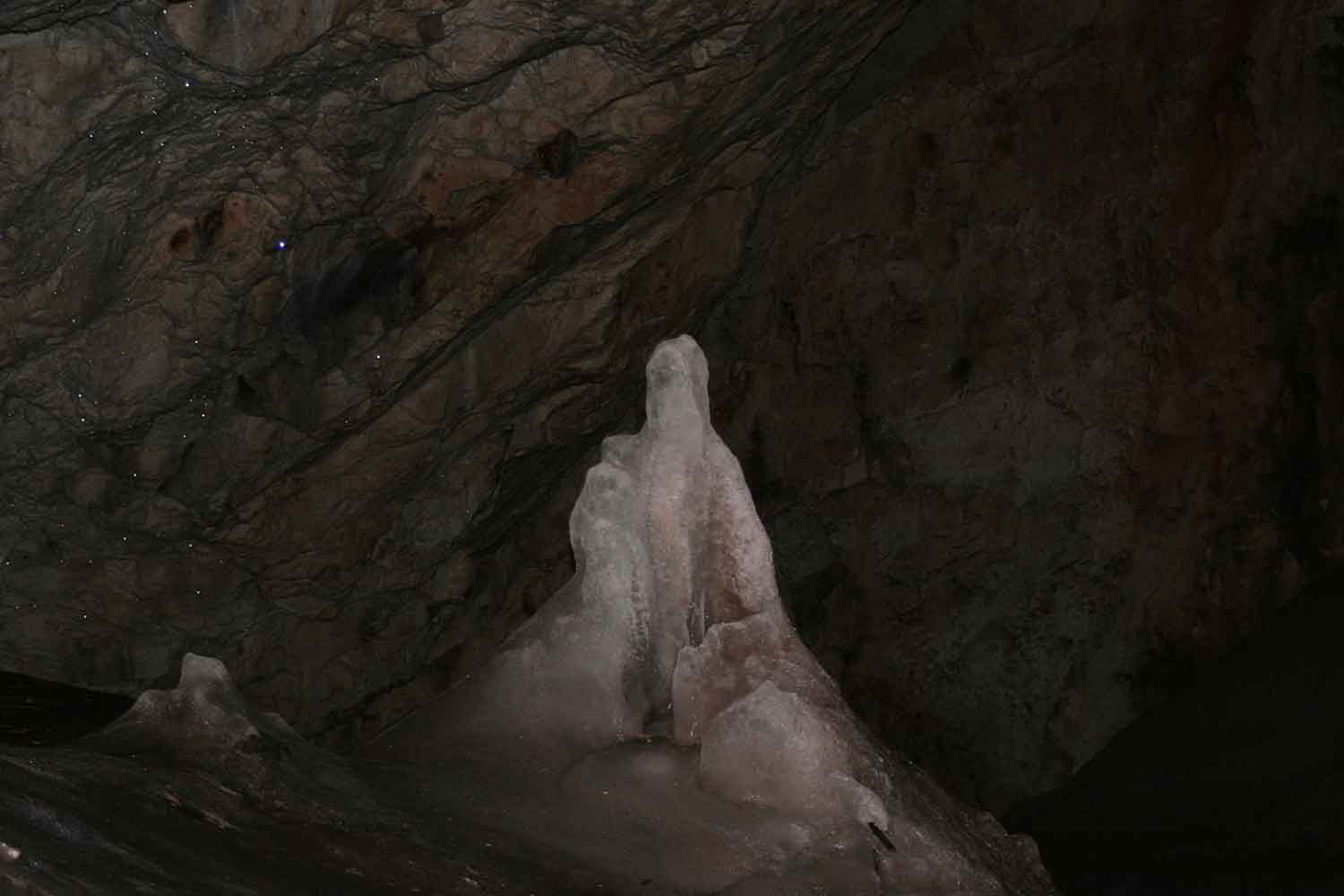
In the heart of the Western Carpathians, in the Apuseni Mountains, lies the Scărișoara Cave, one of the largest glacial caves in Europe. Here the ice is not just landscape: it is memory. Layer after layer, it preserves traces of thousands of years of environmental history.
Precisely from a 25 meter long ice core – a true natural archive covering approximately 13,000 years – an international team led by the Bucharest Institute of Biology isolated a bacterial strain that was trapped under a layer dating back to approximately 5,000 years ago, around 3,000 BC
Its name is Psychrobacter SC65A.3. A technical name, of course. But what he tells is anything but cold and distant. Transferred to the laboratory under sterile conditions, the microorganism was tested against 28 preparations belonging to ten classes of antibiotics. It was resistant to ten modern antibiotics, including metronidazole, vancomycin, trimethoprim, clindamycin, rifampin and ciprofloxacin. Drugs that we use today to fight pulmonary, urinary, systemic infections and even tuberculosis.
Even more significant is what emerged from the genetic analysis: over 100 genes linked to antimicrobial resistance. The study, published in Frontiers in Microbiology, demonstrates that antibiotic resistance is not a “mistake” of the modern era. It is a natural phenomenon, rooted in microbial evolution.
Before humans produced antibiotics in the laboratory, bacteria and fungi were already fighting each other using chemical molecules to survive. In extreme environments such as thousand-year-old ice, this competition has selected microorganisms with an astonishing genetic arsenal.
A real risk or a new resource?
This is where the climate crisis comes into play. Global warming is accelerating the melting of glaciers and permafrost. And when the ice melts, what was trapped circulates again. Scientists warn: If resistance genes like those identified in Psychrobacter SC65A.3 were to transfer to modern pathogenic bacteria, the already serious emergency of antibiotic resistance could worsen.
According to the World Health Organization, antibiotic-resistant infections represent a major global health threat. In the coming decades they could cause up to 10 million deaths a year. Numbers that make you think. Yet, the story is not only alarming. The same strain isolated from the Romanian cave has shown in the laboratory the ability to inhibit the growth of other resistant bacteria. Translated: it could produce new antimicrobial molecules, useful for developing new generation drugs.
In a way, nature is showing us both sides of the coin. On the one hand, the risk linked to the release of ancient microorganisms in a planet that is warming too quickly. On the other, a possible mine of biotechnological solutions right inside those same ice.
The 5,000-year-old antibiotic-resistant bacterium isn’t just a scientific curiosity. It’s a signal. It reminds us that the climate crisis is not just a matter of temperatures and retreating glaciers. It is a question of invisible balances, of microscopic worlds that interact with ours again. Maybe the real question isn’t whether we should be afraid. But if we are ready to listen to what the ice, melting, is trying to tell us.
You might also be interested in:
