
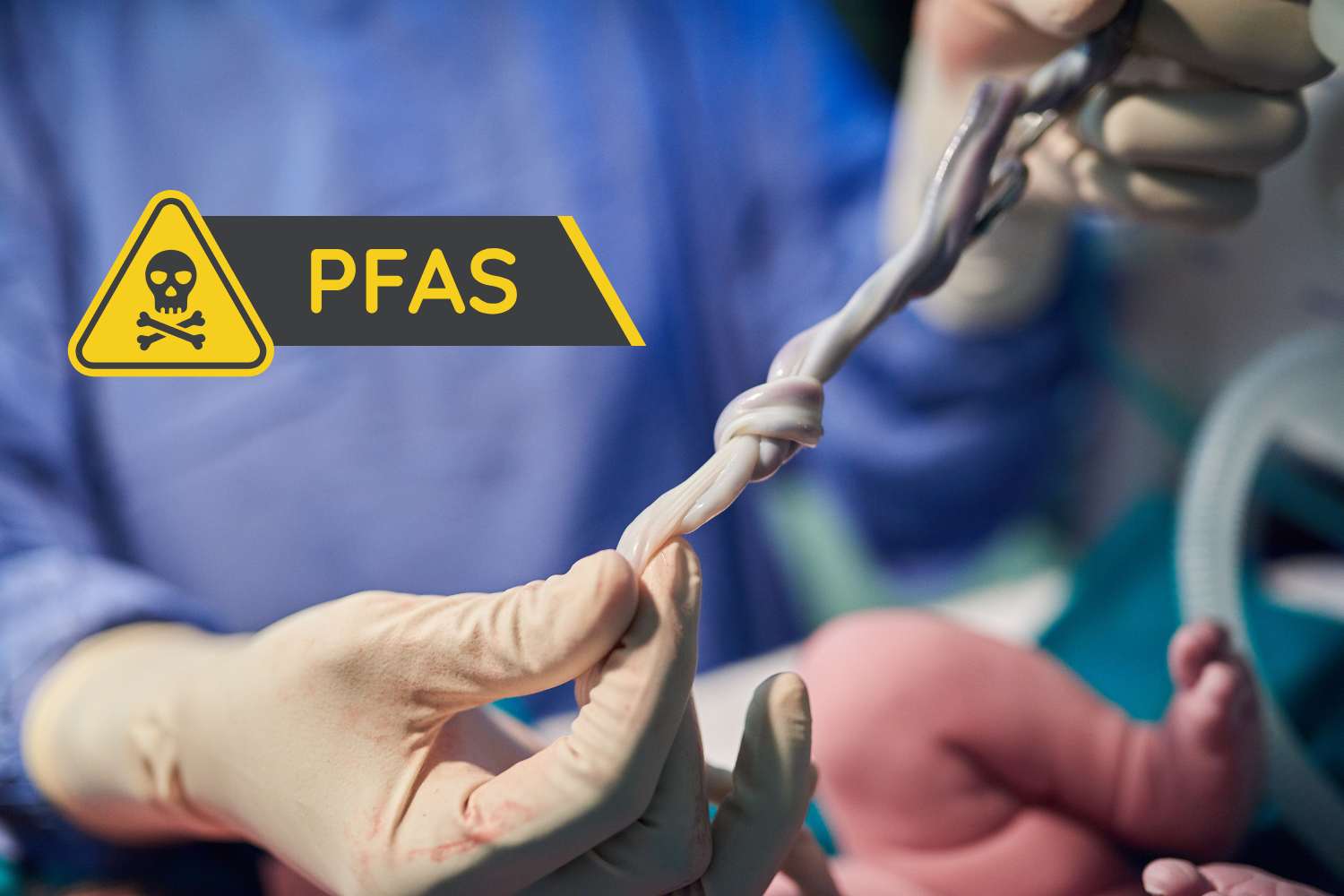
Children are exposed to far more PFAS before birth than previously thought. This was revealed by a new study published in the scientific journal Environmental Science & Technology and led by researchers at the Icahn School of Medicine at Mount Sinai.
Using an innovative approach that combines advanced analytical chemistry and data science, scientists found that newborns born between 2003 and 2006 were exposed in utero to many more PFAS than traditional methods detected. A fact that puts the spotlight back on a crucial topic: prenatal exposure to environmental pollutants.
What are PFAS and why are they worrying
For those who don’t know them yet, PFAS are a group of per- and polyfluoroalkyl substances, a vast family that includes thousands of synthetic compounds used in many everyday products: from non-stick pan coatings to food packaging, from waterproof jackets to fire-fighting foams. The nickname given to him by the United States, “forever chemicals” or “chemical substances forever” is not accidental: these compounds do not degrade in the environment or in the human body, on the contrary they accumulate over time with effects that are still largely unknown.
Some variants, such as PFOA and PFOS, have already been classified by the International Agency for Research on Cancer as proven carcinogens.
The study
The team led by Professor Shelley H. Liu analyzed stored umbilical cord blood samples collected between 2003 and 2006 from 120 newborns involved in the HOME study, conducted in Cincinnati. The real novelty lies not only in the samples analyzed, but in the method used.
Instead of looking for a limited number of already known PFAS (as is done in traditional tests), the researchers used an untargeted chemical analysis capable of simultaneously scanning hundreds or thousands of chemicals.
The result? 42 confirmed or presumed identified PFAS substances have been detected in cord blood, including perfluorinated compounds, polyfluorinated compounds and fluorotelomers, many of which are not normally looked for in standard checks and whose health effects remain largely unknown.
Another innovative element of the study is the creation of so-called “PFAS-omics scores”. This is an indicator developed by researchers using data science methods and advanced statistical tools, designed to summarize the overall exposure to PFAS during pregnancy in a single value.
In practice, instead of analyzing each chemical substance individually, this score provides a clearer and more complete picture of the “chemical load” to which the fetus has been subjected. This approach allows us to better evaluate the risks related to prenatal exposure and offers a more solid basis for future studies that can link the level of PFAS detected to possible health effects in children, now adolescents.
An interesting aspect that emerged was that, using this broader evaluation, no differences in exposure were found between children of mothers with a first pregnancy and those born from subsequent pregnancies – a distinction that previous studies had instead reported when analyzing only a limited number of PFAS.
As Professor Liu explained, the way we measure PFAS fundamentally changes what we see: looking deeper, prenatal exposure appears much more widespread and complex than imagined.
Why prenatal exposure is so critical
Pregnancy is a phase of extraordinary biological vulnerability, in which the fetus’s organism is particularly sensitive to interference from external substances. Previous studies have already reported that prenatal exposure to PFAS is associated with consequences such as low birth weight, premature birth, alterations in the immune response to vaccines and changes in metabolism.
Exposure to PFAS is currently not measured in routine clinical practice, despite growing scientific evidence. This study paves the way for new diagnostic tools capable of estimating the cumulative load of PFAS to which an individual has been exposed, potentially useful in the future to identify the populations most at risk and guide preventive medicine strategies, especially during pregnancy.
The research team, supported by the National Institutes of Health and several American universities including Michigan, Yale, Brown and Pennsylvania, now plans to follow those children – now adolescents – to understand whether higher prenatal exposure to PFAS translates into concrete health effects in the long term. The final objective is to build solid scientific foundations for increasingly early and targeted prevention, starting from the most delicate moments of life.
