
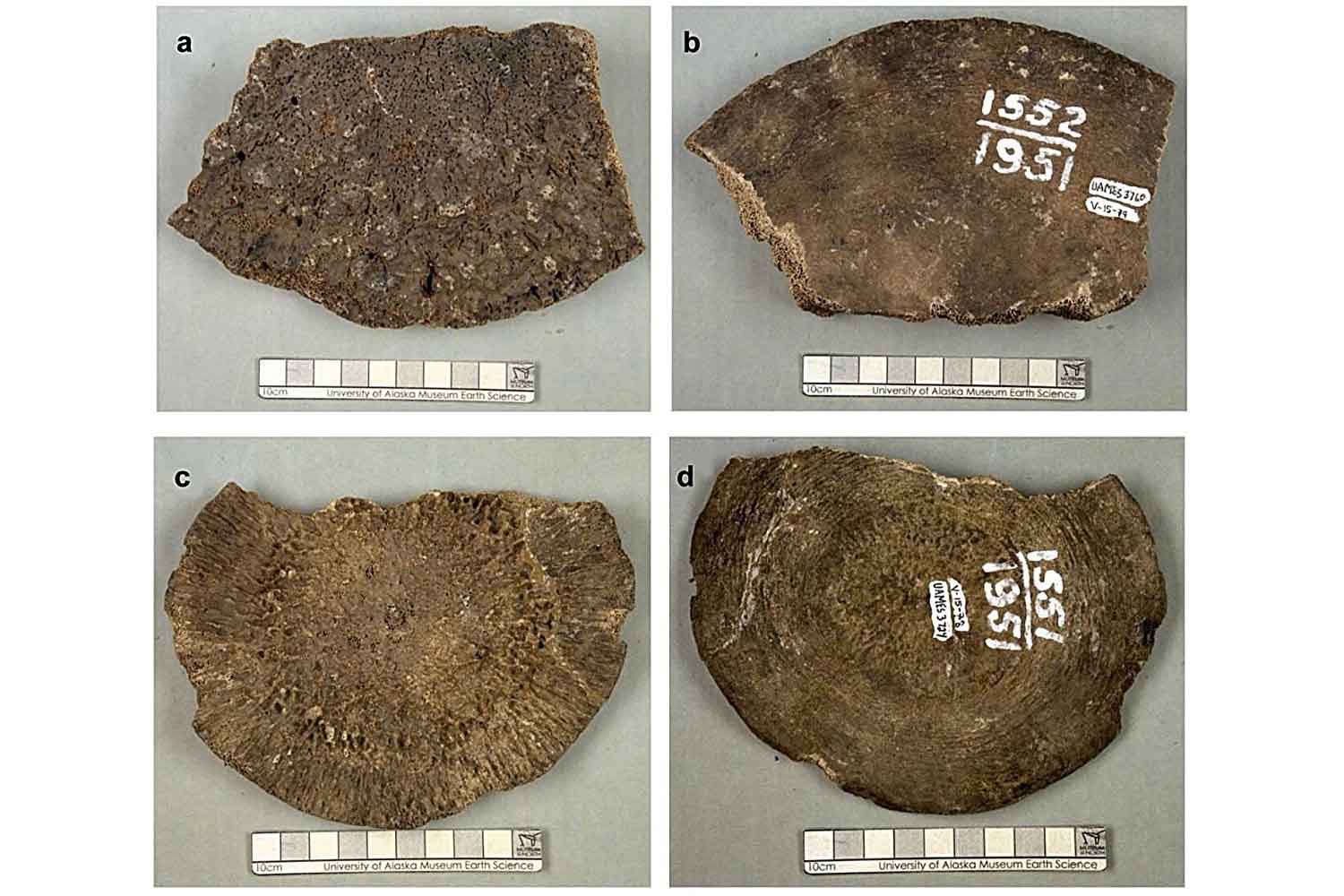
For over a century we have told the wrong story. Those fossil mammoths carefully studied and catalogued, they did not all belong to the same period. Some were separated from 11,000 years. Eleven thousand. A time sufficient to change climate, landscapes, ecological balances and even the human presence in a territory.
The discovery, reported by Phys.org, is not a simple calendar correction: it is a twist that forces us to review what we thought we knew about the end of the ice age and the disappearance of the mammoths.
One misidentification that changes everything
For decades scholars have considered those remains as part of a single deposit, the result of the same historical period. The narrative was linear: a group of mammoths, a precise environmental context, a defined climatic phase. Then new technologies arrived.
Thanks to more accurate radiocarbon dating, carried out directly on the bones, researchers have discovered that i fossil mammoths they actually came from different eras, about eleven thousand years apart from each other. In practice, remains belonging to animals that lived in completely different times had been unconsciously “mixed” in the same historical reconstruction.
Eleven thousand years is not a detail. They mean moving from the end of the last ice age to a world already profoundly transformed, with evolving ecosystems and increasingly present human groups.
And this changes the questions. If some mammoths survived longer than expected in that area, what does that mean for their extinction? Was the climate really the only thing responsible? Or did the human impact have a different weight than we imagine? This story reminds us of something fundamental: science is not a truth set in stone. It’s a process. He updates himself, questions himself, revises his conclusions.
For years, scholars had relied on the stratigraphic context of the site, i.e. the layers of soil in which the remains were found. Today, however, direct analyzes on samples allow precision that was unthinkable until a few decades ago. This site no longer tells a single episode, but at least two different historical phases. And this forces us to recalibrate environmental reconstructions, the timing of extinction and any interactions with human beings.
What does this discovery teach us about the crisis of species
The disappearance of the mammoths is one of the great enigmas of prehistory. Rapid climate change, habitat loss, hunter pressure: the hypotheses have been intertwined for years. Find out some fossil mammoths have been attributed to the same period despite being separated by millennia forces us to be more cautious. When we reconstruct the past, every detail counts. Incorrect dating can alter the entire picture.
And perhaps, looking at this story, we should also reflect on the present. Today we are experiencing another great biodiversity crisis. Truly understanding what happened to the mammoths means better understanding the mechanisms that lead a species to extinction. Natural history is not standing still. Each new analysis can change the perspective. And every bone, even after thousands of years, can still surprise us.
