
In Italy, wood heating is not a niche. Millions of families use it every winter and an increasingly significant part chooses pellets for reasons of practicality, costs and continuity of supply. It’s a fact. What often remains in the background is a less visible but decisive detail: where the wood that ends up in our stoves comes from. It is not a theoretical question, it is a concrete question that concerns supply chains, transport, availability of raw materials and, in the long run, also prices.
In France, Melia was born from this question, a start-up that decided to work on a specific point of the system: changing the origin of the pellet, without changing the way we use it.
A pellet that doesn’t come from the forest but from green waste
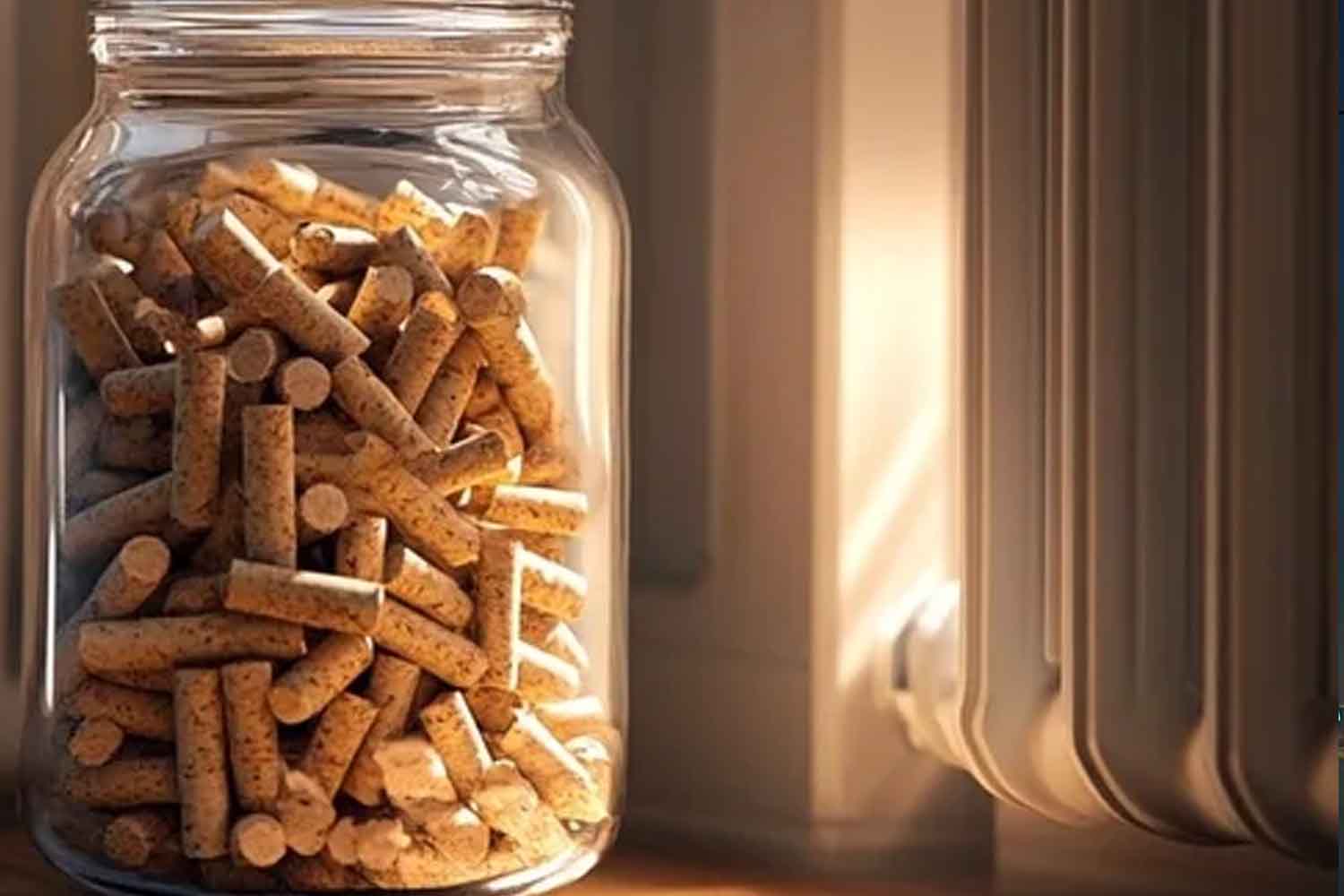
The Melia pellet, when looking at it, has nothing different from what you normally buy. The difference is not aesthetic but structural. The raw material does not only come from sawmills or the forestry industry, but from green waste: prunings, branches, maintenance residues from public and private gardens. Material that already exists, which is collected anyway and which, in most cases, ends up in the compost or is simply accumulated.
Melia works on a local radius, about fifty kilometers around the plant, and this is not a press release detail. It means less transport, fewer intermediate steps and a shorter and more legible supply chain. For those who use pellets every day, it is not just an abstract environmental issue: logistics affects availability, continuity of supplies and, often, the final quality of the product.
Less pressure on forests and more use of already available materials
The basic idea is linear: forests do not grow at the rate of consumption, while the wood deriving from the maintenance of urban and agricultural greenery is constant, predictable and often underused. Transforming it into pellets means preventing that material from degrading by releasing CO₂ and, at the same time, reducing direct withdrawal from the forests.
To avoid yield problems, Melia does not only use pure green waste. The pellet comes from a controlled mix between this non-forestry wood and conifer plaquettes, so as to obtain a fuel with technical characteristics comparable to those of traditional pellets. It is not an ideological operation, but an industrial one: the quality must remain stable, otherwise the system will not hold up.
Firm price, some technical caution and a question that remains open
One of the most intriguing aspects is the announced price, stable throughout the year and disconnected from the fluctuations of the timber market. The reason is simple: when the raw material is waste, the dynamics change. Having said that, those who know pellet stoves know that not all fuels behave in the same way. Ash, residue and crusting are real issues, not forum details.
The company claims to have these parameters under control, but as always, daily use, season after season, will tell if the promise holds up. The real news, however, perhaps lies elsewhere: is it possible to rethink pellets without increasing pressure on forests, using what we already produce as waste?
You might also be interested in:
