
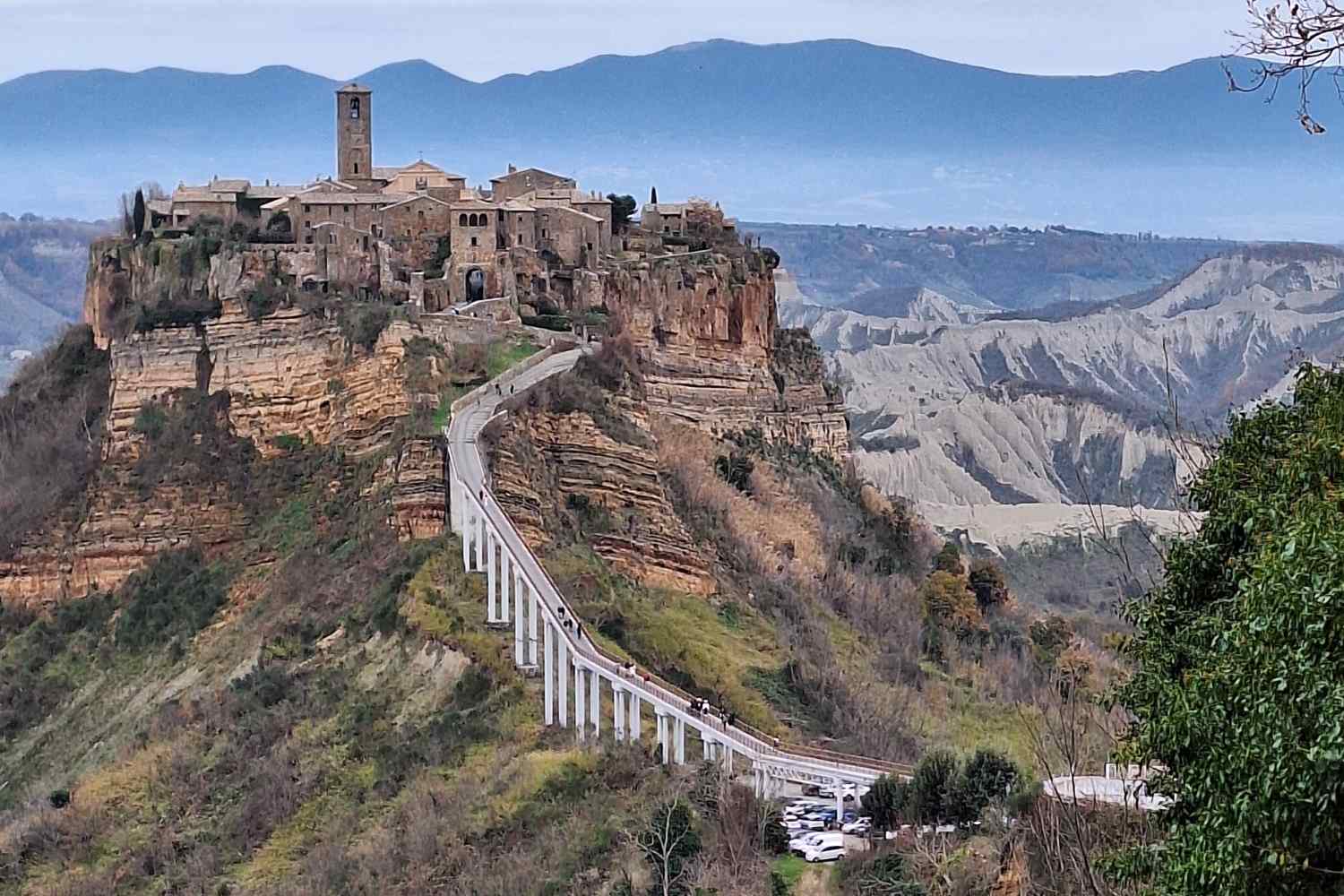
There are places that are not just visited. Civita di Bagnoregio, perched on a tuff spur in the heart of Tuscia in Lazio, is one of those places that seem to exist outside of time and for me visiting it was truly the fulfillment of a dream. They call it “the dying city”, but when you see it appear among the mists of the Calanchi Valley, you understand that it is more alive than ever in the imagination of those who look at it.
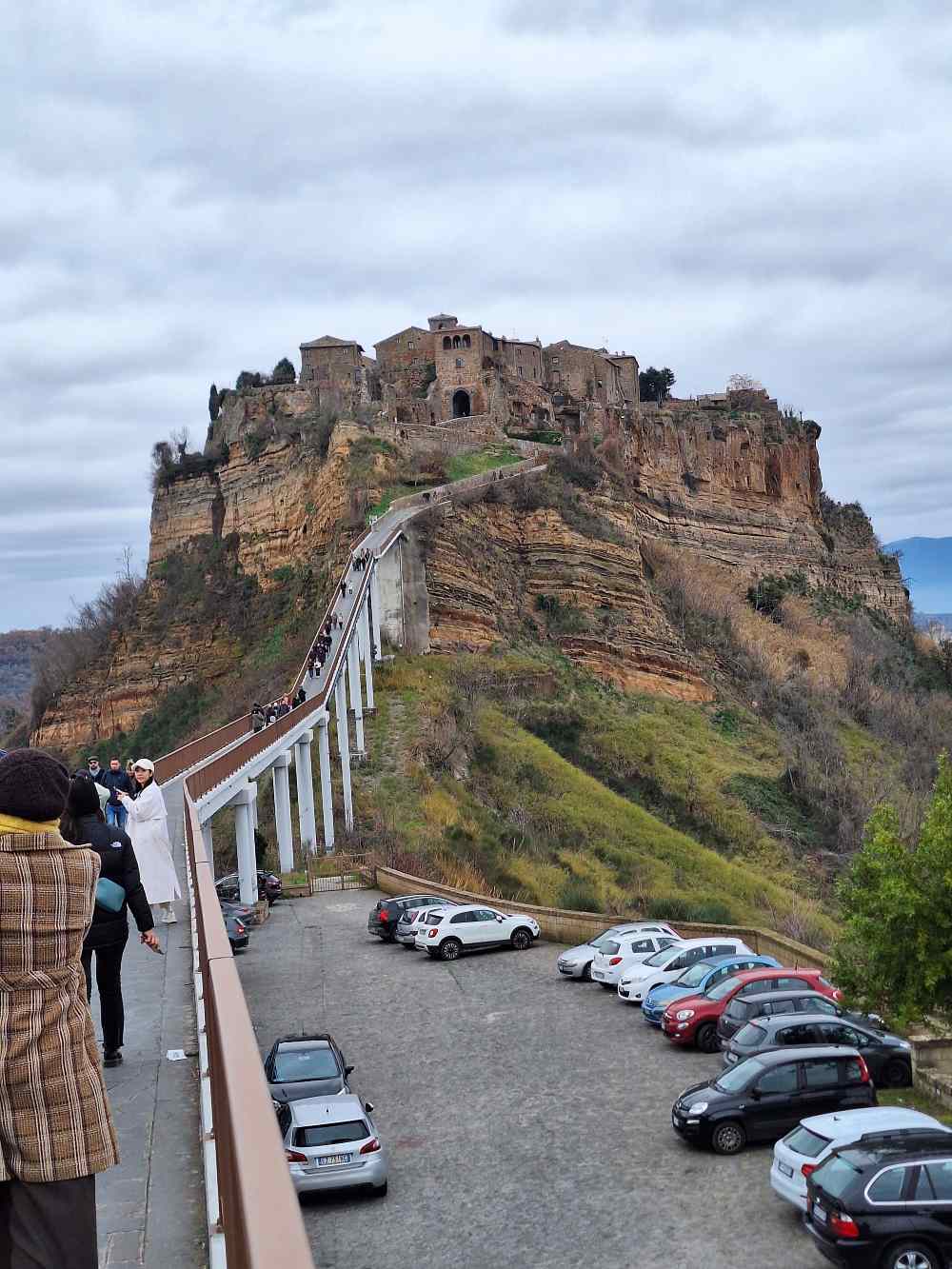
A long pedestrian bridge of about 300 meters is the only access to the village. You walk along it slowly, suspended in the void, with the wind rising from the clay ridges and the silence that envelops every step. This experience alone, for us, was worth the trip. Of course, getting there is not easy and there is a long walk (the car parks, all paid as well as the bridge, are not very close due to the shape of the place) but the beauty of Civita repays all the effort.
An open-air set: from Totò to Sordi
It’s no surprise that cinema fell in love with it. In 1957 The doctor and the sorcerer by Mario Monicelli (filmed in Tuscia) brought here an extraordinary cast with Marcello Mastroianni, Vittorio De Sica and Alberto Sordi. A few years later Totò arrived to shoot The two colonelstransforming Civita into an imaginary Greek city suspended in time.
In 1970 Sordi was again the protagonist of General protestdirected by Luigi Zampa. In more recent years the village has reappeared in productions such as Happy Lazarus by Alice Rohrwacher, who was able to restore its suspended, peasant soul. But the most powerful bond wasn’t in front of the camera. It was born elsewhere, between paper and pencil.
Miyazaki and the dream of Laputa
When Hayao Miyazaki saw some photographs of Civita, he was struck by it and we can’t blame him. Those houses clinging to the rock, isolated from the world, seemed like an island in the sky. Thus was born the imagery of Laputa – Castle in the skyStudio Ghibli’s masterpiece.
In the film, Laputa is a city suspended in the clouds, fragile and powerful, a symbol of the relationship between man, nature and technology. Miyazaki was also inspired by the landscapes of Wales and Bruegel’s Tower of Babel, but in the collective imagination the link with Civita is indissoluble. When the director personally visited the village in 1990, he found what he had already intuited: a place where the earth seems to float in the sky. On foggy days, Civita truly appears like a flying island. For many Japanese travellers, arriving here is a sort of emotional pilgrimage, the fulfillment of a dream.
What to see in Civita di Bagnoregio
Entering Civita means forgetting the clock. The streets are narrow, paved, silent. The medieval houses have external staircases, flowered balconies, ancient doors that tell of centuries of passages. There is no rigid itinerary to follow: the fun is getting lost. You enter through Porta Santa Maria, dug into the tuff, guarded by two stone lions
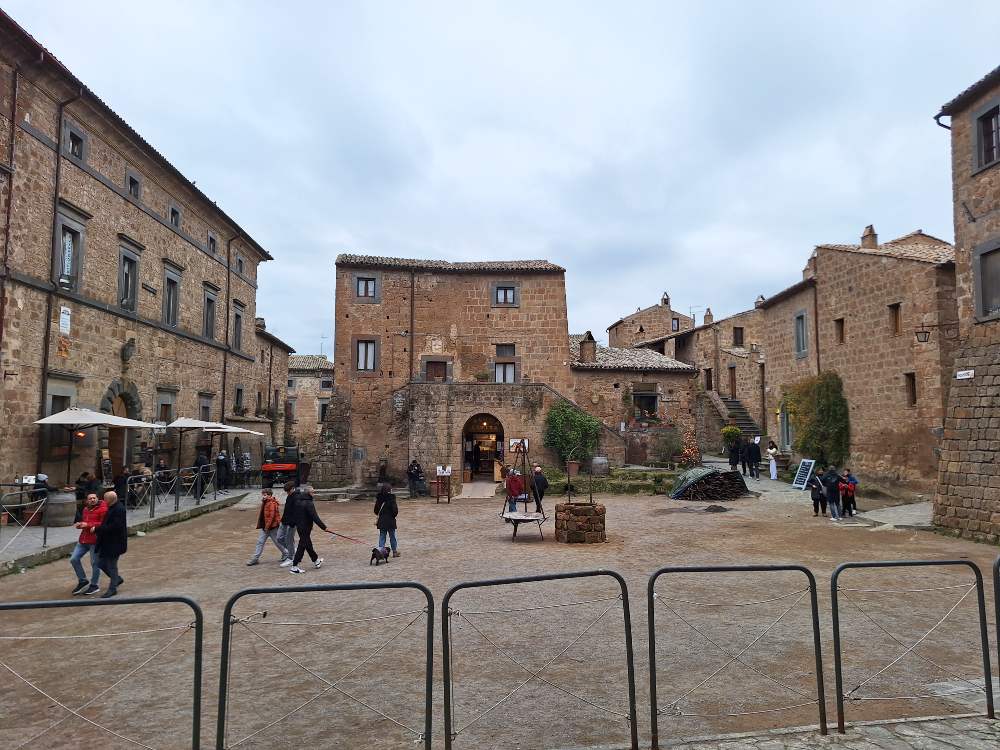
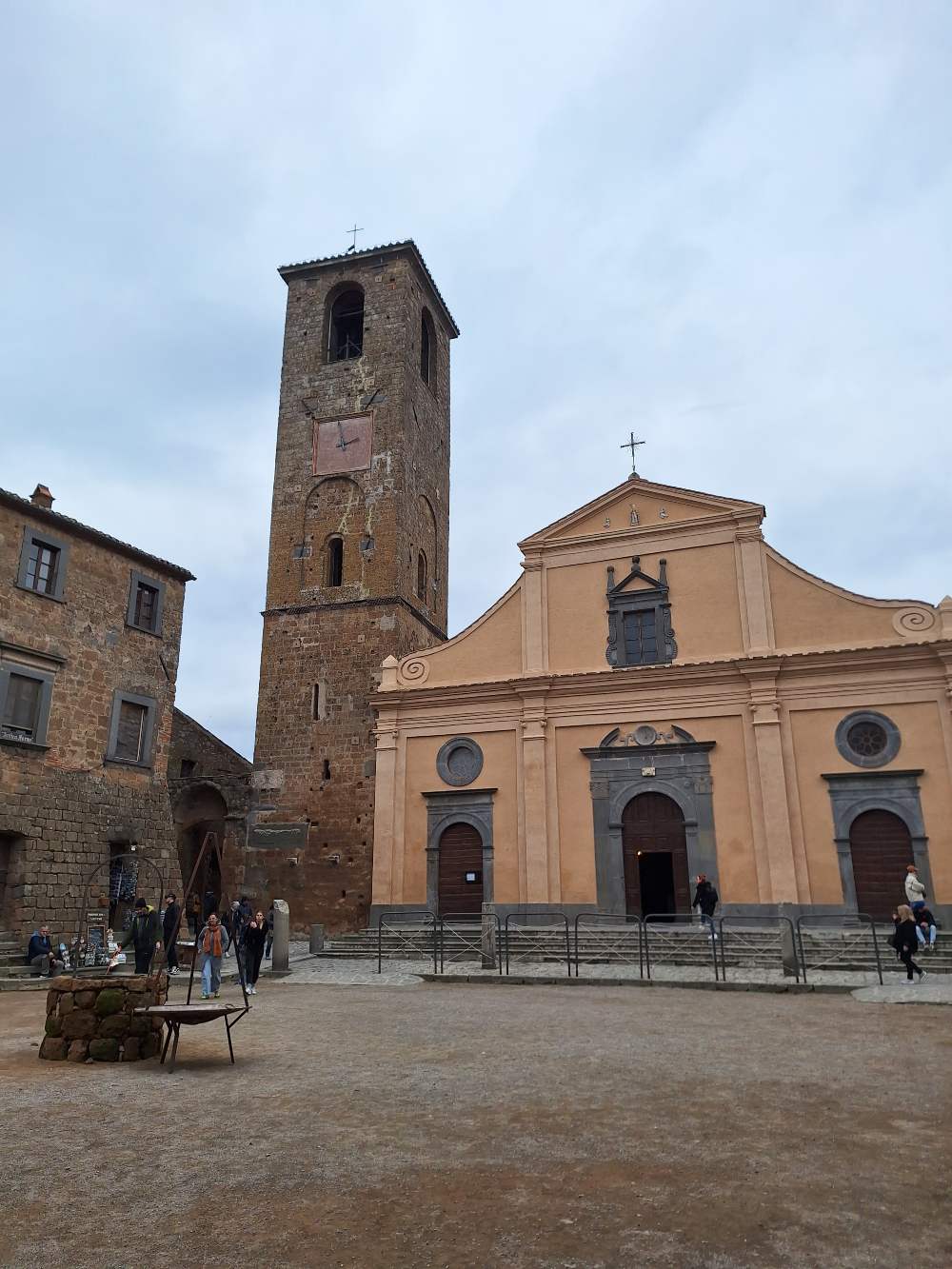
Suddenly the space opens up in Piazza San Donato, the heart of the village. The Romanesque church dominates with its simple facade, while the bell tower watches over from above. Sitting here, perhaps in the late afternoon, is like watching a slow light show: the tuff changes color, from honey to pink, until it fades into gold.
Then you continue walking towards the lookout. And that’s where your breath stops. Below you extends the Valley of the Calanques, an almost lunar landscape made of clay ridges, deep furrows, geometries sculpted by the wind and rain. It is a powerful, primordial panorama. You understand why this place is fragile, why it is called “the dying city”: erosion slowly consumes the cliff on which the village rests. Yet it is precisely this precariousness that makes it so intensely alive.
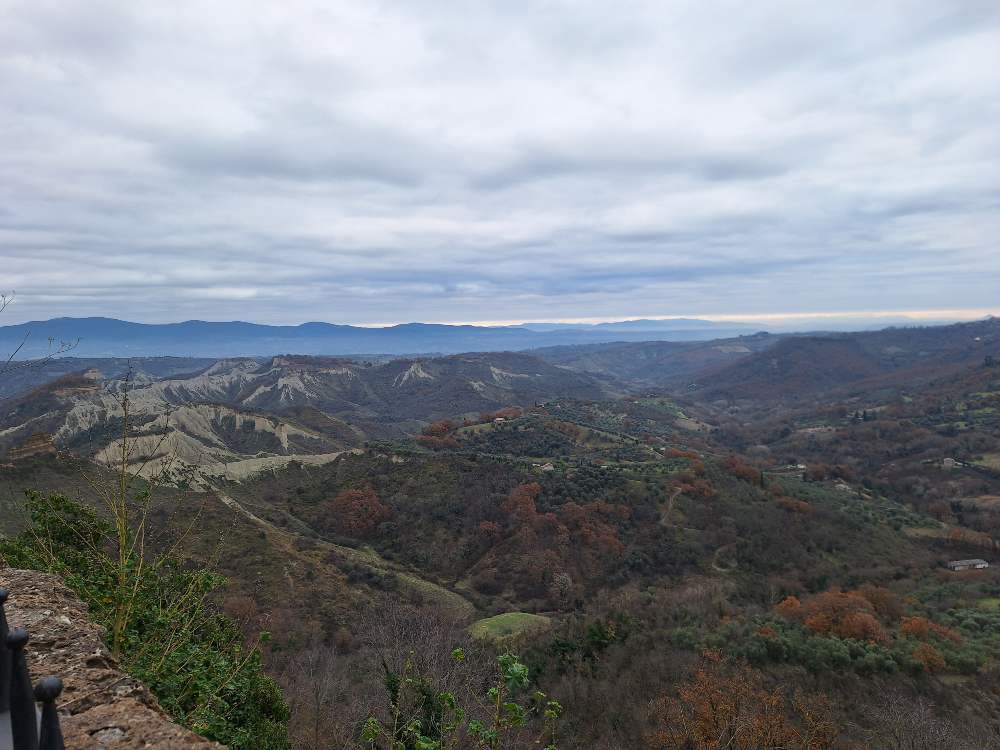
Every corner offers silences, sudden glimpses, hidden details. Civita di Bagnoregio is one of those places that remain etched in the memory. Perhaps because it is suspended, perhaps because it is fragile, perhaps because cinema and animation have made it eternal in the imagination. When the sun goes down and the valley fills with bluish shadows, the village truly seems like a flying island and it is clear why Miyazaki saw a universal symbol in this place.
You might also be interested in:
