
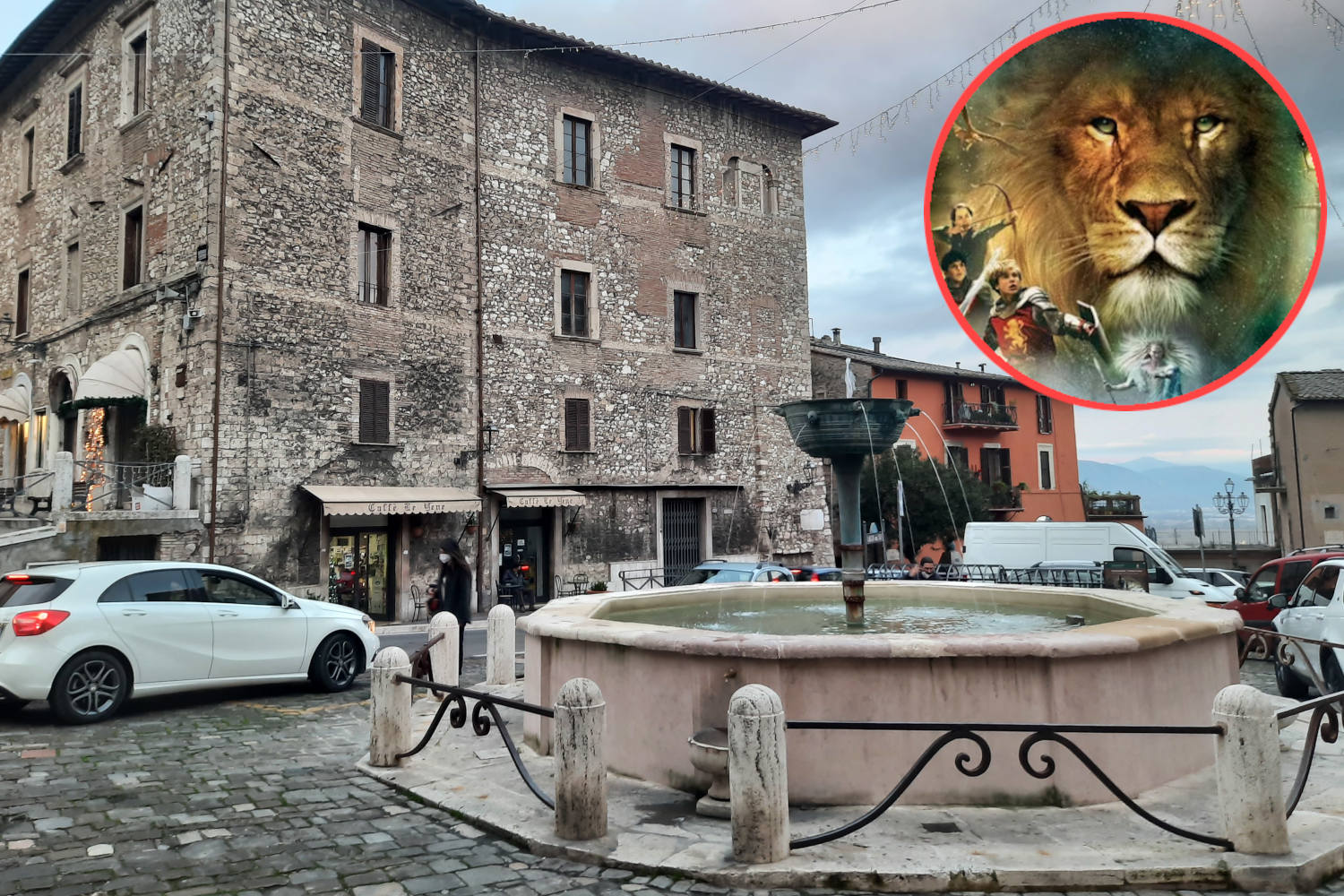
Hills thick with woods, hairpin bends that climb among the olive trees, the Nera river that winds at the bottom of the valley. Narni, in the heart of Umbria in the province of Terni, appears like this: intimate, vertical, medieval. From Narni Scalo station you go up towards the historic center and, curve after curve, you have the sensation of entering another dimension.
And maybe there is a reason. The Latin name of the city was Narnia, a name that will make fantasy enthusiasts like me prick up their ears. It is in fact from this ancient denomination that CS Lewis drew inspiration for the fantastic world of The Chronicles of Narnia. From a Latin atlas studied as a boy to the construction of a literary universe: the passage is short, but very powerful and Narni embodies within itself all that magical world that Lewis recounts.
The Cathedral and the medieval heart
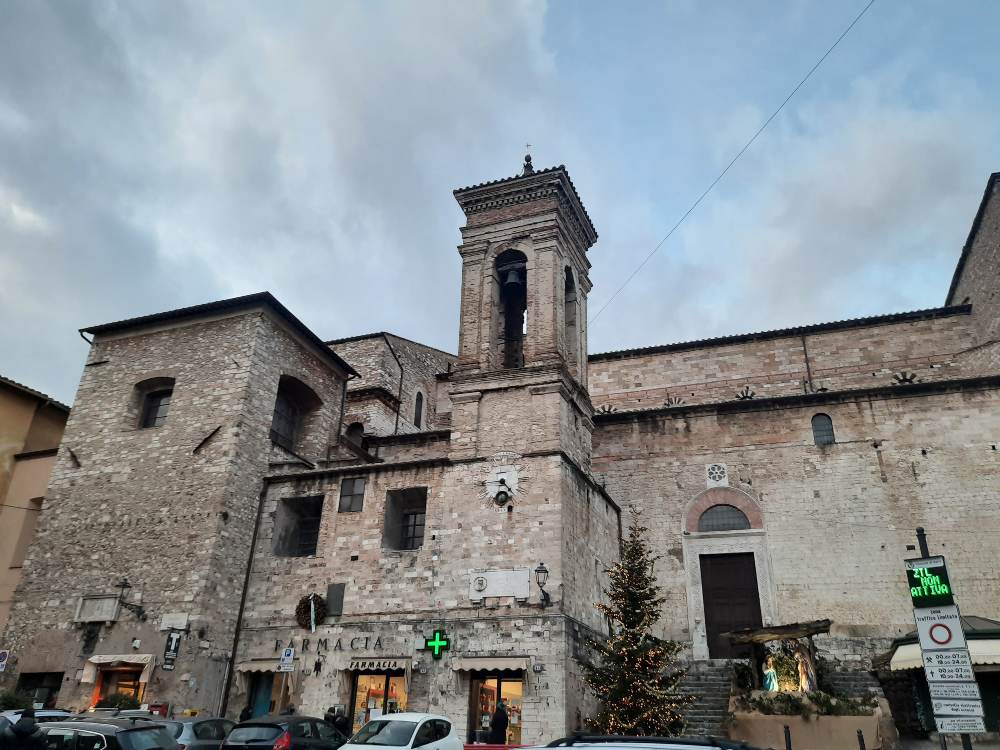
Our tour begins in Piazza Garibaldi, in front of the apse of the Cathedral of San Giovenale, consecrated in 1145. Romanesque in layout, enriched in the fifteenth century by an elegant portico, it houses a solemn crypt where the relics of the patron saint rest. The interior is a mix of baroque art, decorated chapels and medieval memories. Don’t miss the Sacellum of San Giovenale and Cassio, a small basilica within the basilica, with ancient mosaics and a cozy atmosphere.
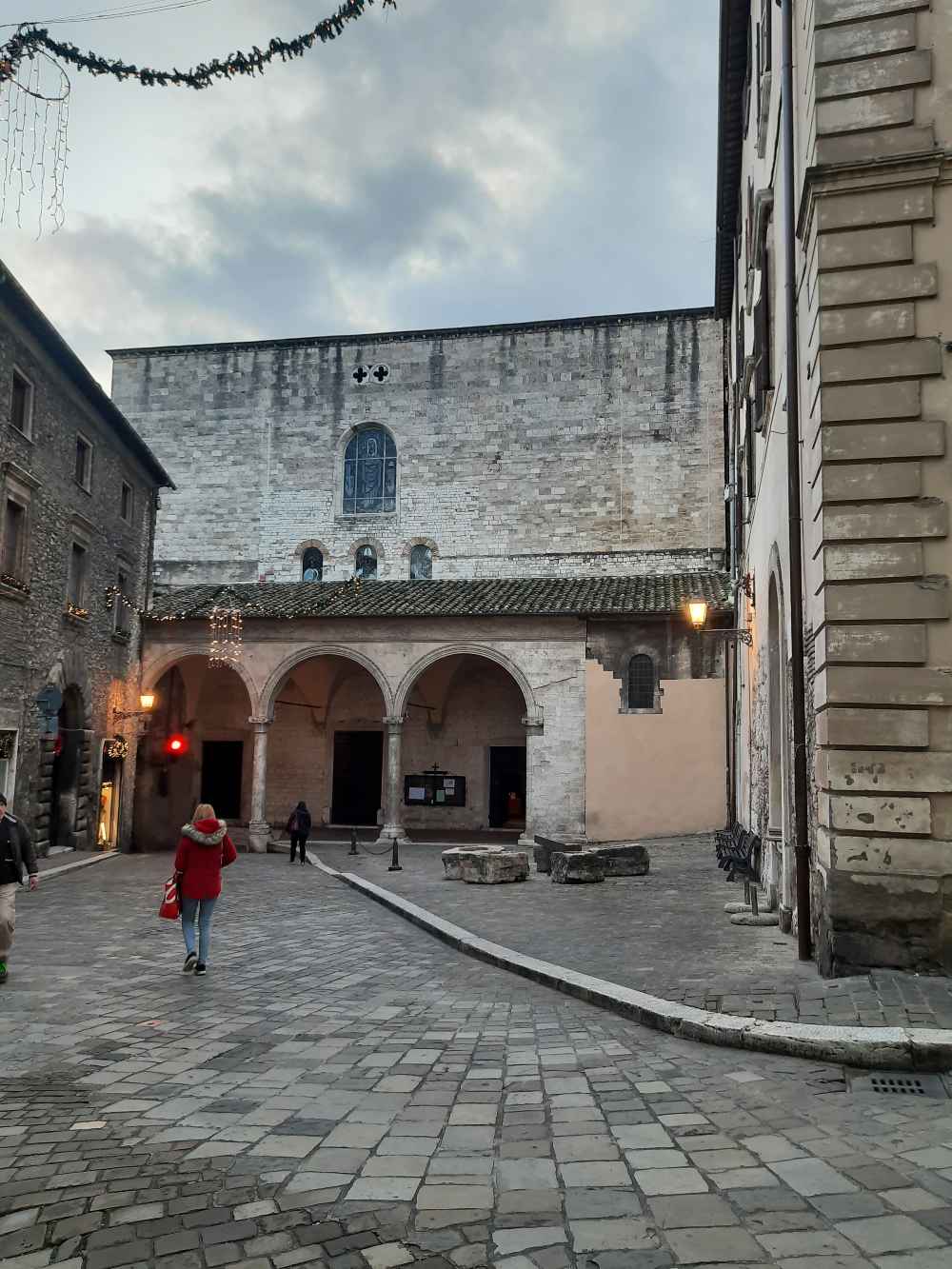
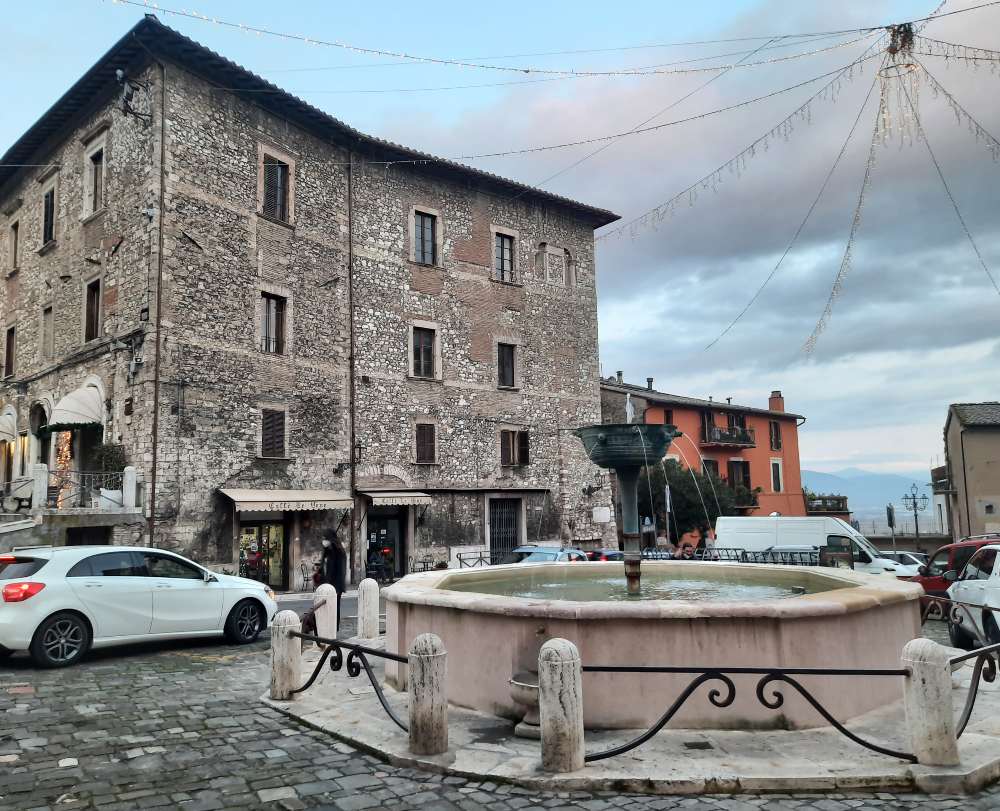
A few steps and you go up towards the bell tower, between stairways that seem to be carved into the rock. Narni is all like this: overlapping arches, narrow alleys, sudden glimpses of the valley. The city’s civil theater opens in Piazza dei Priori: Palazzo dei Priori, Palazzo del Podestà, the Loggia attributed to Gattapone. The medieval political heart beat here, on the foundations of the ancient Roman forum.
Narni Underground: the dark side
But the real twist is underfoot. Narni Sotterranea is an underground complex discovered by chance in 1979 by a speleological group. You can only enter with a guided tour and pass through environments that tell of centuries of transformations: a 13th century frescoed church, Roman cisterns, secret corridors.
The most disturbing environment is the Torment Room, linked to the Inquisition court. On the walls of a small cell remain graffiti and symbols left by an eighteenth-century prisoner. It is a journey into hidden memories, far from postcards, where the city shows its most complex face.
Roman bridges and papal fortresses
Narni is not just the Middle Ages. Just outside the center stands what remains of the Bridge of Augustus, built in 27 BC along the Via Flaminia: a monumental arch suspended in the greenery. On the top of the city, the Rocca Albornoziana dominates, a fourteenth-century fortress built to consolidate papal power. From its stands the gaze embraces endless hills.
Nearby, the turquoise waters of the Mole di Narni seem to come straight from a film set. It is no coincidence that many associate them with the fairy-tale atmospheres also made famous by the film The Chronicles of Narnia – The Lion, the Witch and the Wardrobe.
View this post on Instagram
Narnia: between history and legend
As mentioned, the creator of the fantasy saga never visited Narni, but knew its name through Latin texts. “Narnia” struck him for its evocative sound, for that ancient echo that mixes water, rock and myth. From there a kingdom was born where good and evil face each other, where nature is alive and speaking. Knowing that that name belonged to an Umbrian village adds depth to the fantasy.
Walking here means moving on a thin border: reality and imagination come close to each other. Between a Romanesque church and a papal fortress, between a Roman bridge and an inquisitorial dungeon, Narni demonstrates that wonder does not need special effects. Because sometimes the closet really opens. And it leads to Umbria.
You might also be interested in:
