
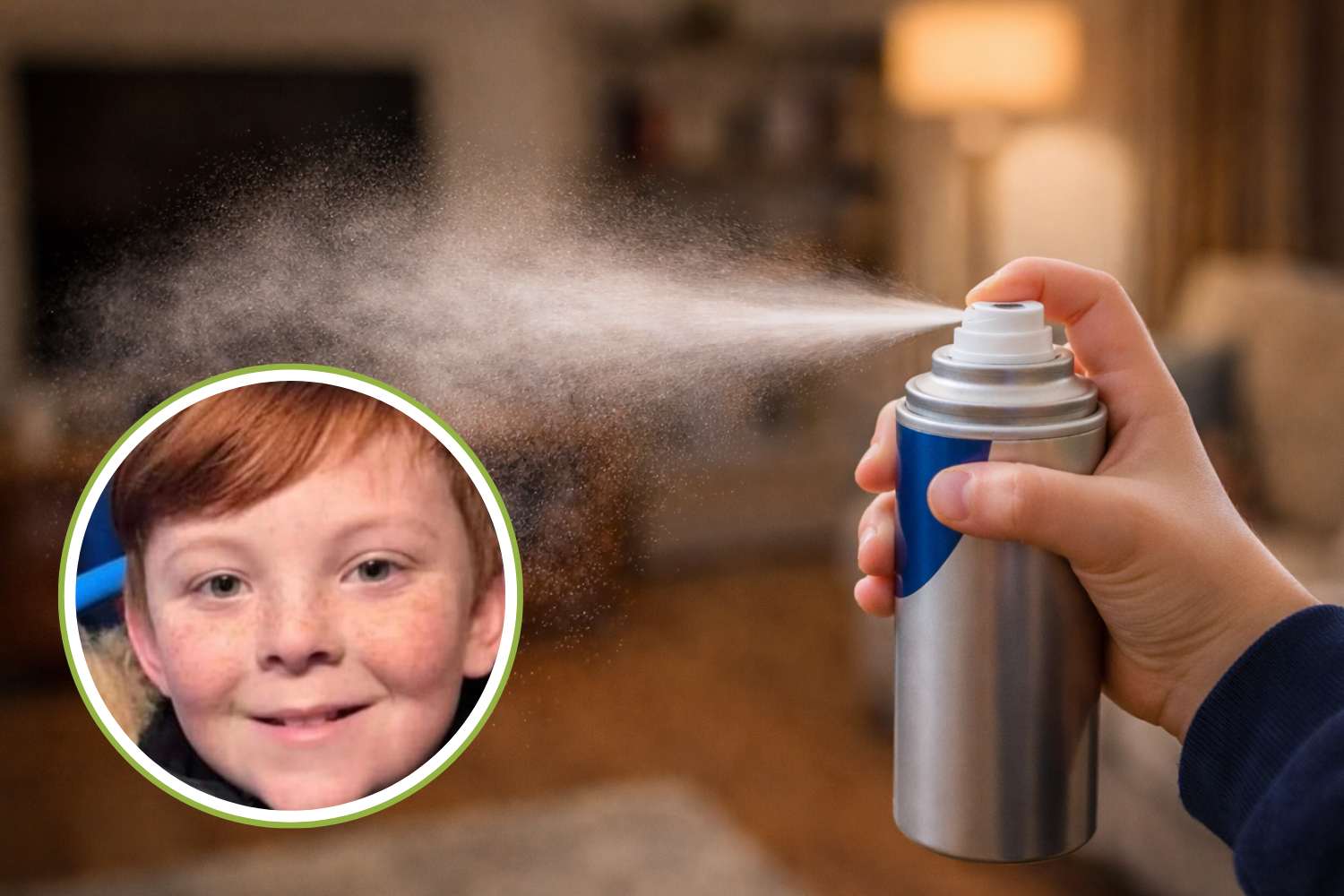
Another life broken by a “challenge” that runs on social media. In London, 11-year-old Freddie Davis died in his bed after inhaling a deodorant spray containing butane, a propellant gas commonly used in aerosols. The closure of the investigation into the death – which occurred in January 2025 – has put the spotlight back on a very dangerous practice known as chroming, which has gone viral among young people through videos on TikTok and YouTube.
A tragedy that reopens an increasingly urgent debate: how safe are social media for children and pre-adolescents?
What is chroming and why is it so dangerous
Chroming (also known as huffing) involves inhaling volatile chemicals readily available at home, such as spray deodorants, solvents, nail polish, compressed air, petrol, paint thinner, to obtain a euphoric effect and a temporary “fogging” of the senses.
What makes this practice even more insidious is precisely the ease of access: these are not illegal drugs, but products of everyday use. However, butane and propane, often contained in aerosols, can cause sudden cardiac arrhythmias, asphyxia, convulsions, brain damage and, in the most serious cases, death even after the first use.
In 2024 the phenomenon had come to the attention of the national conference of the American Academy of Pediatrics. A study presented at the meeting analyzed 109 videos on chroming published on TikTok, which had totaled over 25 million views. Impressive numbers, which show how dangerous virality can be.
Freddie’s case
According to reports in the British press, Freddie had not carried out online research on aerosols or suicide. His mother, Roseanne Thompson, even stopped buying spray deodorant to protect him after hearing about the challenge. Yet it wasn’t enough. And this is unfortunately not an isolated case.
Between 2001 and 2020, 716 deaths linked to the inhalation of volatile substances were recorded in England and Wales, an average of 36 per year. In almost 60% of cases it involved fuel; butane and propane have been mentioned on hundreds of death certificates.
The critical point is precisely social diffusion. Videos that show or trivialize these practices can reach millions of views in a few hours, often without adequate monitoring or timely removal.
Matteo Bassetti’s alarm
Infectious disease specialist Matteo Bassetti also intervened harshly on this case in recent days, raising the alarm on social media:
Chroming is a practice of inhaling toxic chemicals readily available at home for an adrenaline-pumping experience. Spread especially among young people through social media, it can lead to dizziness, addiction and in the most serious cases cause death.
Bassetti underlines how the fact that these substances are legal and common makes it more difficult for parents to notice the danger. And he concludes with a clear position:
This episode also demonstrates that social media should be banned under the age of 16. However, it is important for parents to monitor their children and the content that arrives via social media.
More and more countries limit social media to very young people
The topic is no longer marginal. Several countries are introducing restrictions on the use of social media by minors. In France, a law has been approved that requires parental consent for social media membership under 15s. In Australia the government has started a process to ban access to social media (including YouTube) for under 16s.
The debate is also heated in the United Kingdom, with pressure to strengthen online protections after several cases of dangerous challenges. And finally, more recently in Spain there is discussion of blocking access to social media for minors under 16 years of age.
The point is not to criminalize parents – as many comments that appeared on social media after the news of Freddie’s death remind us – but to recognize that the current digital ecosystem exposes ever younger children to content that can have very serious consequences.
We need more stringent controls on platforms, digital education in schools and a serious discussion on the minimum age for access to social networks.
