
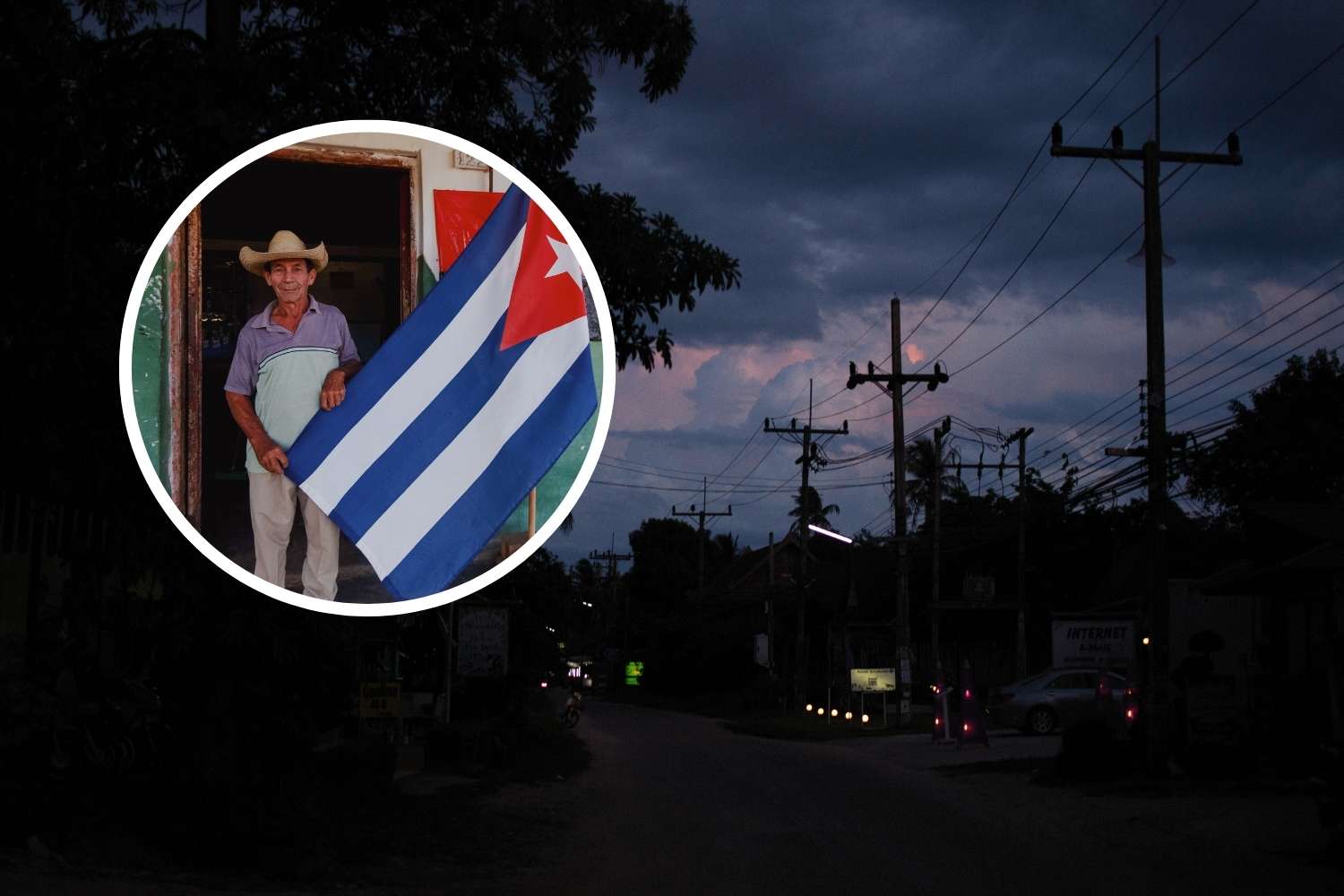
Cuba is in the dark again. Not only for the increasingly recurring blackouts but also for the uncertainty affecting a country used to resisting, but today more fragile than ever. The tightening of oil supplies, desired by the United States and strengthened by diplomatic pressure on the island’s main partners, has transformed a chronic economic crisis into a full-blown humanitarian emergency. It is not an abstract political system that pays the price, but a population exhausted by the lack of food, medicine, transport and electricity.
An economy that no longer holds
Cuba produces around 40,000 barrels of oil a day, less than half of its needs. To survive it has always relied on imports, first Soviet, then Venezuelan and Mexican. Today those routes are almost completely interrupted. Caracas suspended shipments, Mexico City, fearful of commercial retaliation, did the same. The result is a paralyzed production system, with a GDP that has collapsed by over 15% since 2020 and tourism in sharp decline.
The energy that is missing is not just fuel: it is mobility, it is the food supply chain, it is the functioning of schools, it is the conservation of medicines. Without constant electricity, hospitals struggle, ambulances struggle to circulate, refrigerators remain turned off. Everyday life turns into an exercise in continuous adaptation, where every gesture – moving, taking care of yourself, studying – becomes a challenge.
Healthcare under pressure
The difficulties caused by the economic, commercial and financial blockade imposed by the Government of the United States in #Cuba they are not abstract: they are reflected in a variety of medicines, intakes, reactions and repuesto items.
Preserve the basic essence of our purpose. pic.twitter.com/v4EfeLmd1C— José Angel Portal Miranda (@japortalmiranda) February 15, 2026
The healthcare system, for decades the pride of the revolution, is today one of the most affected sectors. According to Health Minister José Ángel Portal Miranda, the sanctions are no longer just “paralyzing the economy”, but threaten “basic human security”, because “you cannot damage the economy of a state without affecting its inhabitants”. Five million people with chronic diseases are at risk of interruptions in treatment, including thousands of cancer patients awaiting radiotherapy or chemotherapy.
The images arriving from Havana tell of half-empty departments, machinery stopped, doctors forced to choose priorities. An emergency medicine that tries to resist with reduced means, while infant mortality starts to rise again and access to essential medicines becomes increasingly uncertain. In the meantime, the streets are filled with rubbish, worsening the already compromised situation:
@jonixdose CUBA IS COLAPSADA: This is PASSING IN HABANA FEBRUARY 2026
How life is in an APAGADA CITY
♬ Pool – Stripped – Samia
@graysonmacdonaldyoutube The trash infested streets of Havana
♬ original sound – YOUTUBE: @GraysonMacDonald
Geopolitics and siege
International civil society will also try to symbolically break the siege. The Nuestra América Flotilla will set sail in March, a humanitarian mission that will cross the Caribbean Sea to bring food, medicines and essential goods to Cuba. An initiative supported by exponents of the global left such as Jeremy Corbyn, Rashida Tlaib, María Fernanda Carrascal and Ada Colau. “We will break the siege”, the organizers promise, relaunching a mobilization with a strong political as well as humanitarian value: a concrete gesture to denounce the impact of the sanctions on the civilian population and rekindle international attention on the Cuban crisis.
The Cuban crisis is part of an international context marked by new tensions. Washington openly talks about regime change and uses economic leverage as a tool of political pressure. After the intervention in Venezuela and the end of crude oil supplies, the White House imposed punitive tariffs on anyone selling oil to Cuba, effectively making any energy exchange with the island toxic.
Havana says it is ready for dialogue, but only “without pressure and between equals”. An opening that has so far not produced concrete results. Meanwhile, international solidarity remains timid: some humanitarian aid, promises of support, but no structural solution. The consequence is an isolation that pushes more and more Cubans to leave the country: since 2020 the population has reduced by over 15%, a silent exodus that empties cities and countryside.
Daily life under stress
In Cuban homes we live with the light coming and going, with the hum of generators and queues in front of shops. Rationing, already known in the 1990s, has become the norm again. But unlike then, the social protection network that guaranteed a minimum of stability is missing. Today 89% of the population lives in conditions of extreme poverty.
Yet, despite everything, Cuban society continues to hold together. Between neighborhood solidarity, inventiveness and resilience, the island tries to stay on its feet. But the margin is getting smaller every day. Cuba is tired, but not resigned. The risk, however, is that geopolitical pressure ends up crushing those who have no voice in major international matches: citizens, trapped in a crisis they did not choose.
