
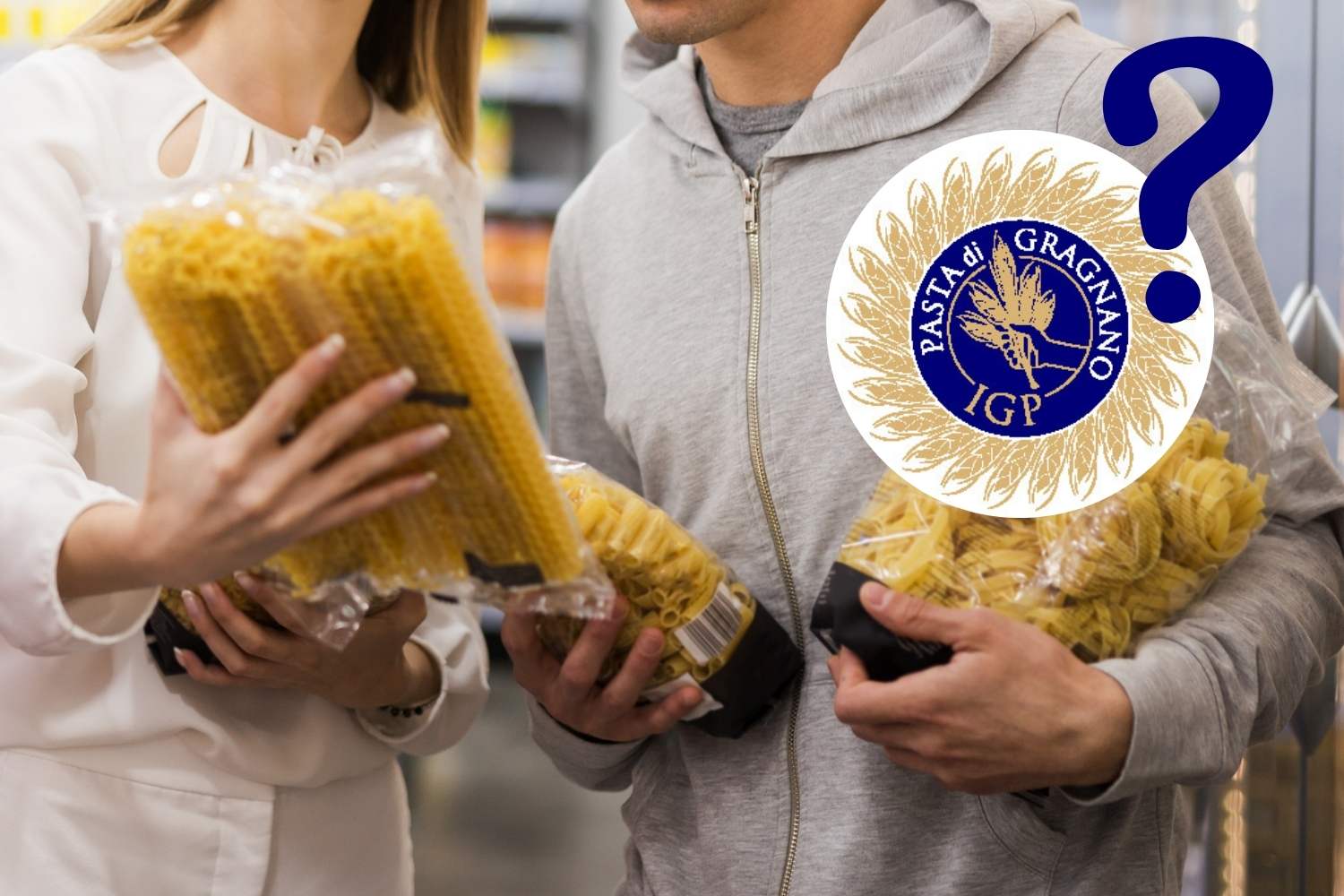
For Italians, pasta is not just food but a real question of identity and tradition. Among the excellent proposals there is Pasta di Gragnano PGI, famous throughout the world for its quality and its link with the Campania region.
When we think about this pasta, we often take for granted that, being a product of excellence from our country, it is made only with Italian wheat. But the reality is a little different.
We then decided to take a tour of supermarkets and discount stores to check. What we discovered is interesting and, perhaps, even a little surprising: in many cases, the Gragrano PGI pasta that we find on the shelves is produced with wheat coming from European Union countries or even non-EU countries.
How Pasta di Gragnano PGI is born
To understand better, let’s start from the beginning: Pasta di Gragnano PGI is not just any pasta. Its production is regulated by precise regulations that protect its quality, method and territory. The wording “Pasta di Gragnano” can only be used for pasta produced in the municipality of Gragnano, respecting all the established rules.
It is a pasta made from high quality durum wheat semolina, mixed with water from the local aquifer, famous for the unique microclimate which contributes to providing fragrance and consistency. The dough is then extruded through bronze dies, which give the pasta its characteristic wrinkled surface, perfect for holding the sauce, and finally dried slowly at a moderate temperature for many hours. This slow process, followed by equally delicate cooling, is what guarantees the cooking resistance and the unmistakable flavour.
When released for consumption, the pasta must have a uniform surface, a bright straw yellow color and a firm and elastic consistency. The PGI certification also ensures that all production phases are traceable and controlled by authorized bodies, and that the words “Pasta di Gragnano PGI”, the logo and address of the producing company clearly appear on the packaging.
Italian wheat or not?
Here comes the point that often surprises consumers: the specifications for Pasta di Gragnano PGI do not oblige the use of durum wheat grown in Italy. What matters is the quality of the semolina, not necessarily its origin. In practice, pasta can contain wheat from European Union countries or other parts of the world, as long as it meets the technical requirements for proteins, moisture and ash.
This does not mean that the pasta is of inferior quality: its excellence derives from the production method, the territory and the artisanal attention to each phase. However, for those who want to support Italian wheat and 0km, reading the labels becomes essential: PGI certification alone is not enough to know the origin of the wheat.
What wheat do the best-known brands of Gragnano pasta use?
We wanted to check which wheat some of the most common brands of Pasta di Gragnano PGI present in supermarkets and discount stores use. Among these, some clearly declare the use of Italian wheat, while others use wheat from EU or non-EU sources. Let’s see them one by one.
Garofalo
Gragnano PGI Garofalo pasta is made with Italian and US (AZ) wheat.
I Love Being (Eurospin)
The Gragnano PGI pasta from the Amoessere line by Eurospin is made with EU and non-EU wheat.
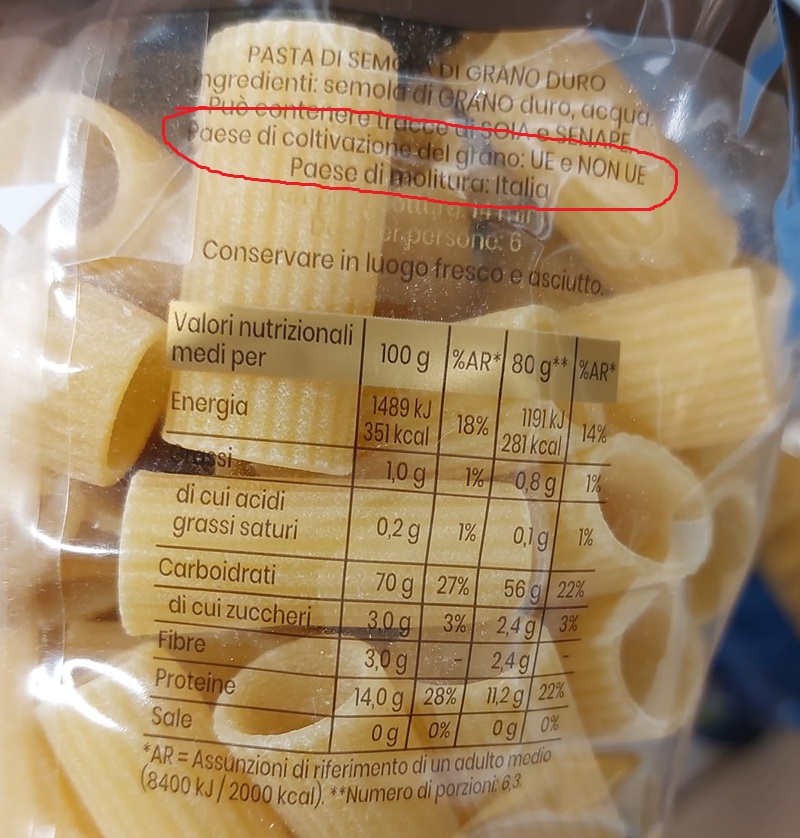
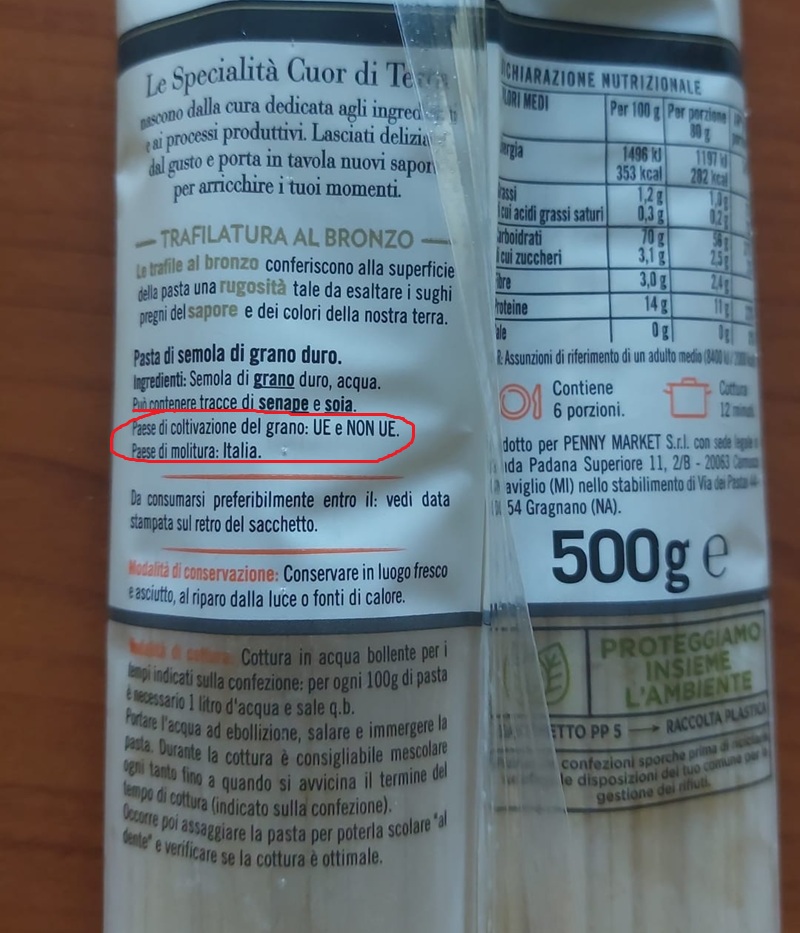
Heart of Earth (Penny Market)
Gragnano PGI Cuor di Terra pasta (Penny Market) is made with EU and non-EU wheat.
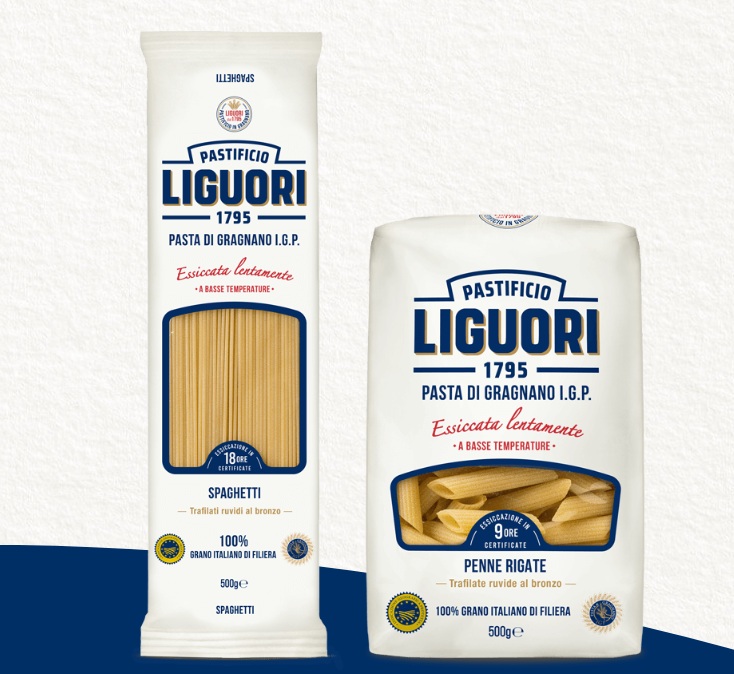
Liguori
The Liguori pasta factory produces Gragnano PGI pasta with 100% Italian wheat.
Conad
The Gragnano PGI pasta from Sapori e Dintorni Conad is produced in the Liguori pasta factory with Italian wheat.
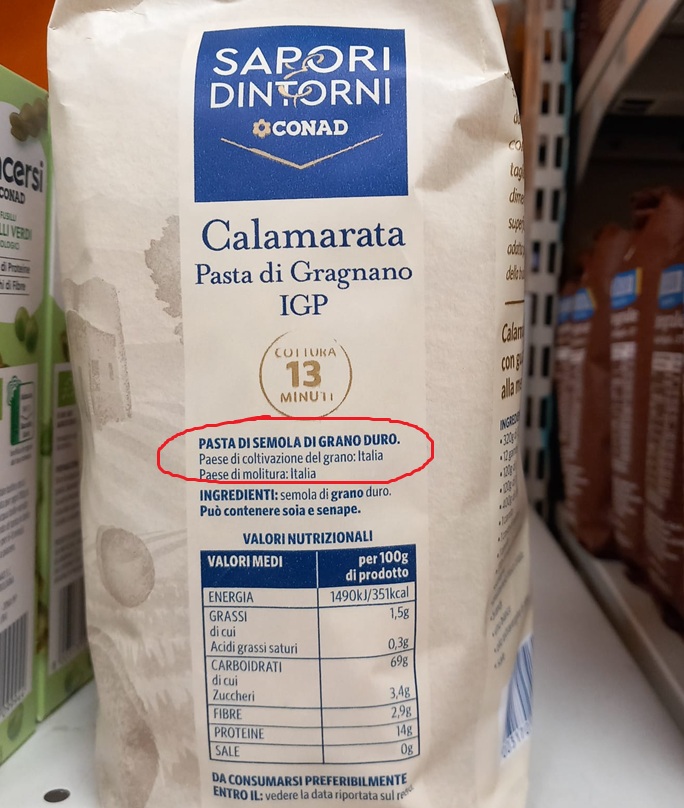
It should be underlined that there are also many other small pasta factories or less widespread brands that choose Italian wheat.
A pesticide-free pasta
A test conducted last year by Lifesaver on 12 brands of spaghetti di Gragnano PGI brought good news for those who consume this type of pasta. In fact, no trace of glyphosate was found, mycotoxin levels were under control and a good protein content was highlighted.
The analysis also revealed an interesting fact about the origin of the wheat: in 9 out of 12 cases it is Italian durum wheat, while only three brands among those tested – Garofalo, Eurospin and Todis – use blends that include foreign wheats. The result confirms that, thanks to more careful agricultural practices and accurate controls along the entire supply chain, beyond the provenance of the grain, Gragnano PGI pasta remains a safe and excellent product, capable of combining tradition, taste and reliability.
