
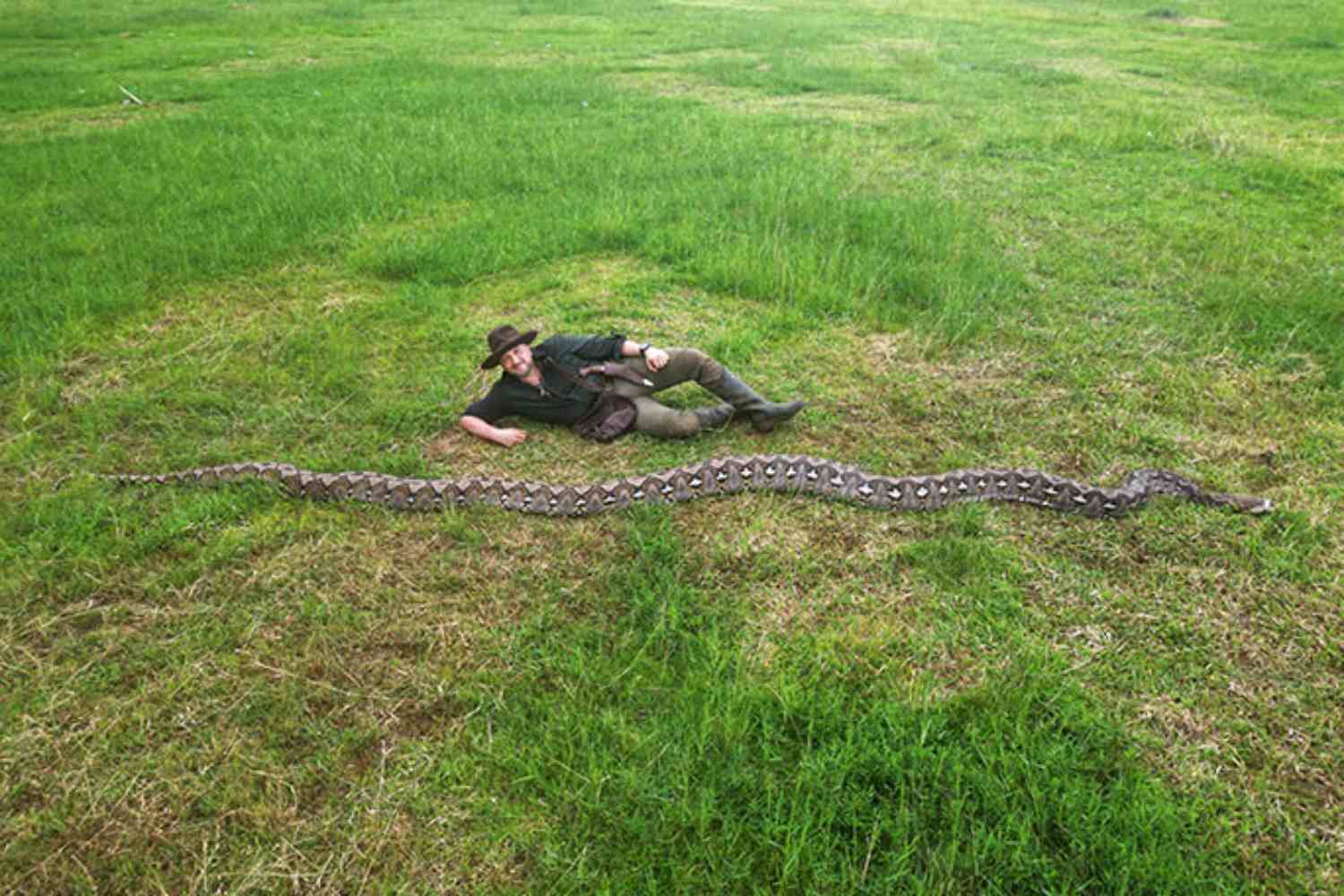
In the forests of South Sulawesi, Indonesia, what is now considered the longest wild snake ever officially documented was measured. It is a female example of reticulated python, named Ibu Baron – “The Baroness” – which has reached the certified length of 7.22 meters from the snout to the tip of the tail.
The measurement, carried out on January 18 and verified by Guinness World Records, was carried out with a surveyor’s tape measure following the natural curves of the body. The recorded weight was 96.5 kilograms, a remarkable value considering that the animal had not just eaten a meal. According to experts, under anesthesia – when the muscles fully relax – the length could increase by up to 10%, approaching 7.9 metres. However, to avoid risks, she was not sedated just for the measurement.
From discovery to rescue: the decisive role of conservationists
The giant female was spotted in the Maros region at the end of 2025. It was documented by nature photographer Radu Frentiu and snake expert guide Diaz Nugraha. The intervention of local conservationist Budi Purwanto was decisive, as he prevented the animal from being killed or sold by taking her into custody in a protected area together with other rescued reptiles.
In Indonesia the relationship between men and large snakes is often conflictual. Reticulated pythons, while not venomous, are powerful predators capable of killing by constriction. Attacks on livestock and, in rare cases, people have fueled widespread fears. Added to the direct pressure are habitat loss, the reduction of natural prey such as wild boars and the illegal trade in exotic animals.
Comparing records: between forests and prehistory
Ibu Baron’s record concerns wild specimens measured with complete documentation. In captivity the record belongs to another reticulated python, Medusa, which in 2011 reached 7.67 meters in the United States. Farmed animals, however, benefit from regular feeding and veterinary care, conditions that favor superior growth compared to nature.
Among the heaviest snakes of all are the South American green anacondas, which can exceed 100 kilograms and, in exceptional cases, reach impressive dimensions. And if we look at the distant past, fossil species such as Titanoboa would have reached lengths exceeding 10 meters millions of years ago.
The discovery of the “Baroness” does not close the question. According to experts, even larger specimens could exist in more remote areas of Southeast Asia or the Amazon. Meanwhile, this record turns the spotlight on the need to protect large wild reptiles, transforming them from a feared threat into a natural heritage to be preserved.
You might also be interested in:
