
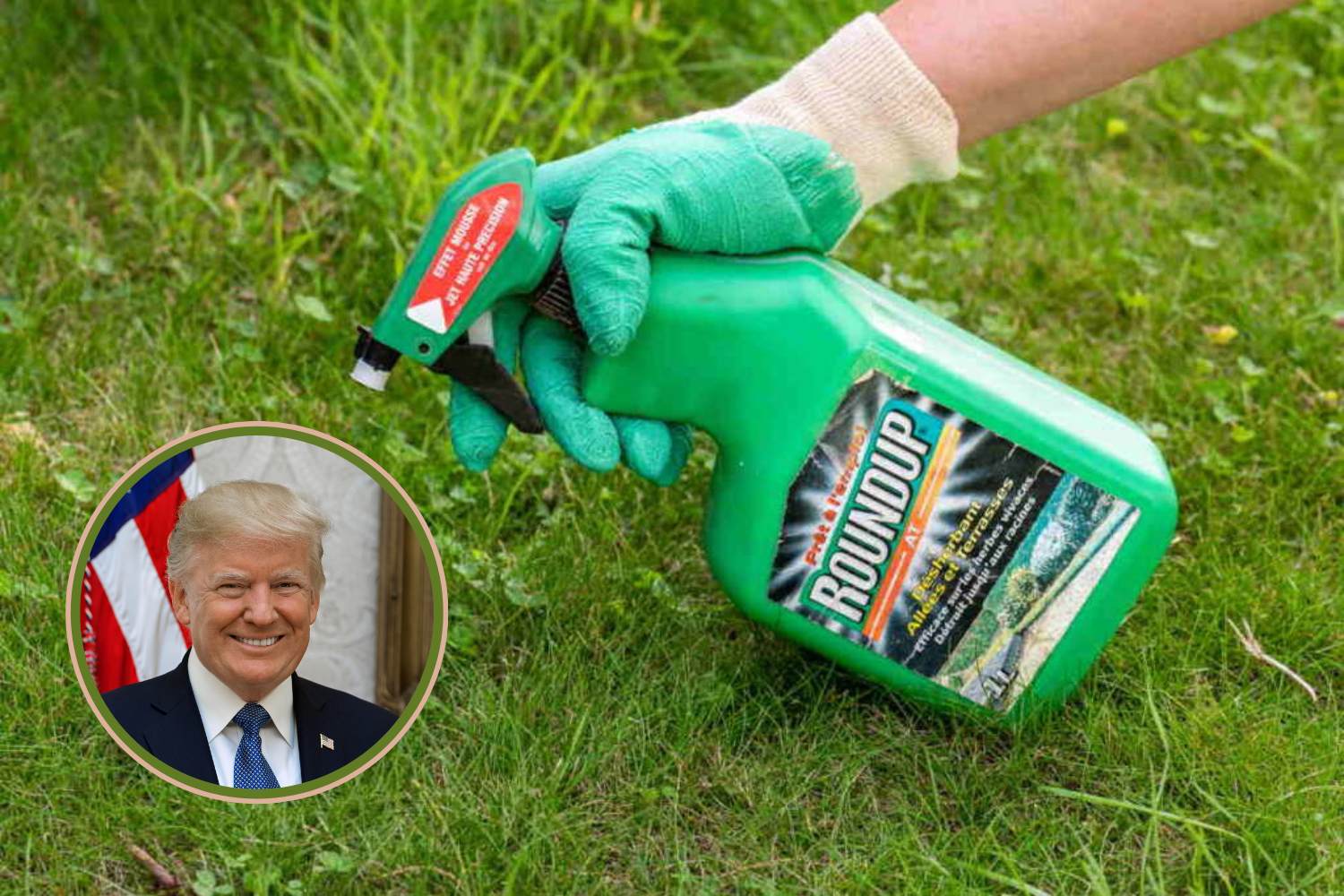
With one signature, Donald Trump changed the rules of the game on glyphosate. The President of the United States has issued an executive order invoking the Defense Production Act – the landmark law designed to mobilize American industry in times of war – to ensure the production and continued supply of glyphosate-based herbicides. Yes, glyphosate, the most used and most discussed chemical substance in world agriculture, has officially become a national defense priority.
The document signed on 18 February 2026 is clear in its reasoning. Elemental phosphorus, an indispensable precursor in the synthesis of glyphosate, is described as a “materialpervasive in defense supply chains” And “crucial to military readiness“, used in lighting devices, semiconductors, radars and batteries of the most advanced weapons. Hence the administration’s logical leap: since glyphosate and phosphorus share the same production chain, protecting one means protecting the other. And protecting both, according to Trump, means protecting America.
Glyphosate is described as “a cornerstone of agricultural productivity and the rural economy” American, the tool that allows farmers to “maintain high yields and low production costs“A topic that becomes even hotter when the document addresses the topic of alternatives.
“There is no direct chemical alternative to glyphosate-based herbicides“Without it, the White House argues, American farmers’ already slim margins would collapse, farmland would risk being abandoned or redeveloped, and the pressure on the entire domestic food system would become unsustainable.
Ensuring an adequate supply of elemental phosphorus and glyphosate herbicides is therefore crucial to national security and defense, including the security of the food supply, which is essential to the health and safety of Americans – reads the document signed by Trump.
Only one domestic producer, millions of kilos imported every year
What makes the executive order urgent is a concrete vulnerability: in the United States there is only one national producer of herbicides based on elemental phosphorus and glyphosate, and it alone cannot cover domestic needs. The presidential statement reveals that every year they are imported from abroad “more than 6,000,000 kilograms of elemental phosphorus“, a dependence that, according to the White House, exposes the country to unacceptable risks in the event of geopolitical crises or disruptions to global supply chains.
The order delegates to the Secretary of Agriculture the power to establish national priorities and allocate resources, with a particularly significant clause: no measure adopted will “put the business sustainability of any domestic producer at risk” of these herbicides.
A measure which, in fact, protects the large industry giants in the sector.
The reactions
The reactions were not long in coming. The Environmental Working Group (EWG), an American organization active for decades on the protection of public health and the environment, defined the decision as a sensational about-face compared to the Trump administration’s electoral promises.
Ken Cook, president and co-founder of the EWG, spoke openly of a “shocking betrayal” of those who live and work near fields where glyphosate is sprayed on a large scale:
If anyone was still wondering whether ‘Make America Healthy Again’ was a genuine commitment to protect public health or a scam concocted by President Trump and RFK Jr. to rally health-conscious voters in 2024, today’s decision answers that question.
Also in the organization’s sights is the position of Robert F. Kennedy Jr., now secretary of Health and Human Services, for years among the most vocal critics of glyphosate, who had contributed to building the image of an administration attentive to the risks of pesticides. His tenure in government after this executive order, according to EWG, poses a difficult question about the coherence of those battles.
Carcinogenic or not?
Glyphosate is the most widely used herbicide in the world, and its history is littered with controversy. The International Agency for Research on Cancer (IARC) classified it as “probably carcinogenic to humans” in 2015, an assessment that triggered a wave of lawsuits in the United States, where Bayer – which acquired Monsanto, the longtime glyphosate maker – has faced thousands of lawsuits. On the other hand, regulatory agencies such as the US EPA and the European EFSA have concluded that, when used as directed, the product does not pose unacceptable risks to human health.
This regulatory ambiguity has not been resolved over time: it has festered, fueling a debate in which science, economic interests and politics continue to intertwine in a way that is difficult to disentangle.
What is striking about Trump’s order is not only the content, but the level on which it shifts the debate. Transforming a herbicide into a strategic resource comparable to critical minerals for defense means removing it, at least in part, from the normal cycle of environmental and health assessment, and inserting it into a logic of superior national interest where other criteria – economic, geopolitical, military – take over.
Sources: The White House/EWG
