
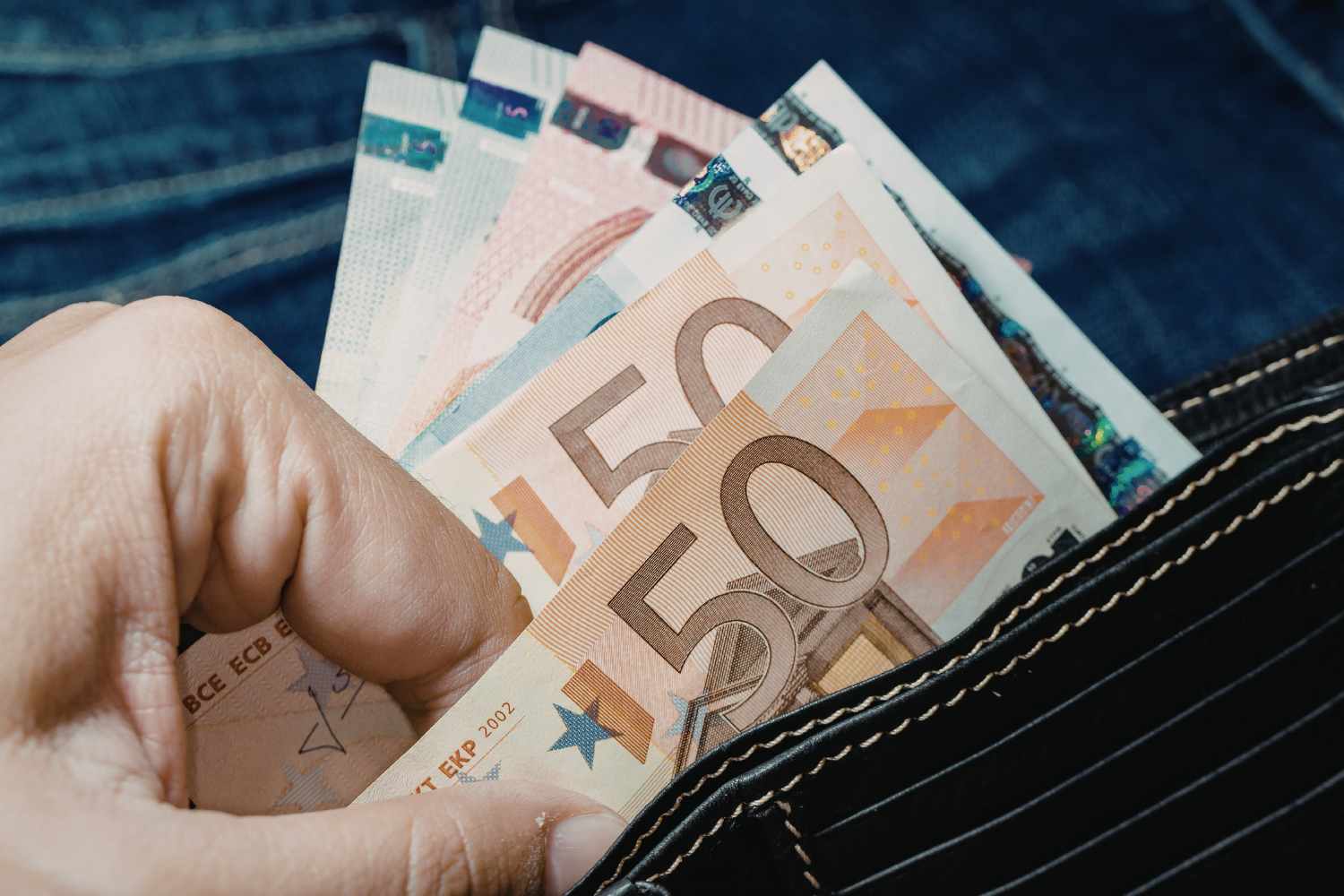
The reports are multiplying throughout Italy, with the alarm coming mainly from Abbruzzo, as reported by Il Messaggero: fake 50 euro banknotes passing from hand to hand, often without the recipients realizing anything until the cash register closes. The phenomenon is not new, even if the numbers from the Bank of Italy require reflection: in 2024 alone, 121,111 counterfeit banknotes were withdrawn from circulation in our country, and 87% concerned the 50 and 20 euro denominations. At a European level, in 2024 the ECB recorded approximately 554,000 counterfeit banknotes withdrawn across the entire euro area, with Italy accounting for more than 20% of total seizures.
The reason why counterfeiters almost always focus on the 50 euro denomination is simple, given that it is the most used in daily payments and withdrawals at ATMs, which makes it easier to circulate without arousing suspicion. A nominal value high enough to allow the purchase of goods and services of a certain importance, without however triggering the controls reserved for large denomination banknotes.
The official ECB method: touch, look, move
The European Central Bank has developed a verification system within everyone’s reach, summarized in three actions: touch, look, move. No professional tools or special skills are needed — just attention and a minute of time:
The test with ultraviolet light
For those who want to go beyond naked eye inspection, a UV lamp would offer an additional level of verification. Under ultraviolet light, genuine paper should not become fluorescent, while the fibrils embedded in the support become visible in red, blue and green. The background of the front appears green and the stars of the European Union flag appear orange. The signature of the President of the ECB appears green, and the map with the bridge reproduced on the back takes on yellow or green tones. There are also smartphone apps equipped with a magnetometer that can detect the metal band embedded in banknotes, although not all devices have this sensor.
An often overlooked but very useful detail: each authentic banknote has a unique serial number, so two banknotes with the same serial number are absolutely both counterfeit (unless it is a printing error, which is rare but still possible).
What to do if you receive a suspicious banknote
The first rule — and the most important — is don’t try to spend it. Anyone who puts a banknote back into circulation knowing that it is fake commits a crime punishable under articles 453 et seq. of the Penal Code, with penalties of up to 12 years in prison and fines from 516 to 3,098 euros.
The correct procedure is to deliver the suspicious note to a bank teller, a post office or a branch of the Bank of Italy. The operators will collect it and send it to the National Analysis Center, the body responsible for establishing its authenticity with certainty, issuing a collection report in the meantime.
At that point two scenarios open up:
Anyone who delivers the banknote in good faith, however, does not risk criminal consequences for simple possession.
One last practical tip, valid especially for traders and tobacconists: fraudsters tend to operate in shops far from places where controls are more careful, often in crowded and chaotic environments to reduce the time available to the shopkeeper, sometimes mixing a fake banknote with authentic tickets. A few seconds of attention, when exchanging cash, can avoid economic damage that is difficult to recover.
