
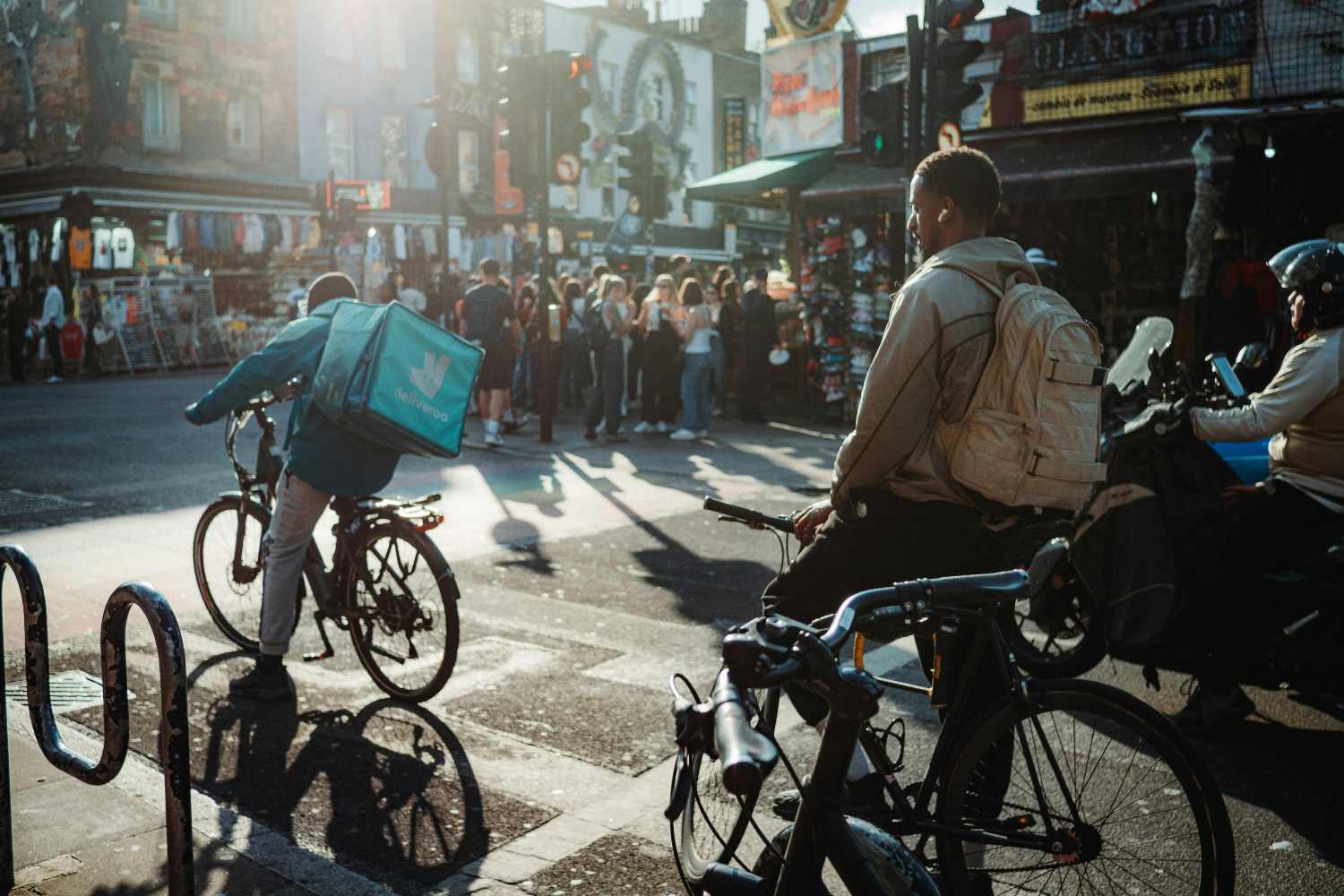
After Glovo, Deliveroo also ends up under judicial control as part of the Milanese investigation into alleged digital gangmastering. The measure, carried out on February 25th at the disposal of the prosecutor Paolo Storari, aims to verify and correct the organization of the riders’ work.
“Deliveroo is examining the documentation received from the authorities and the company is cooperating with the investigations” declared the company. But the investigation, coordinated by the Milan Prosecutor’s Office, outlines a scenario that goes far beyond a simple administrative dispute.
The accusations: wages below the threshold and only formal autonomy
According to investigators, between 3,000 and 20,000 riders active between Milan and the rest of Italy worked in conditions of systematic exploitation. The audits speak of compensation up to 90% lower than the minimums established by the collective bargaining agreement.
From the testimonies of 50 workers it emerges that 73% would earn less than the poverty threshold indicated by Istat, i.e. below 1,245 euros gross per month, with an average annual difference of more than 7,200 euros compared to the levels considered adequate. According to the accusation, the wages were not proportionate to the quantity and quality of the work, in violation of article 36 of the Constitution.
The central point is the nature of the relationship: the riders are formally autonomous with a VAT number, but the investigation hypothesizes a condition of hetero-organization, in which times, operating methods and compensation are established by the platform. An autonomy that is only apparent.
The algorithm and continuous control
At the center of the protests is algorithmic performance management. The app would not only collect orders, but would determine assignments, timing, evaluation parameters and remuneration. According to the provision, the system would provide for constant monitoring and possible penalties or exclusions. A mechanism which, according to investigators, affects the effective freedom of the worker.
The investigations would also have identified phenomena of account transfer: registered profiles, sometimes with false documents, transferred to third parties in exchange for percentages of earnings. A form of illicit intermediation that reinforces the hypothesis of gangmastering.
A trend that starts from afar
The Deliveroo case is part of an investigative line already started in recent years. In addition to Glovo, Uber Eats was also placed under commissionership in 2020 for similar hypotheses of exploitation through cooperatives and intermediaries. Now the investigations also extend to commercial partners, including McDonald’s Italia, Burger King Restaurants Italia and Esselunga, to verify organizational models and responsibilities in the supply chain.
The objectives of the measure
The emergency provision, contained in approximately 60 pages and now being examined by the investigating judge, aims to regularize the riders, adapt the organizational models and prevent new situations of exploitation. The judicial administrator will have the task of supervising contractual relationships, verifying any responsibilities in the delivery chain and guaranteeing conditions compliant with labor legislation.
An exploitation before everyone’s eyes
However, there is one point that cannot be circumvented: the conditions currently contested by the Prosecutor’s Office do not come as a bolt from the blue. For years, riders, grassroots unions and associations have been denouncing negligible wages, unpredictable shifts and deliveries made in all weather conditions: in pouring rain, in the winter frost or during summer heat waves.
The promise of flexibility has often translated into permanent availability. Anyone who refuses too many rides risks being penalized by the algorithm; those who accept everything accumulate kilometres, effort and risks, without full coverage in the event of an accident. The result is a fragile balance: workers who are formally autonomous but, in fact, dependent on a system that decides times and priorities. It’s not just a judicial issue. It is a social node that concerns the economic model of the platforms. If delivery costs a few euros and arrives faster and faster, someone pays the difference. And that someone, too often, is the person who pedals.
Food delivery, as it has been structured so far, is incompatible with compliance with labor regulations. The judicial review arranged on multiple platforms demonstrates that marginal corrections or downward agreements are not enough. – comments USB (Basic Union of Unions) – It is the model that has failed, because it is based on a systematic reduction of rights. For this reason we reiterate that the only solution is the direct hiring of all riders with the Logistics, Goods Transport and Shipping CCNL. Riders are an integral part of the logistics chain and must have full subordination, a decent salary, certain hours, contributions, holidays, sickness and safety at work. Vehicle, maintenance and insurance must be borne by the companies.
You might also be interested in:
