
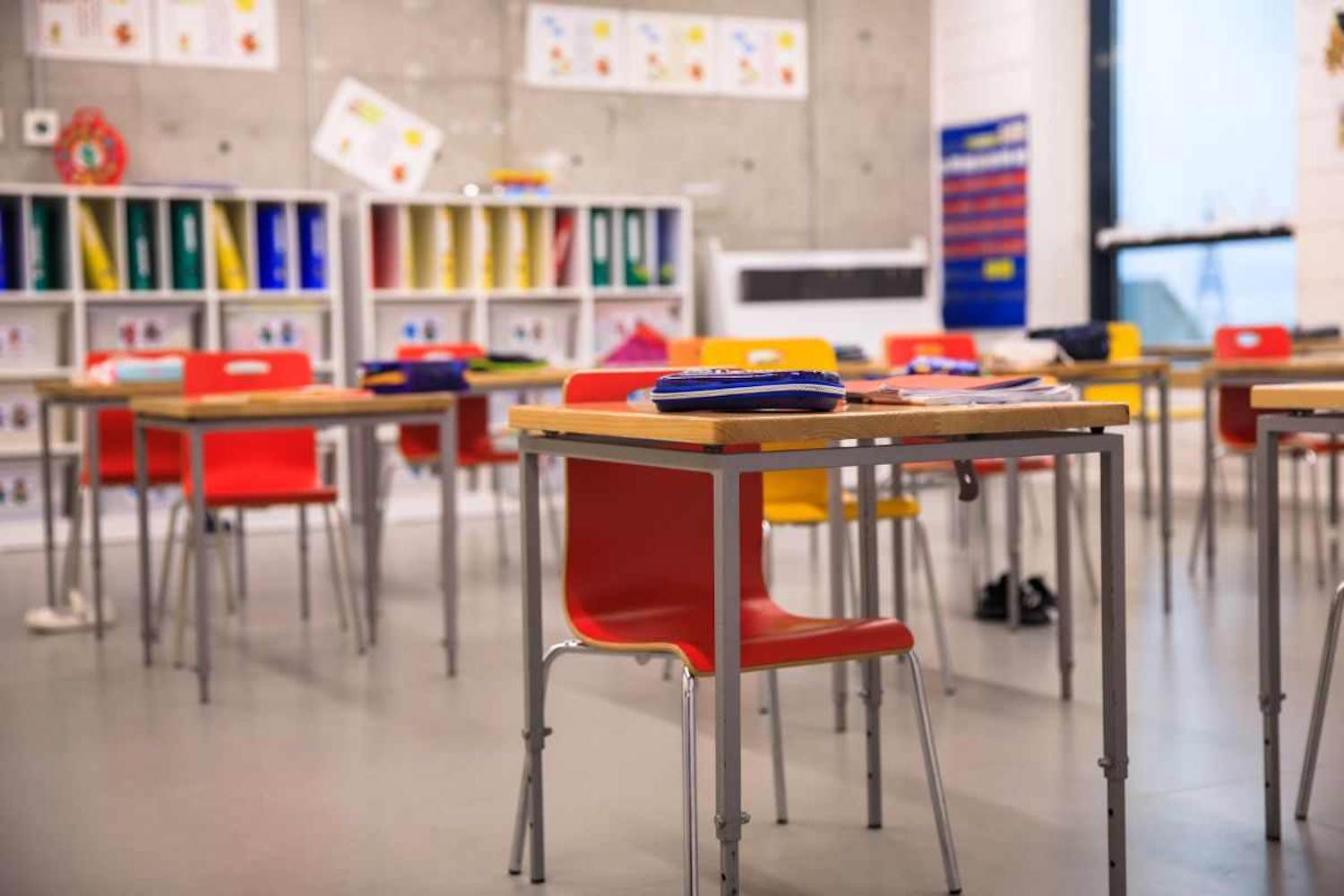
With a new official note, Minister Giuseppe Valditara invites Italian schools to put an often underestimated theme back at the center: the care of school environments as an integral part of education. It’s not just a question of cleanliness. It is a question of civic education, of respect for common goods, of a sense of belonging.
The idea is clear: school is not a neutral place to be walked through distractedly, but a shared space that requires daily attention. It is not a question of turning students into cleaners, but of making them active protagonists in the management of order and decorum.
From theory to practice: what really changes
The note from the Ministry of Education and Merit urges managers and teachers to introduce clear rules and dedicated information moments. The instructions speak of small concrete gestures: tidying up desks and chairs at the end of lessons, tidying up laboratories after use, leaving the gym in decent conditions for the next class.
It is not a spectacular revolution, but a cultural choice. Inserting these practices into the Institute Regulations and into the Educational Co-responsibility Pact means formalizing a principle: school belongs to those who live it. And those who live it answer for it.
Because we needed a shock
The numbers tell a less reassuring reality than one imagines. Engraved desks, damaged chairs, chewing gum under the desks, offensive graffiti in the bathrooms. Not isolated episodes, but widespread habits. In many schools the surfaces remain marked for years, as if time had stopped intervening. The problem is not just aesthetic. It is a sign of disaffection, of emotional distance from common spaces. When an environment is perceived as “no one’s”, it becomes easy to treat it without care.
Shared responsibility, not punishment
The ministerial reminder is part of the Statute of students, which already provides for the duty to correctly use structures and teaching aids. The objective is not to introduce symbolic sanctions, but to reinforce an idea: decorum affects the quality of school life.
In other countries, such as Japan, students directly participate in the daily cleaning of the rooms. In that education system, daily cleaning is considered a practical civics lesson. Children learn that the common space is a “second home” and that keeping it tidy means respecting themselves and others.
In Italy we don’t talk about shifts with brooms and buckets, but the underlying principle is similar: learning that respect is exercised with simple and repeated gestures. The challenge is cultural even before organizational. If the school wants to educate aware citizens, it must also start from the corridors, the classrooms and the desks. Because civic sense is not taught only in books: it is built, every day, in the space we share.
You might also be interested in:
