
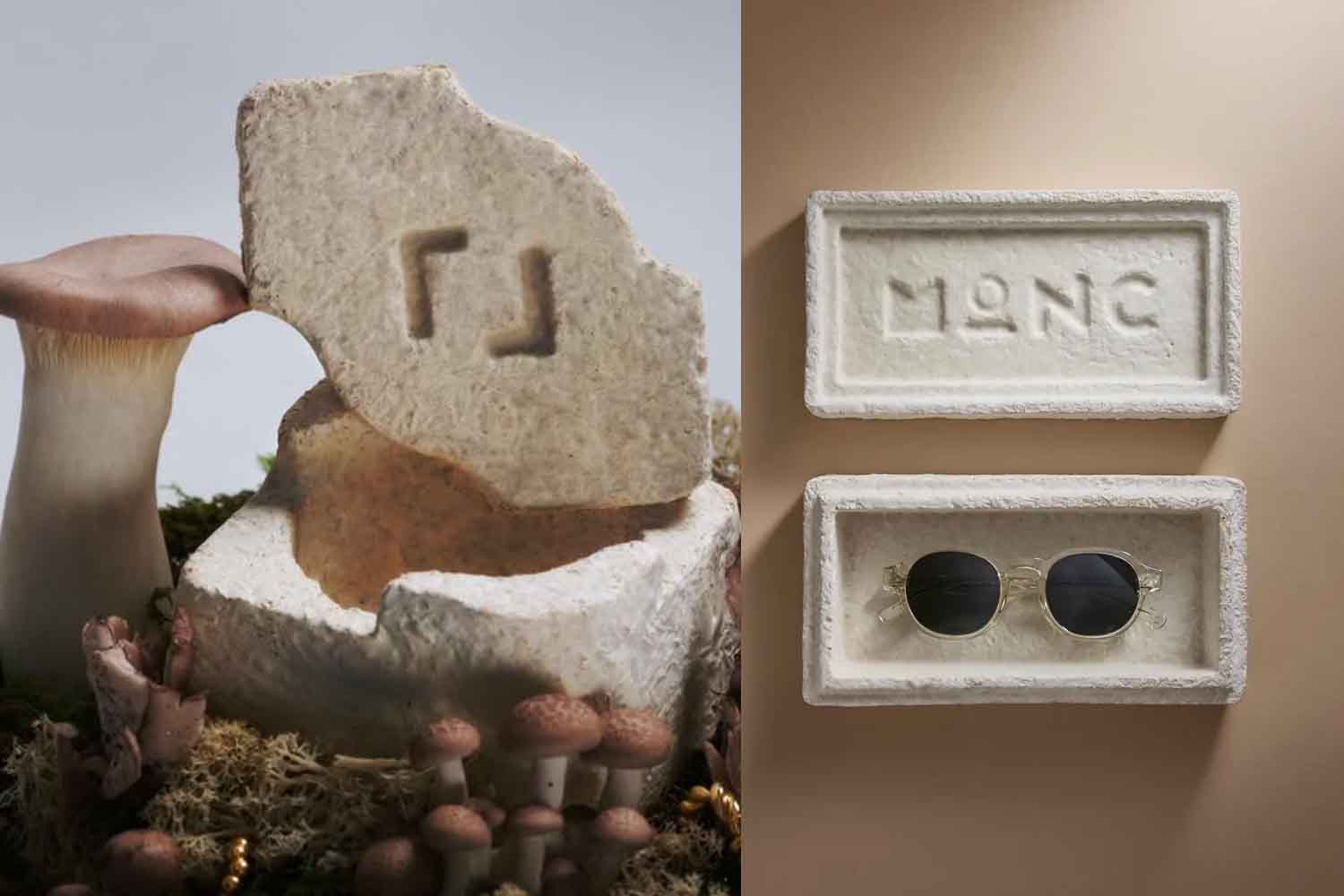
There are materials that perfectly describe the era in which we live. Polystyrene, also known as polystyreneis one of them: light, economical, omnipresent. We find it in the packaging of household appliances, in online shipments, even in insulating panels. It has become invisible precisely because it is everywhere. Yet it is also one of the most evident symbols of our disposable model, one of the main causes of the dispersion of microplastics into the environment and one of the most difficult materials to recycle on a large scale.
The good news is that a concrete solution already exists and comes from a world that we know well but rarely associate with the industry: that of mushrooms. Yes, because today the myceliumthe filamentary network that constitutes the vital part of mushrooms, is used to create a material capable of replacing polystyrene in just seven days of growth.
What is mycelium-based material and why it can change packaging
The principle is simple and revolutionary at the same time. They are used agricultural wastesuch as vegetable fibers or hemp, which are sterilized and then “colonized” by the mycelium. During growth, the mycelium develops a network that naturally binds the fibers thanks to the presence of chitina substance that works as a biological glue.
No synthetic glues are needed, no chemical additives are needed. The material grows directly inside a mold and, after approximately seven days, is dried to interrupt the biological process and stabilize it.
The result is surprising: a light but resistant material, with excellent performance capabilities shock absorptionnaturally insulating from a thermal and also insulating point of view sound absorbing. It can protect glass bottles, electronic components, small and large appliances, even being used as an insulating panel.
The substantial difference compared to polystyrene emerges at the end of the life cycle. This material can be disposed of in the garbage or composted in the garden, where it decomposes in weeks or a few months, returning to being part of the natural cycle without leaving persistent microplastics for centuries.
The companies that are leading the transition
View this post on Instagram
It operates in the United Kingdom Magical Mushroom Companywhich produces compostable mycelium-based packaging designed to directly replace expanded polystyrene, with applications already active in the industrial sector. In the United States, Ecovative Design was among the first companies to develop fungal biomaterials on a commercial scale, also collaborating with giants such as IKEA to reduce the use of plastic packaging.
Italy also has its innovative reality. Smush Materials was born as a spin-off of the Polytechnic University of Milan and works on the transformation of local agricultural waste into compostable packaging intended for sectors such as automotive, electronics, cosmetics and design. The process is entirely circular: we start from organic waste and obtain a material which, at the end of its life, can return to the earth. In the Czech Republic and New Zealand, in Auckland, other startups are developing similar solutions, with materials that “grow in the dark” and promise performance comparable to synthetic materials.
The sector is no longer an experimental niche: it is attracting significant capital and millionaire investments to scale production. Expanded polystyrene is very light and for this reason extremely difficult to recover and recycle efficiently. It fragments easily and becomes microplastic, enters waterways, seas and agricultural soils. It can remain in the environment for hundreds of years.
View this post on Instagram
Mycelium-based packaging proposes a radical paradigm shift: from the logic of petrochemical extraction to that of regenerative cultivationfrom persistence to controlled ephemerality, from refusal to restitution to the earth. The real challenge today concerns the industrial scalability. To truly replace polystyrene, large-scale production is needed, investments are needed, companies willing to change their approach and aware consumers ready to support this transition.
