
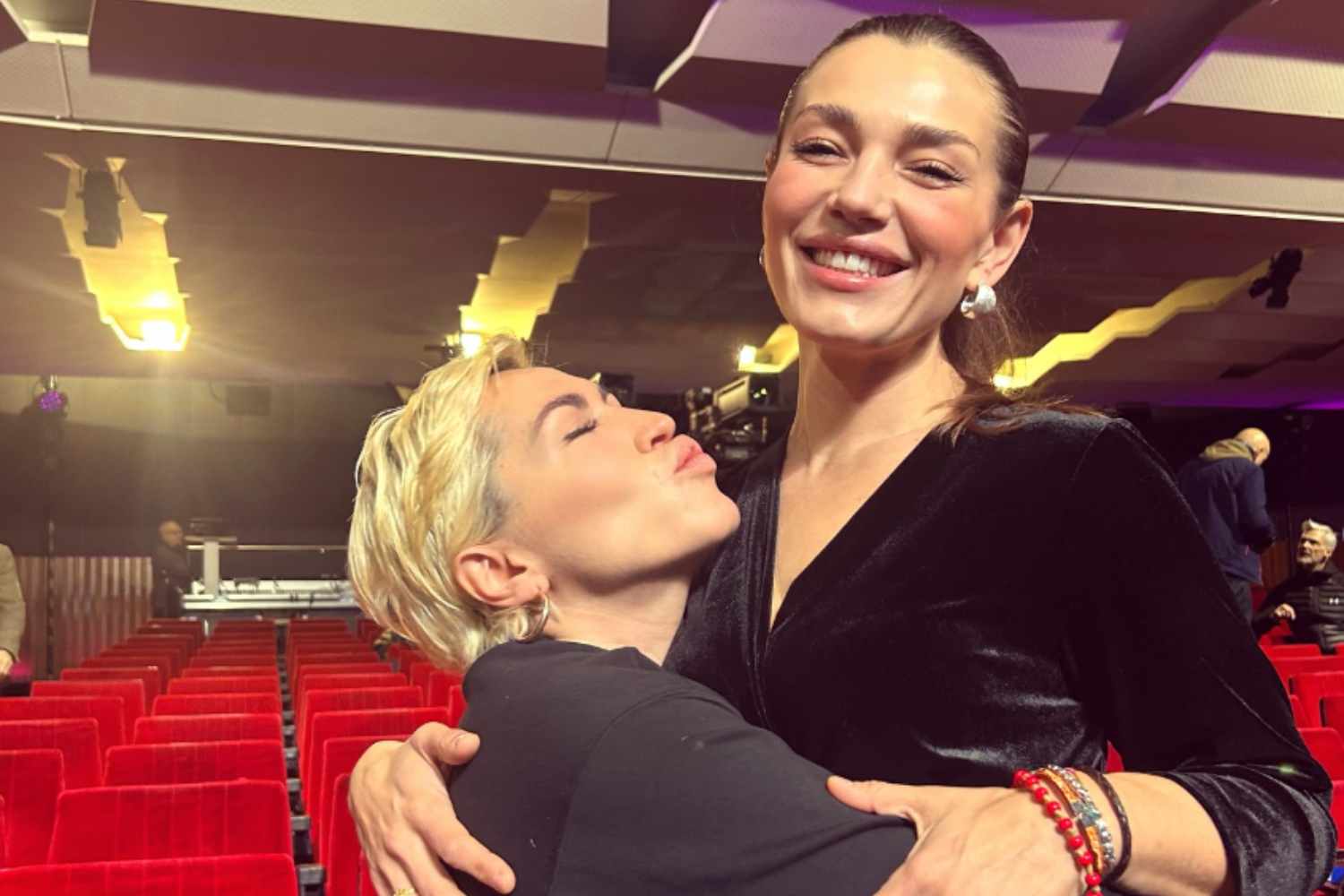
Serena Brancale returned to Ariston with the song Here with mededicated to his mother Maria, who passed away in 2020. An intense piece, divinely sung, which speaks of loss, love and memory and which brings a few tears to those who have lost this type of figure in their life.
I would scale the earth and the sky, even the entire universe, to still have you here with me.
This sentence is enough to understand how much the singer feels. A piece that is a tribute to the woman who passed on the passion for music to the two sisters, and seeing Serena on stage with her sister Nicole conducting the orchestra was their mother’s greatest dream.
A career of excellence
And here we come to today’s focus, not Serena, but Nicole. The older sister is one of the few women to occupy the role of conductor. Born in Bari in 1982, Nicole followed a rigorous musical path, becoming a piano teacher and orchestra director, demonstrating that talent has no gender. The bond with Serena is profound: they both chose music as their life and work, transforming the loss of their mother into creative energy. Nicole was defined by her sister “a lucky charm”, an indispensable presence to experience the emotion of the stage.
View this post on Instagram
The question of the title: Master or Mistress?
In addition to music and emotion, Sanremo 2026 offers us an interesting linguistic inspiration. In introducing the sisters, Carlo Conti introduced Nicole as “the maestro Nicole Brancale“, male. An issue that had already emerged during the 2025 Festival with Serena competing with Anema and core. Not a forced effort by the conductors, but something desired by the artist herself.
An episode that reopened last year, and does so again this year, an age-old debate on the female declination of professional titles. In Italian, forms such as “maestra”, “directress” or “architetta” have existed for centuries and can already be seen in the nineteenth century, but custom tends to favor the masculine when the role is traditionally male or prestigious, as happens with “conductor of an orchestra”.
View this post on Instagram
Nicole chose the masculine title for personal reasons: for her “Maestro” is a name that does not want to diminish the feminine value, but still gets people talking. The Accademia della Crusca confirms that both forms, masculine and feminine, are correct, and that the choice of gender often depends on individual preferences, consolidated uses and cultural contexts.
A festival that tells emotions
But beyond the names, the return of the Brancale sisters to Sanremo is a celebration of family and memory. Serena brings the pain of loss to the stage, transforming it into art, while Nicole leads the orchestra with confidence and mastery. Music becomes the common thread that unites past and present, the memory of Maria and the dream of seeing them together on stage, realizing that emotion that her mother would have desired.
View this post on Instagram
You might also be interested in:
