
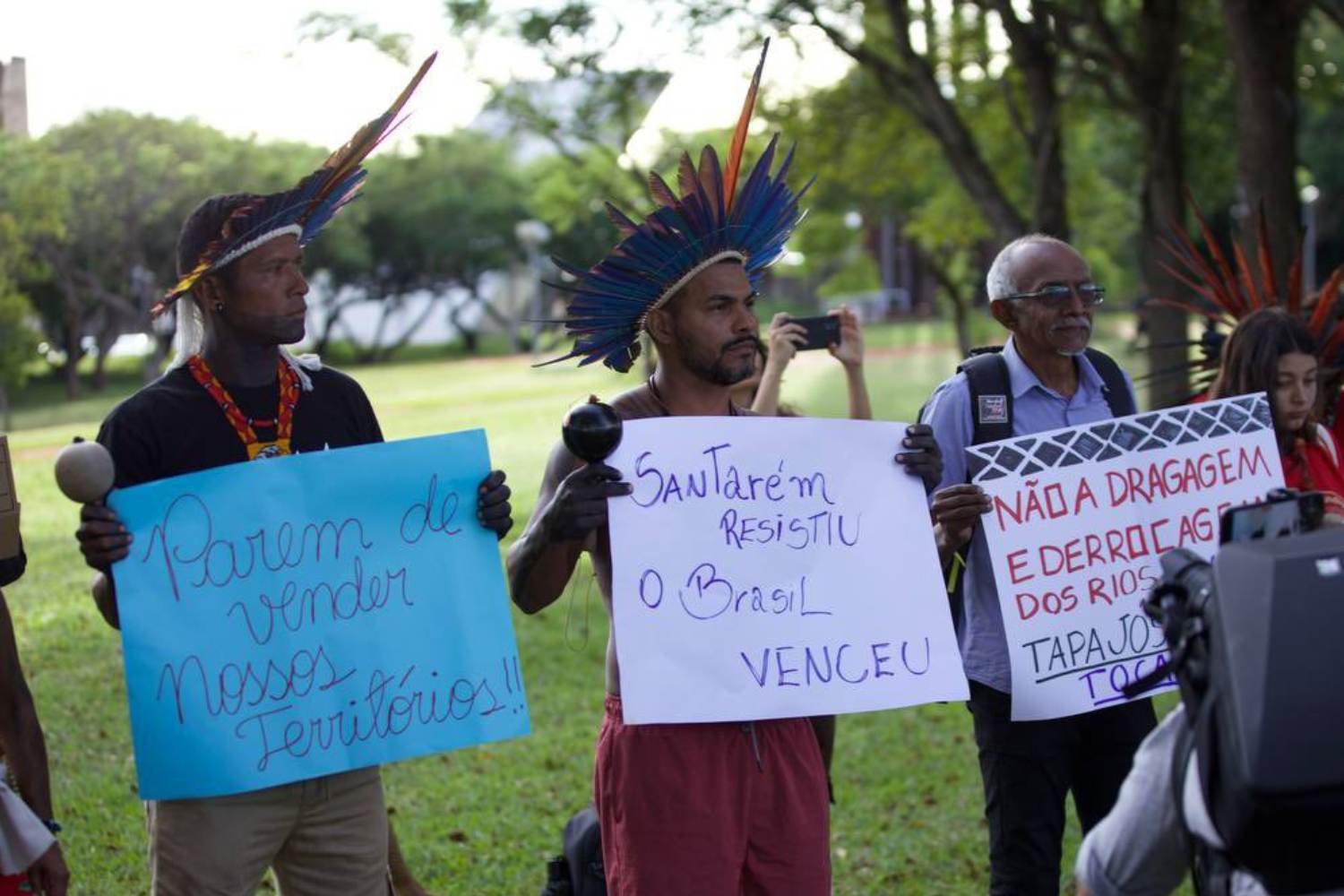
For 33 days, indigenous communities occupied a strategic port for Cargill, a US multinational. Their goal? Prevent the privatization of Amazon rivers. The result: the decree was repealed and the battle won.
Thus, in Brazil, the indigenous peoples have just achieved a great victory. After a month of occupation of the port in Santarém, the Government decided to repeal the decree that authorized the privatization and dredging of the Tapajós, Madeira and Tocantins rivers in the Amazon.
Obviously, soy agribusiness, export profits, and control of vital common resources were behind this decree.
The decree rejected
The provision provided for the concession of the waterway of the Madeira river (from Porto Velho to Itacoatiara), of the Tocantins (from Belém to Peixe) and of the Tapajós (from Itaituba to Santarém), for thousands of kilometers in total in the heart of the Amazon forest.
The decision comes after days of mobilization of the indigenous peoples who live along these rivers. Representatives of around 14 ethnic groups occupied the Cargill plants in Santarém, denouncing the risk that dredging and concessions would pave the way for what they defined as the “privatization of the Tapajós riverFor them it’s not just about infrastructure: those waterways are ancestral territories, sources of life, culture and sustenance.
The announcement came after a meeting at the Planalto Palace between ministers Guilherme Boulos, Sônia Guajajara and indigenous leaderships. During the discussion, the communities expressed their concerns about the environmental and social impact of the works, which would also affect quilombolas and coastal populations.
The Ministry of Ports and Airports explained that the choice was shared with other ministries and that the revocation will be published in the next edition of the Official Journal. At the beginning of the month the government had only proposed a suspension, but the protests had not stopped.
According to the minister Sônia Guajajarathe decision also takes into account the commitment made during COP30: every project linked to the Tapajós waterway must be preceded by free, prior and informed consultation, as required by Convention no. 169 of the International Labor Organization.
For indigenous communities it is an important signal: the defense of the Amazon rivers is not just an environmental battle, but a question of rights, self-determination and future.
