
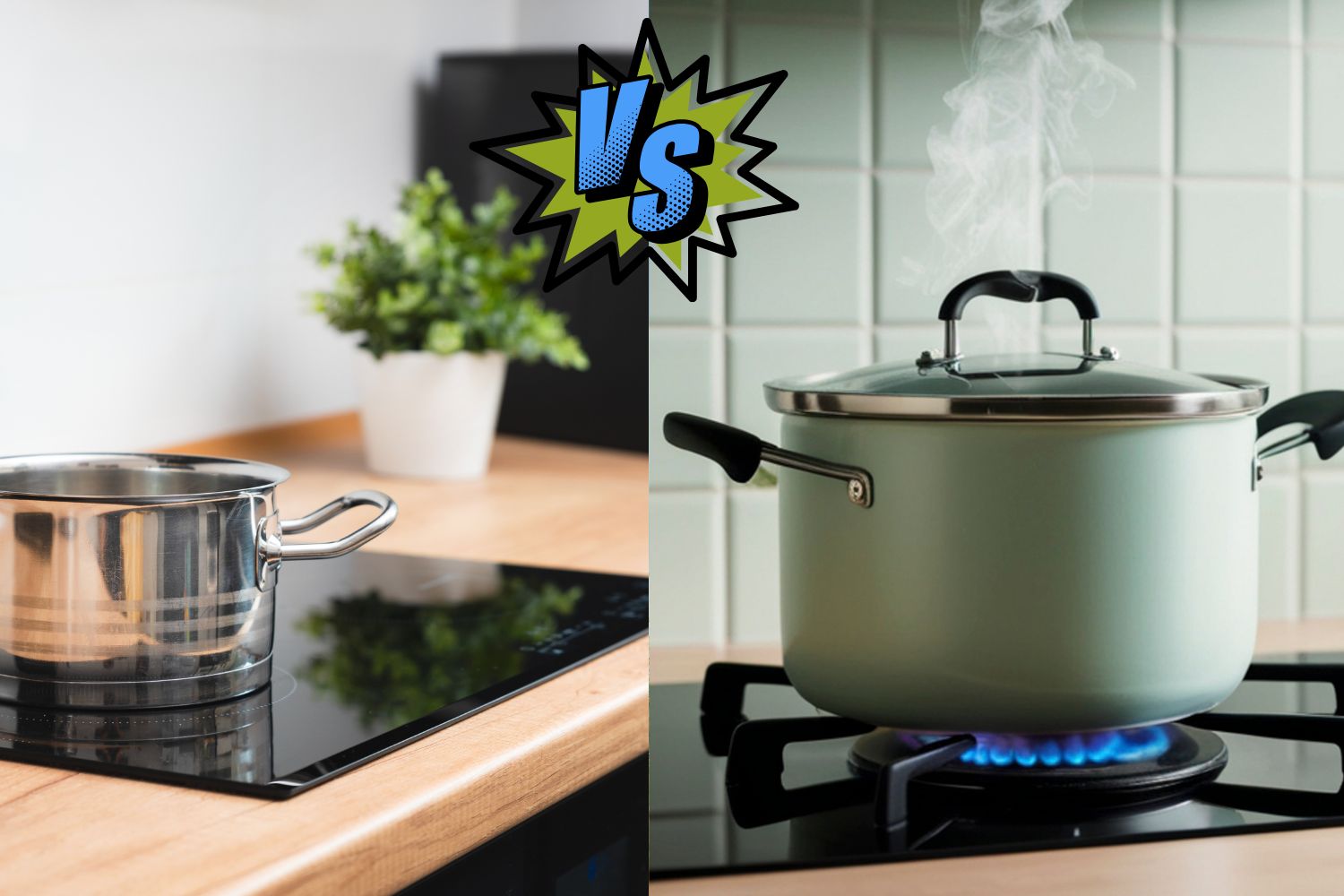
Choosing between a gas hob and an induction hob means entering a territory that goes far beyond domestic habits or personal preference, because at stake there are two technologies based on opposing principles, with concrete impacts on energy consumption, bill costs, air quality in closed environments and even daily safety. The comparison must therefore be placed in a much broader perspective, between the idea of energy transition, the increase in prices and the growing attention towards the environmental impact of domestic choices.
How the two technologies work
The gas hob is a familiar technology, in which we have the classic steel, aluminum or cast iron burners that generate a live flame regulated by the knobs, which control the flow of fuel. A candle produces the initial spark, while a safety thermocouple cuts off the gas supply if the flame goes out.
The induction hob works in a radically different way. Under the glass-ceramic surface there is a copper coil which, powered by electric current, generates a magnetic field. When you place a pan with a ferromagnetic bottom, the heat develops directly inside the container – not on the surface, nor in the surrounding air – giving rise to the mechanism that is the basis of the superior efficiency.
Consumption compared
Comparing the real costs of the two technologies requires some calculations:
The economic advantage, therefore, is not clear but closely linked to the trend in energy prices, and the two systems are equivalent in many scenarios.
Energy efficiency: here induction wins
The situation changes radically when we consider efficiency, i.e. how much of the energy consumed actually reaches the food. According to the technical evaluation conducted by the Electric Power Research Institute (EPRI) for the California Energy Commission, induction hobs transfer up to 90% of the energy to the cooking container, while gas hobs stop at around 30-40%: the remaining heat is dispersed in the air, heats the environment and is lost. Traditional electricity plans fall somewhere in the middle, around 74-80%.
According to the same EPRI study, when heating water from 21°C to 93°C, a gas burner disperses approximately 60% of the heat produced into the surrounding air. With induction, dispersion drops to 23%. The practical result: cooking times are shortened and wasted energy is reduced. The ENERGY STAR program certifies an average efficiency of 85% for induction hobs, compared to 32% for gas burners.
An often underestimated aspect: the quality of the kitchen air
In addition to energy efficiency, in recent years scientific research has brought to light an often ignored problem, namely the impact of gas stoves on domestic air quality. A Stanford University study published in 2024 in Environmental Science & Technology measured nitrogen dioxide (NO2) levels in more than one hundred homes, finding that routine use of a gas stove increases average annual exposure to this pollutant by up to 4 parts per billion — three-quarters of the WHO safe threshold for outdoor air. Researchers estimate that gas stoves are responsible for approximately 200,000 current cases of childhood asthma in the United States. The same research team has documented the presence of benzene — a carcinogen — in the fumes produced by burning gas, with concentrations that in some cases exceed those of secondhand smoke.
A subsequent study by Columbia University conducted on some families in public housing in the Bronx confirmed that replacing the gas hob with an induction one significantly reduces NO2 levels in domestic environments. Induction hobs, as they do not produce any combustion, do not emit NO2 or benzene.
Safety: a comparison that goes beyond appearances
In terms of home safety, the induction hob has structural advantages compared to gas, but is not without specific considerations for some categories of users.
The most immediate risk associated with gas stoves is that of fire. According to data from the National Fire Protection Association (NFPA), cooking is the leading source of home fires in the United States, responsible for 44% of all reported residential fires. Between 2017 and 2021, there were an average of 158,400 cooking fires per year, with around 470 deaths and 4,150 injuries. The open flame of gas is one of the most direct risk factors: it can ignite dish towels, clothes or flammable materials placed nearby, and an undetected gas leak can lead to much more serious situations.
The induction hob eliminates these risks at the root. It does not produce flames, does not generate heat on the surface when a pan is not placed on it, and cools quickly once the pan is removed. As confirmed by the US Department of Energy, the surface of the hob never reaches the dangerous temperatures of traditional glass-ceramic hobs, reducing the risk of accidental burns, particularly for children. Any food spills also burn less easily, making cleanup easier and safer.
However, there is a specific aspect that concerns the induction hob, inherent to the electromagnetic field generated by the coil. For the general population, this does not represent a problem – the emission levels are well within the limits set by the WHO and European regulations, but the situation is different for those with pacemakers and/or subcutaneous defibrillators. A study published in the journal Europace analyzed eleven European-made induction hobs, concluding that the risk exists but is limited to a specific condition: unipolar pacemaker implanted on the left, pot positioned eccentrically with respect to the coil, and user in close contact with the hob. In all other cases, the induced voltage values remain below the critical threshold. However, the British Heart Foundation and Harvard Health recommend maintaining a minimum distance of 60 centimeters between the table top and the implanted device, and consulting your cardiologist before purchasing.
What to choose, basically
The induction hob has clear advantages: greater energy efficiency, faster cooking, easier to clean surface, absence of risks related to gas leaks and a positive impact on the air quality in the home. The initial investment is higher, however, and requires cookware with a ferromagnetic bottom — an additional cost to consider. From a strictly environmental and health point of view, the available data clearly indicates the direction: induction produces fewer emissions, consumes less energy for the same result, is safer and does not deteriorate the quality of the air inside homes.
The gas hob offers flexibility in the choice of pans, a generally lower purchase cost and an immediate thermal response appreciated by those who cook professionally. On the economic front it remains competitive, even if convenience is linked to the trend in the price of methane.
