
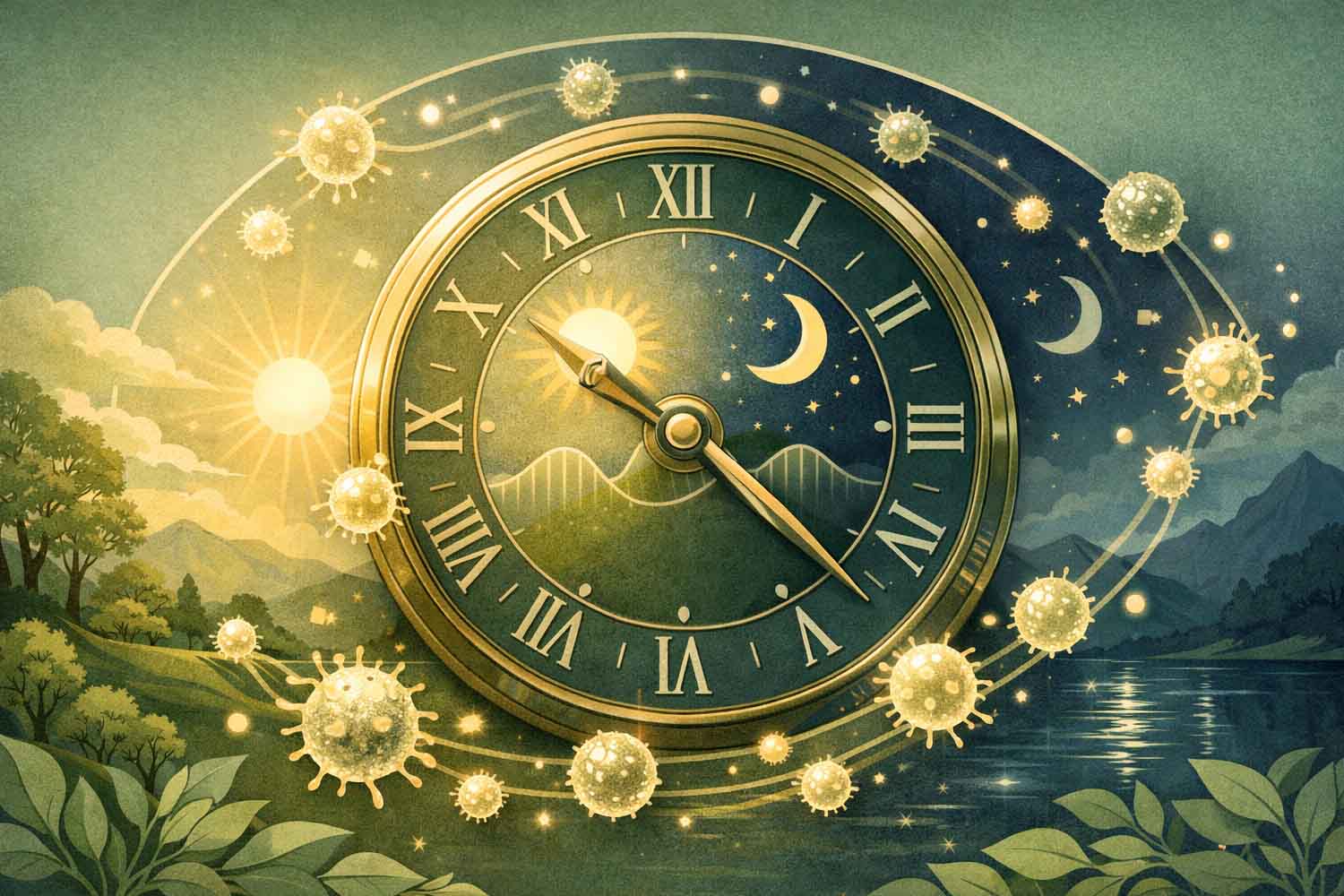
The immune system is not always ready in the same way: it does not work 24 hours a day with the same intensity, as we often imagine. It follows a precise rhythm, marked by our biological clock, which influences the ability to react to viruses, inflammation and even more complex diseases.
And the most interesting thing is that we can do a lot, every day, to help it function better. We just need to learn to listen to the time of our body. Immune cells do not remain constantly “on alert”, but move in precise shifts. In the morning they increase in the blood and prepare to defend us. At night they slow down, re-enter the bone marrow and favor the repair processes.
It is not a recent intuition: already more than fifty years ago, scientists had observed that white blood cells fluctuate throughout the day even in healthy people. And that animals react differently to toxins depending on the time of exposure. The immune system, therefore, is a dynamic system, regulated by the circadian rhythm, the same one that governs sleep, body temperature, metabolism and hormone production.
Two components of the nervous system work in balance: at night the parasympathetic system prevails, which slows down and promotes recovery; during the day the sympathetic dominates, which activates and stimulates the circulation of immune cells. This continuous “dialogue” creates a daily dance between defense and repair. And there’s more. Even when immune cells are isolated in the laboratory, they continue to follow a cycle of about 24 hours. It means the clock is written inside them.
This explains, for example, why rheumatoid arthritis sufferers feel greater stiffness in the morning: inflammatory signals peak in the early hours of the day. Or because some immune responses against tumor cells are more effective between the morning and early afternoon. Even vaccines seem to respond to this logic: in the elderly, administration in the morning can induce more robust antibody production than in the afternoon. In short, time matters. And a lot.
How to support the immune system while respecting the circadian rhythm
If our immune system has an internal clock, ignoring it is working against nature. Respecting it, however, can become a concrete form of prevention.
The first ally is sleep. We are not just talking about quantity, but about regularity. Going to sleep and waking up at more or less the same time every day helps keep biological rhythms in sync. Deep sleep in the early hours of the night reduces stress hormones and supports immune signals that defend us from infections. When we sleep little or poorly, inflammatory markers increase. The immune system loses efficiency and struggles to maintain internal balance.
Meals also play a key role. Eating at predictable times helps the body better organize metabolism and immune activity. Constantly skipping schedules, having dinner very late or eating in a disorderly way creates a mismatch that also affects the defenses.
And then there is the movement. Physical activity during daylight hours strengthens circadian signals. You don’t need extreme performance: a walk in the sun, a bit of constant exercise, a regular routine are enough to send the right message to the body. Experts talk about “circadian hygiene”: a sort of daily education to respect one’s rhythms. Nothing complicated. Just consistency.
The medicine of the future will follow the biological clock
The concept of chronotherapy (the administration of drugs at specific times of the day) is already a reality in various fields. Statins, for example, are often taken in the evening because the liver produces more cholesterol at night. Some oncology treatments are scheduled at specific times to improve their effectiveness and tolerability. In the future, we may be able to monitor markers related to the circadian rhythm to predict disease risk or assess the state of the immune system in a more personalized way.
Of course, studies are still needed to better understand the differences related to age, sex and lifestyle. But one thing is clear: aligning our daily habits with the body’s natural rhythm is a simple, accessible and powerful strategy. Respecting the internal clock means giving the immune system the best conditions to protect us. And perhaps, for once, the first answer is surprisingly elementary: sleep well, eat regularly, move in daylight.
You might also be interested in:
