
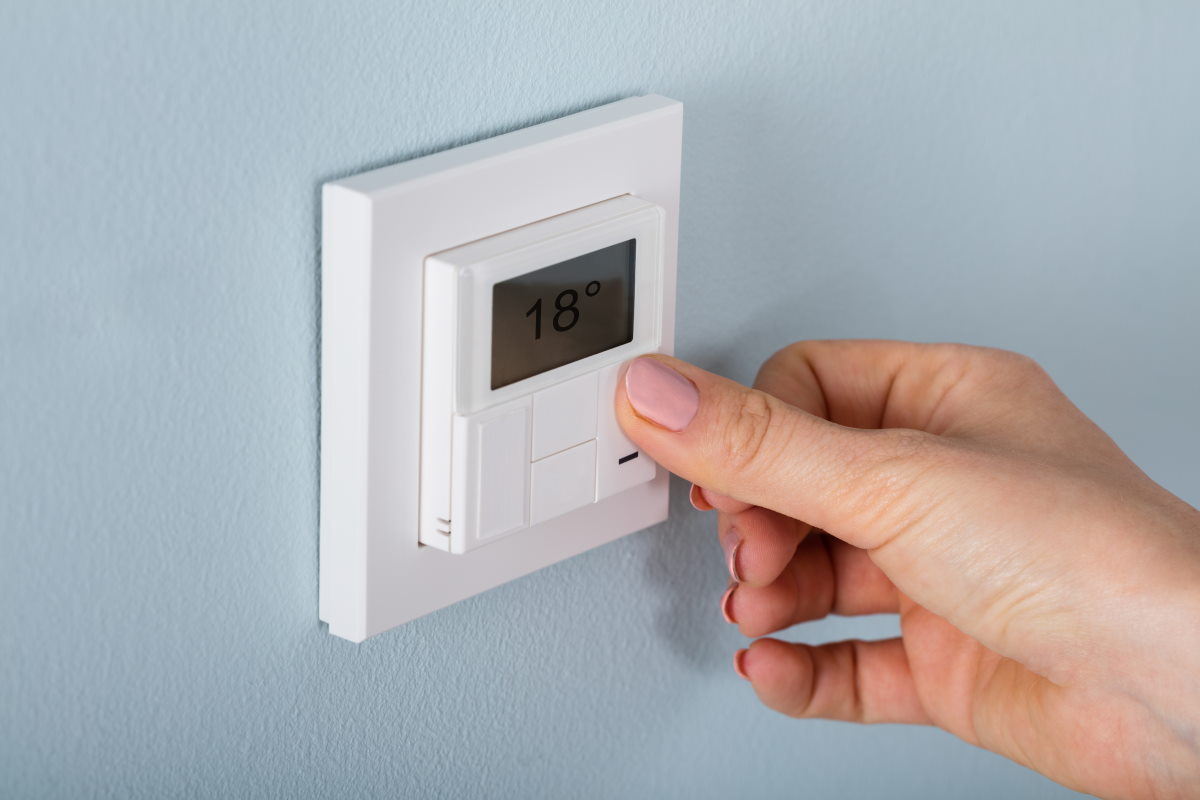
At home we never live in the same way: we cook, we work on the computer, we rest, we argue with the radiator which decides to turn on when it wants. It is not surprising, therefore, that the famous “perfect temperature” is more of a myth than a mathematical formula. Yet there is a truth that many home comfort technicians, climatologists and energy experts are now repeating: 19°C is not a fallback, but a new standard of balance.
To be honest, it’s not such a crazy idea. Our body does not need to live in an eternal tropical microclimate. In the most lived-in living rooms – those where you have lunch, work remotely, argue with the mocha – 19-20 °C are enough to feel good. In bedrooms, where the metabolism slows down and the spaces heat up on their own, 16-18°C is even healthier. Experts repeat it bluntly: a cooler environment promotes the quality of sleep and reduces the proliferation of mold and mites. Which, translated, means breathing better.
The point is that the house is not a museum: we live it. And when we experience it, we discover that that old 22°C we were used to is often more a cultural habit than a real physiological necessity.
Because lowering the thermostat to 19°C can make us feel better
The first, obvious consequence is savings: one degree less can significantly reduce annual heating consumption. You don’t need to be an engineer to understand this, just remember last winter’s bill. But saving isn’t the only reason. Air that is too hot, especially when humidity is out of control, can worsen allergies and irritations, make environments feel heavy and make us feel tired sooner than expected.
At 19°C, however, the body regulates itself better, the environment breathes and – most importantly – the house also lives in healthier conditions. Fewer temperature changes, less energy waste, fewer continuous cycle domestic “ovens”.
Then there is a topic that in recent years has stopped being a trend: environmental responsibility. Reducing consumption means reducing emissions. And reducing emissions means looking with less embarrassment at those increasingly warm winter days, those unmanageable summers, that climate that seems like a hysterical cat. No need for heroism: just drop the thermostat a few notches.
The new common sense
In Italy, the legislation indicates 20 °C as a reference, with a tolerance between 18 and 22 °C. So yes: those who keep their homes at 25°C haven’t found the “ideal temperature”, they’ve just found a way to make their wallet and the planet suffer. Many experts are converging on a simple and decidedly more modern idea: comfort does not lie in the quantity of heat, but in the quality of the environment we create.
And a balanced environment can easily stop at around 19°C, provided you: have good insulation, regulate humidity, differentiate room temperatures (a cooler bedroom, a warmer bathroom only when needed) and learn to listen to what the body really asks for, not what the 90s taught us.
The feeling of cold often comes more from cultural inertia than from physical reality. And when we overcome that inertia, we discover that living at 19°C is surprisingly natural.
You might also be interested in:
