
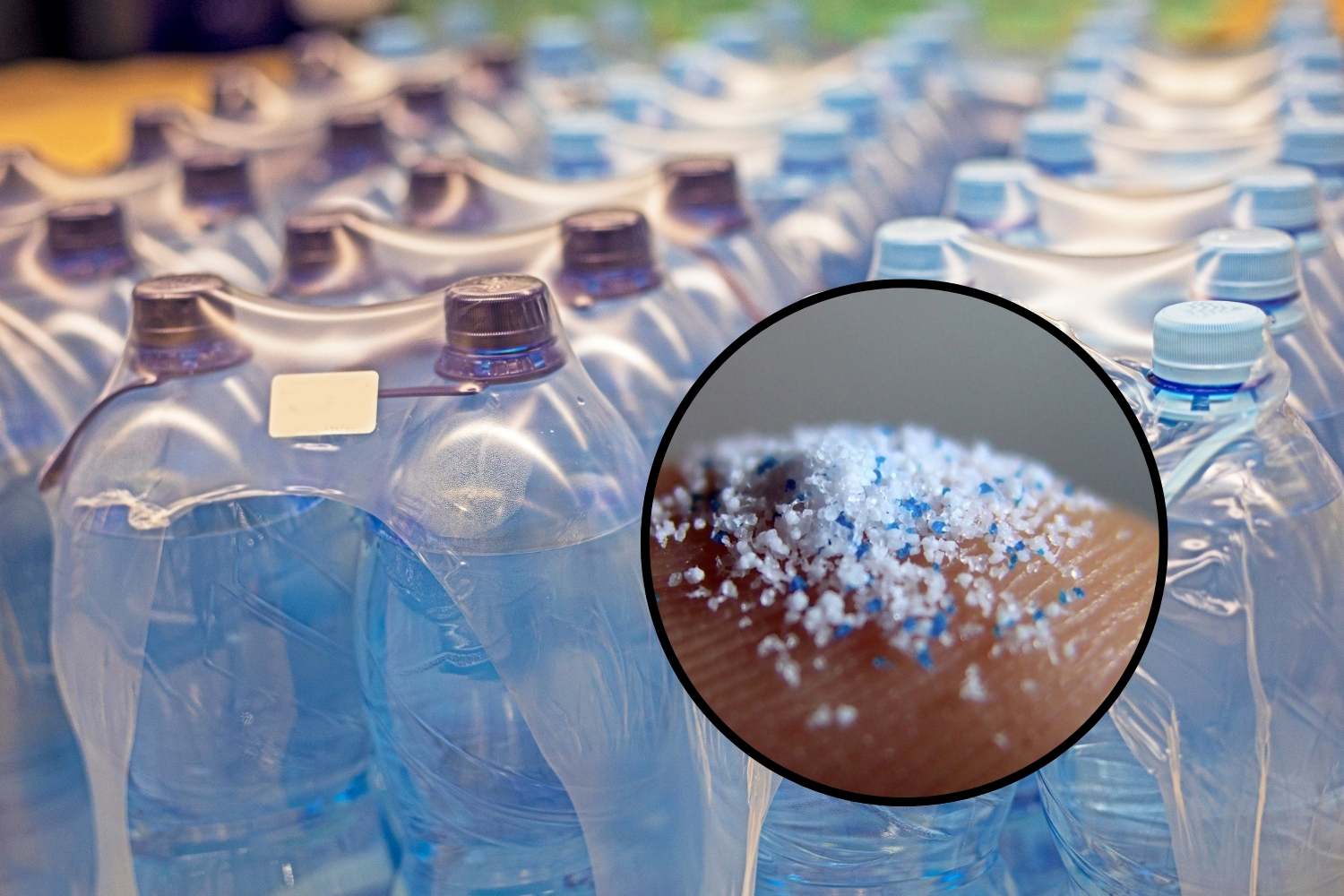
How many times have you chosen bottled water thinking it was more “pure” than tap water? For some time, however, scientific research has been telling us that it is time to review this belief. A study, conducted by a team at Ohio State University, compared the levels of micro- and nanoplastics (MNPs) present in treated drinking water and bottled water, with results that leave little room for interpretation: bottled water contains significantly more of them.
So far, studies on plastics in water have focused mainly on microplastics, particles that are already very small but still detectable with traditional techniques. Nanoplastics – even tinier fragments, sub-micron – have often remained on the margins of research, especially because their extremely small size makes identification with conventional analytical tools complex.
The team led by Megan Jamison Hart and Professor John Lenhart then developed a new analytical approach that combines scanning electron microscopy (SEM) with optical-photothermal infrared spectroscopy (OPTIR), a technique capable of identifying polymers on submicron-sized particles, with a detection limit around 300 nanometers, lower than many comparable methods used previously.
With this approach, the researchers analyzed samples from four drinking water treatment plants in the Lake Erie area and six different brands of bottled water, detecting plastic particles ranging in size from about 300 nanometers to 42.3 micrometers.
The results
The results do not leave room for many interpretations: bottled water had significantly higher concentrations of micro- and nanoplastics than treated drinking water, especially in the smaller fractions. Specifically, the bottles contained approximately three times more nanoplastic particles than the tap water analyzed.
Among the most frequent particles in bottled water are polyamide (PA), polyethylene terephthalate (PET) and polyethylene (PE), substances that are also found in the materials used to produce bottles and caps. These polymers can gradually detach from the packaging itself, especially when the bottle is exposed to light, heat, movements or deformations, or during the bottling, transport and storage phases.
Tap water, however, presents a different profile: in addition to polyamides, there are rubbers and elastomers and other synthetic polymers, which mainly come from already contaminated natural sources, such as glaciers, rivers and lakes.
An interesting fact concerns the presence of elastomeric particles: fragments of rubber were detected in all the samples analyzed, both in the bottle and from the tap. According to the authors, these materials may have been underestimated in the past due to the limitations of the detection techniques.
The practical message that emerges from the research is clear:
For the average person who simply wants to quench their thirst, the best way would be to drink straight from the tap rather than resorting to bottled water,” Professor Hart said.
Of course this applies in contexts where tap water is treated and complies with safety standards. But the idea that the plastic bottle is automatically synonymous with greater purity appears increasingly difficult to support.
The study also highlights that many previous studies may have underestimated plastic contamination in drinking water precisely because they did not systematically include nanoplastics in the analyses. With more sensitive tools, the picture that emerges is more complete and potentially more worrying but also offers useful indications for improving water treatment processes in the future.
Why nanoplastics are more worrying
Over 50% of the particles detected in the study were nanoplastics. This is not a secondary detail, as the smaller a plastic particle is, the greater the probability that it can cross the organism’s biological barriers, as suggested by some scientific literature, even if the long-term effects on humans are not yet fully clarified:
Even if we don’t fully understand the human health risks associated with exposure to nanoplastics, it’s still best to try to mitigate that risk,” Hart said. “The evidence suggests that they cause problems, even if we’re not yet fully aware of what they are.
Sources: Ohio State University / Science of The Total Environment
