
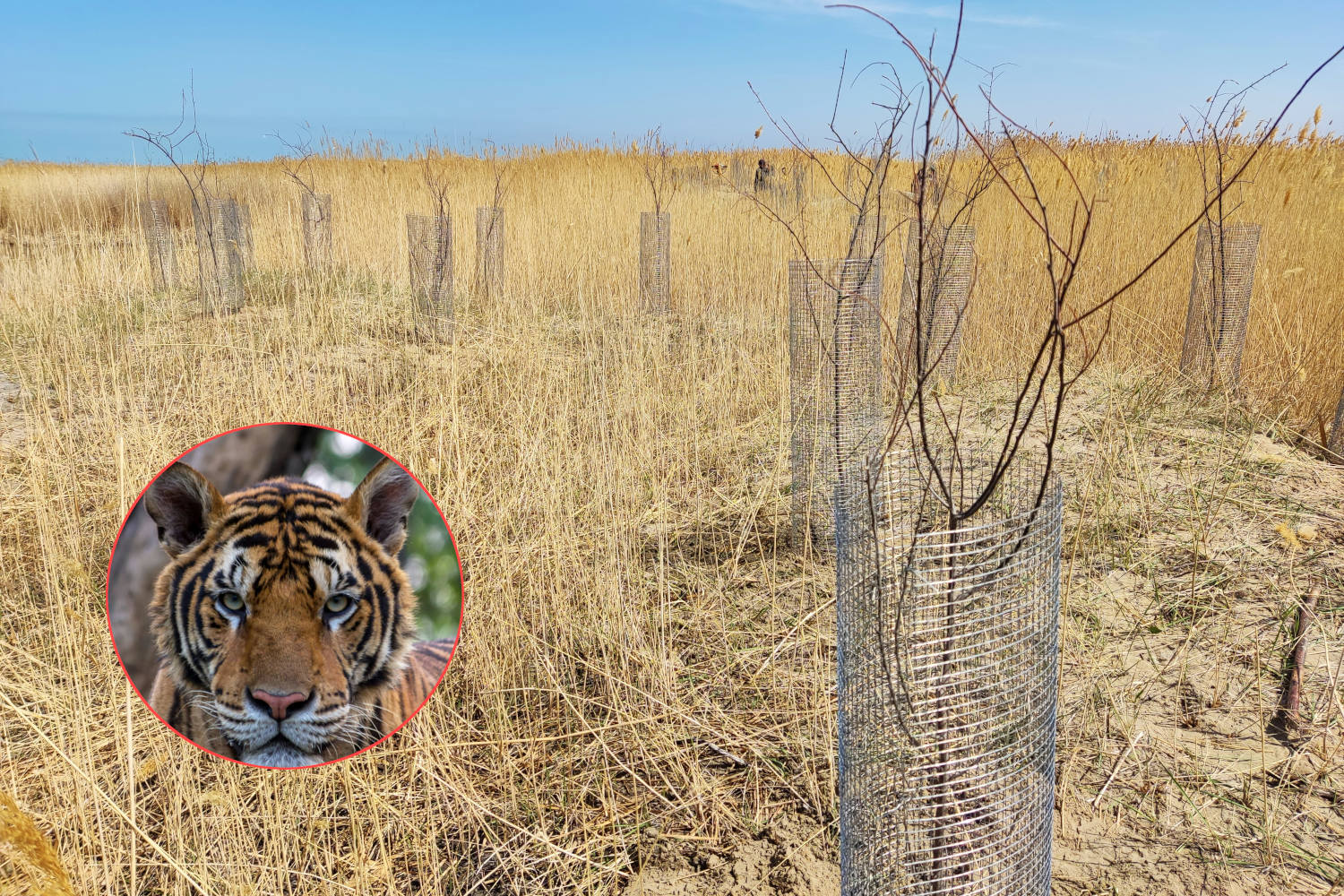
For over 70 years, tigers have no longer walked freely in Kazakhstan. Their extinction, which began in the 1940s, was accelerated by deforestation, indiscriminate hunting and habitat loss. Today, however, the Astana government has launched an ambitious reforestation and reintroduction project, with the aim of bringing these majestic predators back to their historical territories.
The program combines massive plantings, environmental protection and international collaboration: the WWF and the UN support the creation of new ecosystems in the South Balkhash region, where 37,000 new trees and cuttings were planted in 2025, in addition to the 50,000 planted between 2021 and 2024.
Ecosystems coming back to life
The new forests are already showing signs of restoration: wild ungulates such as wild boars and Bukhara deer have been spotted at the renovated sites. “Each seedling planted is therefore a direct contribution to the future of the tiger in Kazakhstan“, confirms WWF Central Asia. The seedlings, including narrow-leaved wild olive, willow and turanga poplar, create small forest islands along the shores of Lake Balkhash, regulating water flow and stabilizing the ecosystem. The government has set an ambitious goal: 2 billion trees by 2027, not only to combat desertification and climate change, but also to provide a safe habitat for future tigers.
The first tigers ready for release
To prepare the cat population, Astana has already introduced two Amur tigers, a female and a male, from a sanctuary in the Netherlands. They live in a controlled area of the Ile-Balkhash nature reserve, where zoologists monitor their adaptability. The goal is for their offspring to help create a new population of Kazakh tigers, while wild tigers from Russia will also arrive in early 2026.
Reintroducing large predators is delicate: in addition to ensuring the safety of the tigers, the program includes measures to protect local communities, including satellite monitoring, patrols and a compensation system for any damage to livestock.
A model of sustainable coexistence
The Kazakh project is not just about wildlife conservation: it represents an example of cooperation between the government, international organizations and citizens for the protection of nature. With perseverance, science and a far-sighted strategy, tigers are about to walk through Kazakhstan’s forests again, reminding the world that even species that have disappeared for decades can have a new life.
You might also be interested in:
