
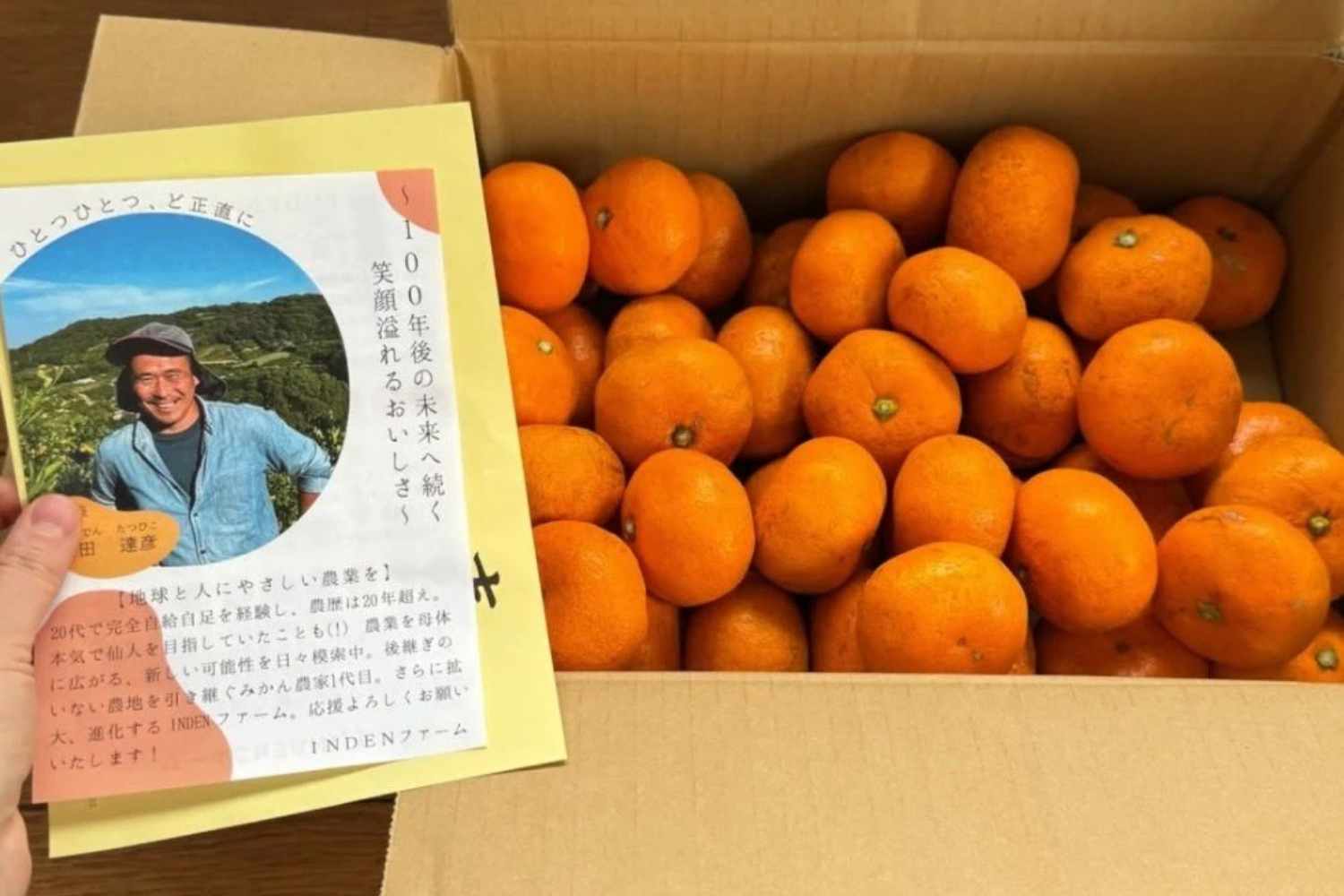
In Japan, shopping can turn into a meeting. Between boxes of spinach and packs of strawberries, you happen to come across a gaze printed on a label: it is that of the farmer who grew that product. Not an advertising slogan, but a real photograph, accompanied by name and origin.
It is the phenomenon of “vegetables with faces” (顔の見える野菜), a choice that has changed the way consumers perceive food trust. Instead of an anonymous code or generic brand, a person appears. The message is immediate: behind that harvest there is a story, a field, a responsibility.
View this post on Instagram
From crisis to transparency
The idea gained momentum in the early 2000s, when a series of scandals linked to incorrect labeling and food safety fears – including cases of BSE, mad cow disease – damaged the system’s credibility. Consumers wanted concrete traceability, not promises.
Companies have responded by strengthening controls and regulations. But an even more direct solution has appeared on the shelves: making the manufacturer visible. In 2004, the giant Ito Yokado, part of the Seven & i Holdings group, launched programs to put fresh fruit and vegetable growers at the forefront. At the same time, the sections dedicated to chisan chisho, the sale of local products grown in the same prefecture, have been strengthened.
View this post on Instagram
A label that speaks
A certification guarantees controls. A QR code refers to the source data. But it’s the printed face that creates an instant bond. Photography works as a signal of accountability: those who produce expose themselves, literally. The practice is not ubiquitous and is mainly concentrated in local production departments. Imported products rarely follow this pattern. Yet, more than twenty years after its diffusion, the system resists, especially in regional supermarkets.
View this post on Instagram
Trust as a visual experience
In an era where many countries are banking on digital transparency, Japan has added a human and immediate layer. The result is subtle but powerful: a tomato is not just part of a distribution chain, it becomes the fruit of someone’s labor that you can look into the eyes.
It’s not just about marketing. It is a cultural strategy that transforms daily spending into a conscious gesture, strengthening the relationship between city and countryside. After the crises, trust was not only rebuilt with stricter rules, but with a symbolic and concrete choice: putting a person next to the price.
You might also be interested in:
