
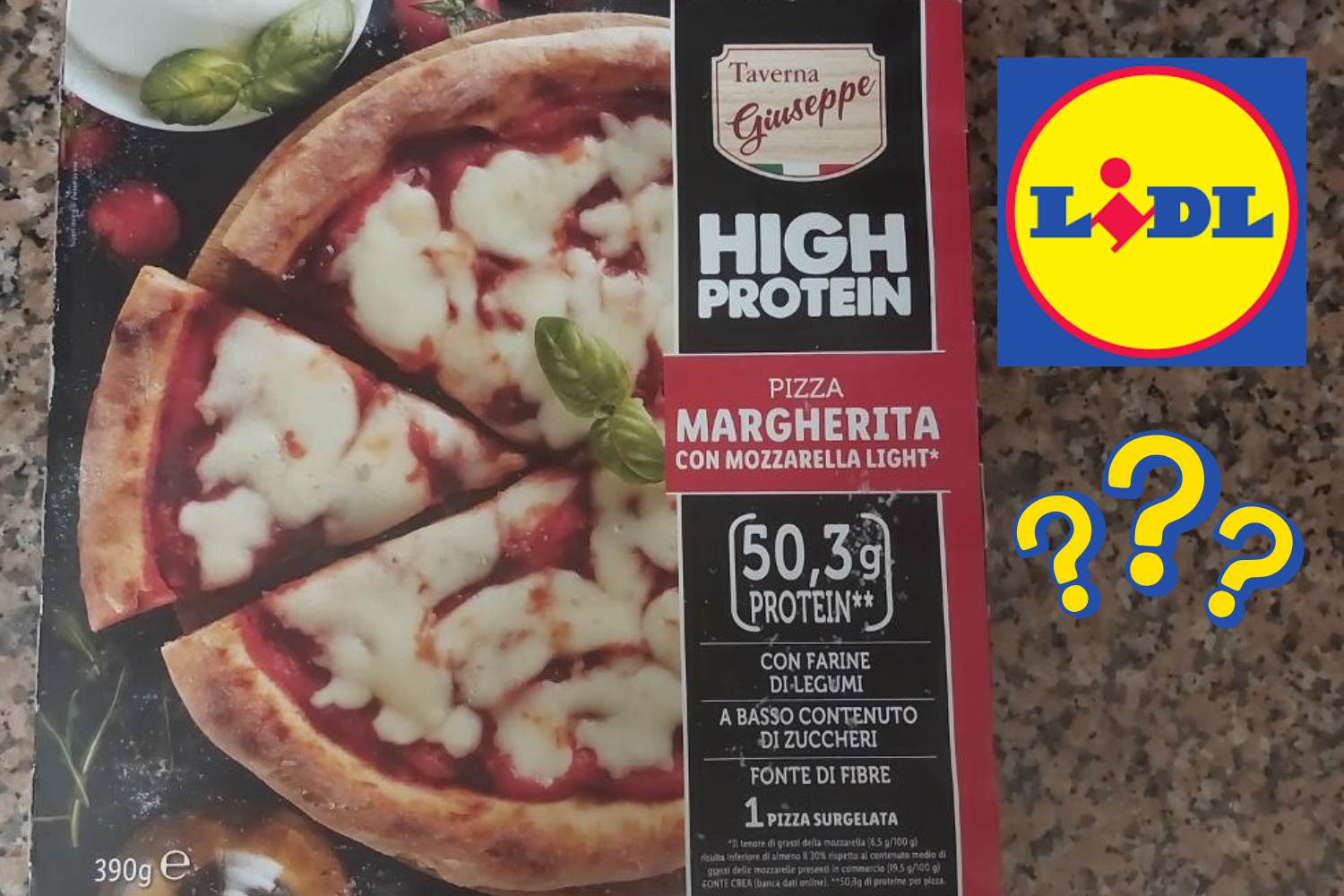
In recent years, high-protein foods have literally invaded supermarket shelves. Yogurt, pasta, enriched bread, bars and snacks designed for those who train or simply want to increase the protein intake of their diet. Demand grows and supply responds. It is therefore not surprising that the large discounters have also taken this path.
Lidl, in particular, has developed its own continuously expanding line of protein products, designed to appeal to a public that is increasingly attentive to nutritional aspects but does not want to give up the convenience of the price. Among the most curious proposals, the protein pizza stands out, which we wanted to try for you.
What Lidl protein pizza tastes like
Let’s start from the appearance: the pizza looks good, with a puffy and inviting edge, a beautiful color and a filling visually similar to a classic margherita. The first bite, however, immediately reveals something different. The dough resembles homemade dough in consistency and structure, it is slightly rustic, with a certain substance, but the aftertaste is very different and you can clearly taste the legumes, in particular chickpeas and peas, with a slightly bitter note and a much stronger flavor than a traditional pizza.
Does it look like a daisy? Yes, in shape and setting. But those expecting the same flavor will be a little disappointed. It’s not a classic pizza with more proteins, it’s really a different product. Those who are already used to consuming legume pasta or other plant-based foods will find themselves at ease; Those who only eat “classic” pizza may need a few more tastes to appreciate it. A plus point, however, is that it is very filling, thanks to the high protein and fiber content which slow down digestion and prolong the feeling of satiety.
Ingredients and nutritional values
These are the ingredients of Lidl’s protein pizza:
Water, 24% tomato, 16% mozzarella (partially skimmed milk, rennet, salt), 10% soy flour, 10% “00” wheat flour, 3% lentil flour, 2% chickpea flour, 2% olive oil, pea protein, soy protein, gluten, yeast, salt
From a nutritional point of view the product has several strengths. The proteins are in decidedly high quantities, obtained from a mix of vegetable sources – soy, peas, lentils, chickpeas and wheat – plus light mozzarella.
Carbohydrates are reduced by about 30% compared to a classic pizza, since the structure of the dough is built mainly on proteins and fibers rather than starch. The fats are contained and derive partly from the light mozzarella and partly from the olive oil. Fibers are abundant. As for salt, we are at 1.45 g per portion, about 5 g on the entire pizza: lower than a common pizza, but still a quantity to keep in mind.
The calories are also around 30% lower than a traditional pizza, with a much more balanced distribution of nutrients. It is in all respects a good single dish, even more so if accompanied by fresh or cooked vegetables.
As for portions, if you eat little, have a small build or are on a weight loss journey, half a pizza is more than enough. If, however, you have a high calorie requirement or train regularly, you can eat it all, in fact, it is practically designed for this.
How much does it cost
The full price at Lidl is 2.99 euros but it is often discounted at 2.69 or even 2.00 euros. All things considered, the quality-price ratio is advantageous.
