
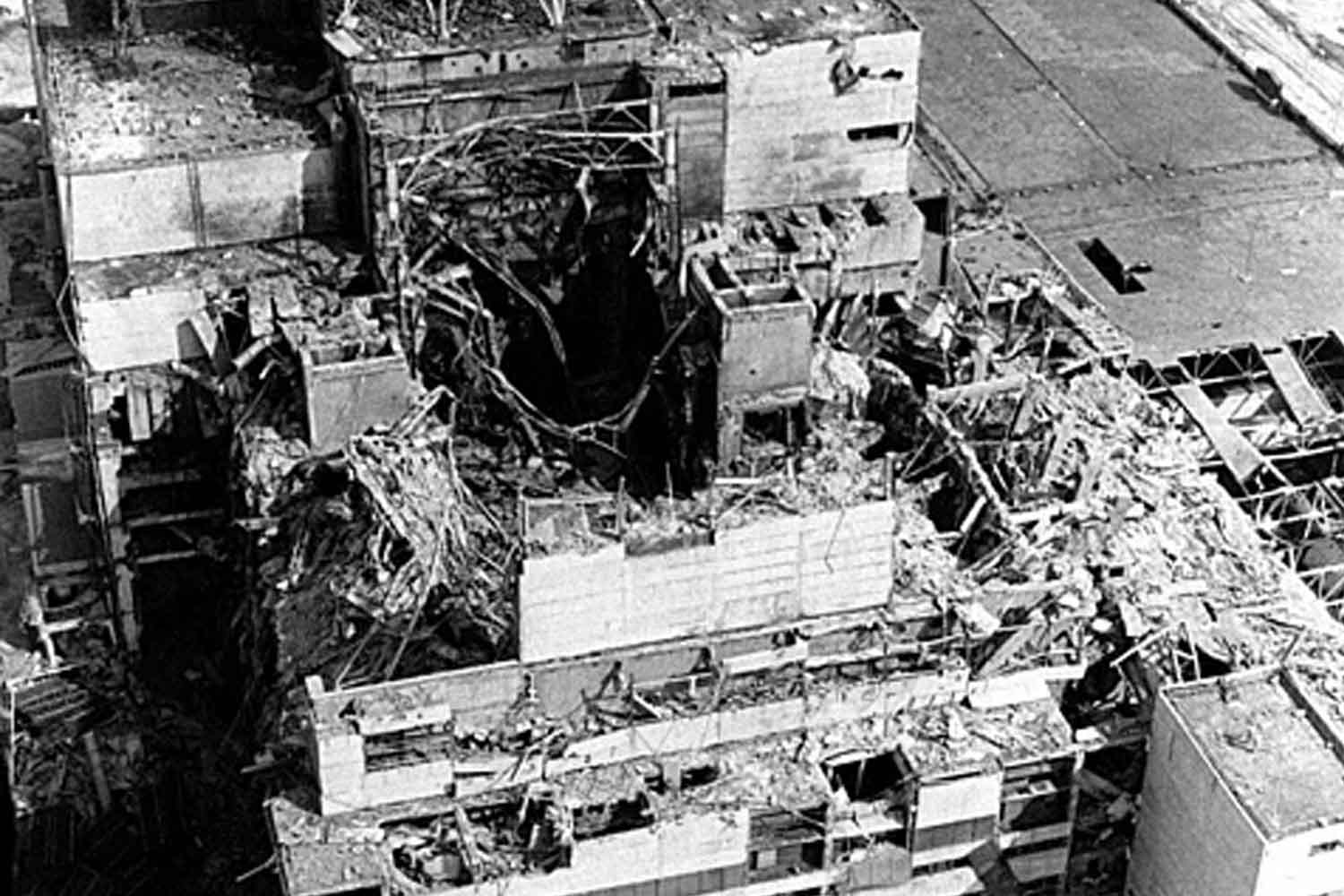
When we talk about Chernobyl, the mind immediately goes to images of the exploded reactor, the radioactive cloud crossing Europe, and the hastily evacuated cities. Much less visible, however, is what happens over time, inside our body, in that microscopic dimension where DNA preserves the biological memory of what we experience. And that is precisely where science is looking again today.
Almost forty years after the disaster of 26 April 1986, research from the University of Bonn adds a delicate but important piece: for the first time, solid evidence emerges of a transgenerational effect linked to prolonged paternal exposure to low doses of ionizing radiation. In other words, the impact of radiation could leave observable genetic traces even in the children of those who were exposed.
It is a theme that touches deep chords, because it concerns the long time of biology, the one that spans generations.
The invisible traces left by radiation
The researchers analyzed a particular type of mutation called cDNM, an acronym that indicates groups of two or more mutations close together. The characteristic that makes them significant is that they appear in children but are not present in the parents’ genetic heritage. This detail suggests that they may result from DNA breaks that occurred in the father’s germ cells following exposure to radiation.
The study involved 130 children of operators involved in the cleanup of Chernobyl, 110 children of German military radar operators presumably exposed to scattered radiation and 1,275 children of unexposed parents used as a control group. Genomic analysis detected an average of 2.65 cDNMs per child in the Chernobyl group, 1.48 in the radar group and 0.88 in the control group.
The difference exists and follows a consistent trend: higher paternal doses correspond to a greater number of mutations in the offspring. The scientists underline that, despite the inevitable uncertainties linked to the reconstruction of the doses received decades ago, this is the first clear demonstration in humans of a possible transgenerational effect due to prolonged exposure to low doses of ionizing radiation.
What it means for health
This is where balance is needed. The word “mutation” scares, and understandably so. However, the researchers explain that the overall increase in cDNMs observed is limited and that many of these alterations are found in the so-called non-coding DNA, portions of the genome that do not directly produce proteins.
The probability that a disease in the children is triggered by one of these mutations is considered minimal. Furthermore, an interesting element concerns the age of the father at the time of conception: older fathers tend to transmit a greater number of genetic mutations than those associated with the exposure detected in the study. This data helps to reduce the risk in a bigger picture.
The biological mechanism underlying the phenomenon is consistent with what science already knows. Ionizing radiation favors the formation of reactive oxygen species, unstable molecules capable of damaging and breaking DNA strands. When the breaks are multiple and close together, they can generate the clusters of mutations observed in the offspring.
Of course, the study has limitations. The initial exposure occurred decades ago, and doses were estimated through historical records and instruments from the time. Furthermore, voluntary participation may have influenced the composition of the sample. These are aspects that the authors themselves declare transparently.
What remains, however, is an important message: ionizing radiation can leave subtle signs even in subsequent generations, especially in cases of prolonged exposure. It is not an immediate health alarm, but it is a scientific confirmation that nuclear power, when something goes wrong, produces consequences that go beyond the time of the emergency.
Chernobyl continues to teach us that the environmental impact does not end with the end of the flames or with the reclamation of an area. Sometimes the deepest scars are the invisible ones, written silently in our genetic code.
You might also be interested in:
