
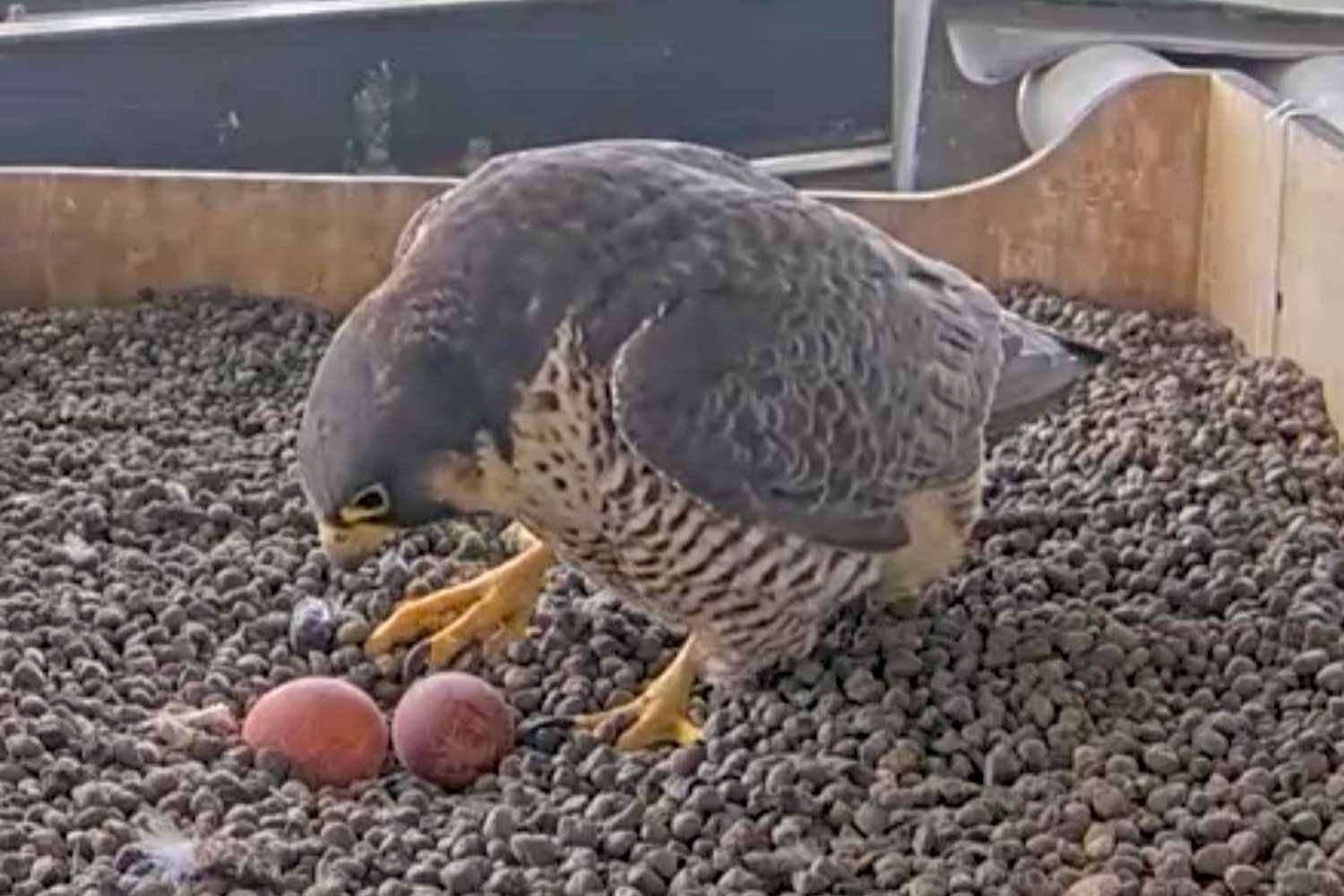
At 125 meters above the traffic and trams of Milan, spring has already begun and, as always, it is dictated by the peregrine falcons Giò and Giulia. On the top of the Pirelli Skyscraper, known as the Pirellone, Giulia laid her first egg on Saturday 28 February at 3.45pm. The second arrived 61 hours later, at 4.45am on March 3. The 2026 breeding season is officially open.
A faithful couple since 2014
Giulia and Giò are no strangers to the city news. The pair has been nesting here since 2014, when two chicks were found behind an air conditioner during some maintenance work. Since then the tower designed by Giò Ponti has become their permanent home. The names of the birds of prey pay homage to the architect and his wife Giulia Vimercati.
To encourage nesting, a wooden tank with a pebble bottom was installed, which reproduces the rocky ledges typical of the natural habitat. Two webcams transmit live images 24 hours a day on the Lombardy Region portal (accessible at this link), transforming the nursery into a permanent public observatory.
A community of 25 thousand people follows Giò&Giulia
Over 25 thousand fans follow the couple’s events on the Facebook page “Giò&Giulia Falchi Pellegrini a Milano”. The laying of eggs is a small collective event every year, commented in real time between hashtags and screenshots.
Hatching is expected between the end of March and the beginning of April, after a hatching period of 29-32 days, shared by the couple even if it is the female who mainly takes care of it. The male contributes by taking turns on the nest and obtaining food. Typically the peregrine falcon lays 3 to 4 eggs, at intervals of two or three days. Last year there were three eggs.
Why precisely the Pirellone
The choice of the skyscraper is not random. The tower dominates the surrounding squares and is located in an area frequented by starlings and pigeons, ideal prey. Nighttime lighting also helps spot migratory birds flying over the city. A perfect balance between urban environment and predatory instinct.
From 2014 to today Giulia and Giò have had 39 children. The hawks stay in the nest for about 40 days, are fed up to 6-8 times a day and do not drink: they take liquids directly from their prey. There was no shortage of critical issues, such as the death of two young people in different years after impact with glass windows. Precisely for this reason the municipal regulation provides measures to reduce the risk of bird collisions. Meanwhile, on the Milanese skyline, two cream-colored eggs mark the beginning of a new wait. And the city, once again, looks up.
You might also be interested in:
