
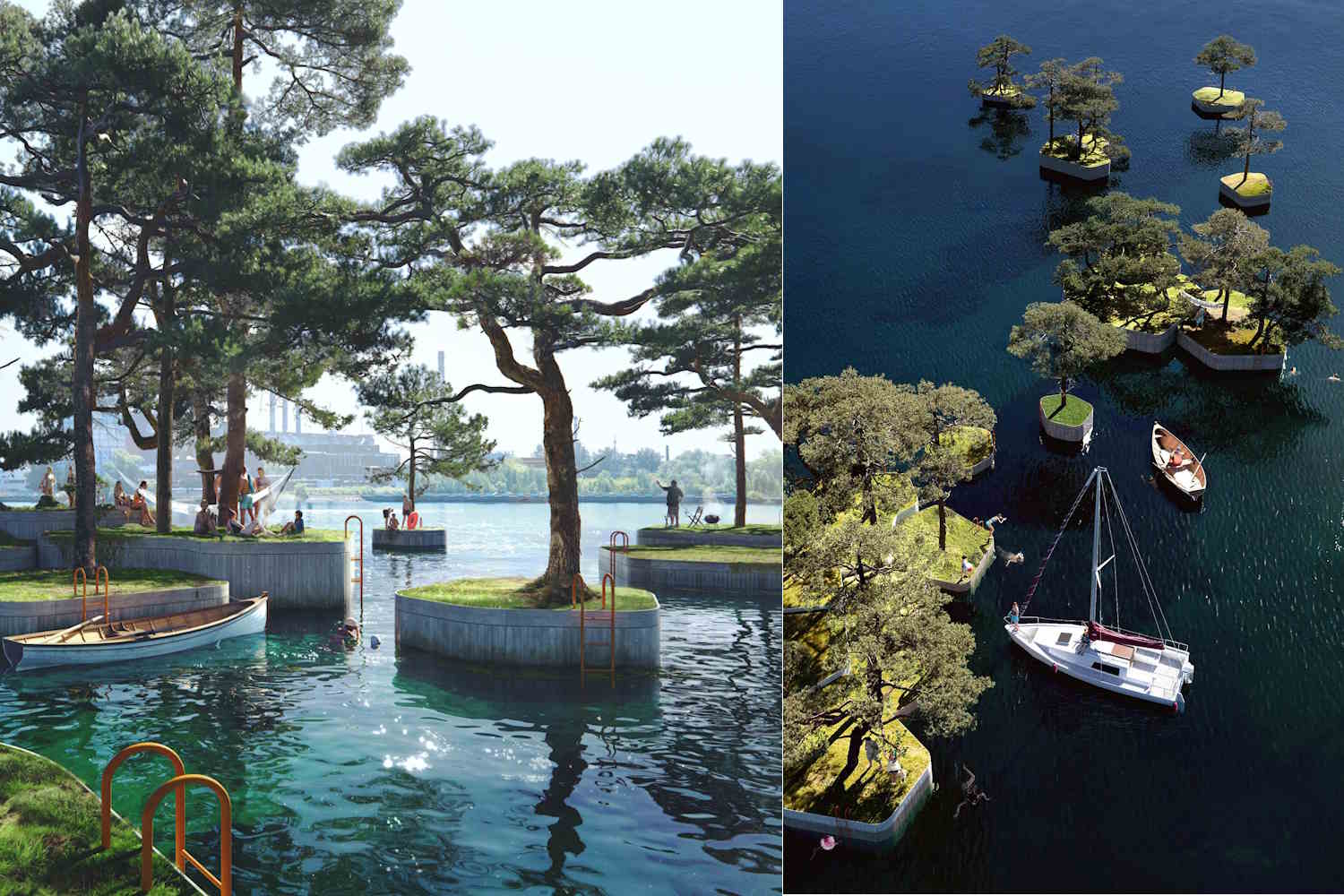
The ecological transformation of cities often involves spectacular projects, large urban parks or impressive renaturalization works. Yet, sometimes the turning point comes from a surprisingly simple intuition: bringing nature back to where it seemed to have definitively disappeared. In urban ports, for example, the water has for decades been an empty space, crossed by boats and surrounded by concrete, almost devoid of biodiversity. In Denmark, however, something is changing. Small floating islands covered with wild flowers and native vegetation are appearing between piers and modern buildings, tiny ecosystems that transform urban bodies of water into living places.
These plant platforms demonstrate how even seemingly modest interventions can generate a real impact on urban biodiversity, offering refuge to birds, pollinating insects and marine life.
The floating islands that bring nature back to the ports
In Danish ports, and in particular in Copenhagen, small floating platforms are taking shape that are home to native plants, herbs and wildflowers. Their goal is to give back space to nature in contexts where urbanization has erased almost every natural habitat.
These structures are part of an innovative urban planning project called Parkipelago, also known as Copenhagen Islands, conceived by architect Marshall Blecher together with designer Magnus Maarbjerg. The idea is simple and visionary at the same time: to create an urban archipelago made up of small artificial islands that float in the city port and which can host vegetation, public activities and natural micro-habitats.
The first prototype, called CPH-Ø1, is a platform of approximately twenty square meters built with wood, steel and materials recovered from old boats. An adult lime tree even grows above the island, offering shade and helping to create a green environment in the heart of the port.
This first installation represents only the beginning of an archipelago destined to expand over time. The project involves the creation of several floating islands, each with slightly different functions: urban gardens on the water, small mussel farms, floating saunas, swimming areas and even a café reachable by boat. All of these facilities are designed as free public spaces accessible via kayak, boat or from the waterfront.
Small floating ecosystems for bees, birds and marine life
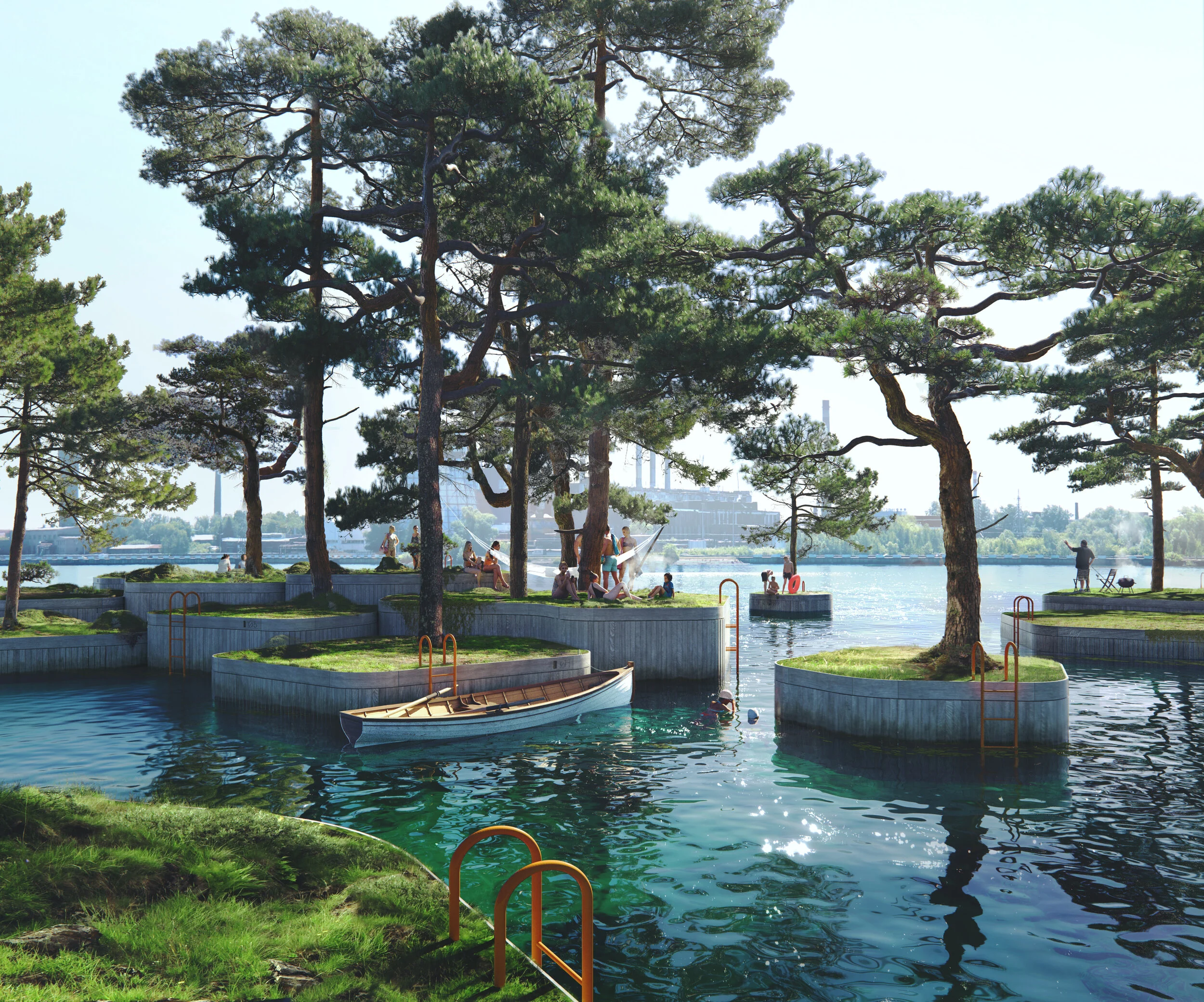
The most interesting value of these islands does not only concern the social or architectural dimension of the project, but above all their ecological role. Each plant platform functions as a micro-nature reserve in the heart of the city.
Wild plants and flowers attract bees, butterflies and other pollinating insects, species increasingly threatened by habitat loss in urban environments. At the same time, birds find small, safe refuges where they can stop while traveling or build their nests away from city traffic.
The submerged part of the platforms also plays an important function. The surfaces below the water level become an ideal substrate for the growth of algae and marine organisms which in turn attract fish and molluscs, helping to rebuild an ecological network in the port waters.
In this way, a simple floating element manages to generate a cascade effect on urban biodiversity, transforming an artificial space into a living ecosystem.
A new way of imagining cities on water
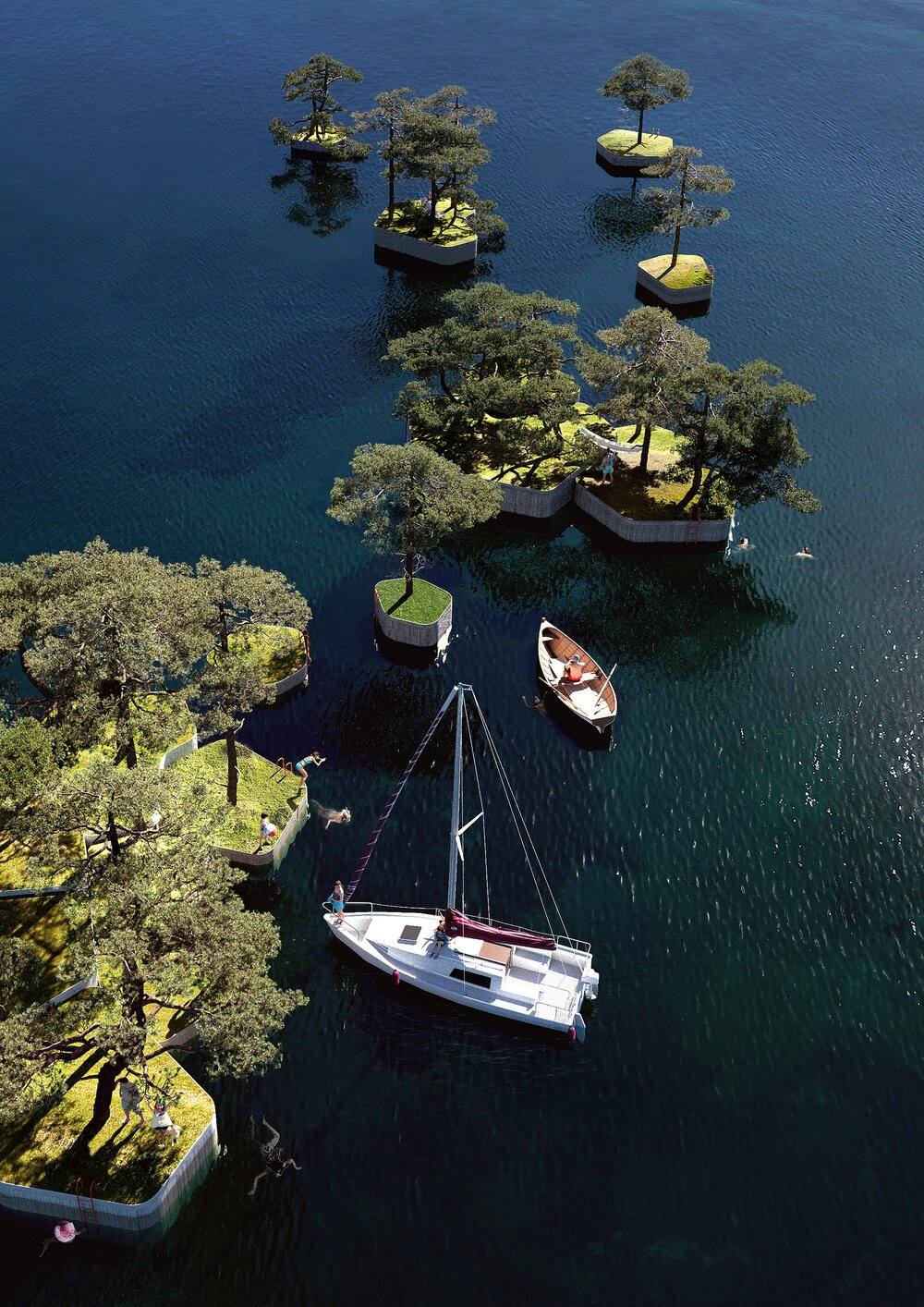
One of the most interesting aspects of the project concerns its flexibility. The floating islands can be moved within the port depending on the needs of the city, adapting to the seasons or public events. At certain times of the year they can be gathered together in groups to create a sort of small temporary urban archipelago, while at other times they remain distributed along the waterfront.
This approach demonstrates that urban regeneration does not necessarily require major infrastructure works. Sometimes it is enough to introduce light and intelligent green infrastructures, capable of re-establishing a dialogue between city and nature.
The Danish project suggests a fascinating prospect for the future of coastal cities. Ports and canals, for a long time considered exclusively industrial or logistical spaces, can be transformed into shared natural environments, places where biodiversity, design and urban life coexist.
And while patches of wild flowers bloom between boats and buildings, it becomes clear that even a small floating island can help mend the relationship between man and the environment, bringing life back to the most unexpected spaces of our cities.
You might also be interested in:
