
The history of Rome does not need official celebrations to emerge: it often reappears simply because someone starts digging. It happens on construction sites, under busy streets, in places where university buildings and residences are designed today. Just descend a few meters into the ground to encounter another city, made up of ancient rites, funerary memories and architecture that tell the story of the life – and death – of two thousand years ago.
That’s what’s been happening along the way via Ostiensein the area of St. Paul Outside the Wallswhere during some works for the construction of a student residence a surface emerged vast funerary area with decorated tombs and surprisingly well-preserved pit burials. A discovery that brings attention back to the big one Ostiense Necropolisone of the most extensive funerary systems of ancient Rome.
Here, along the road that connected Rome to the port of Ostia, for centuries tombs, funerary monuments and spaces dedicated to the cult of the dead have lined up. Today a new fragment of that landscape re-emerges from underground.
A funerary complex that remained hidden for centuries
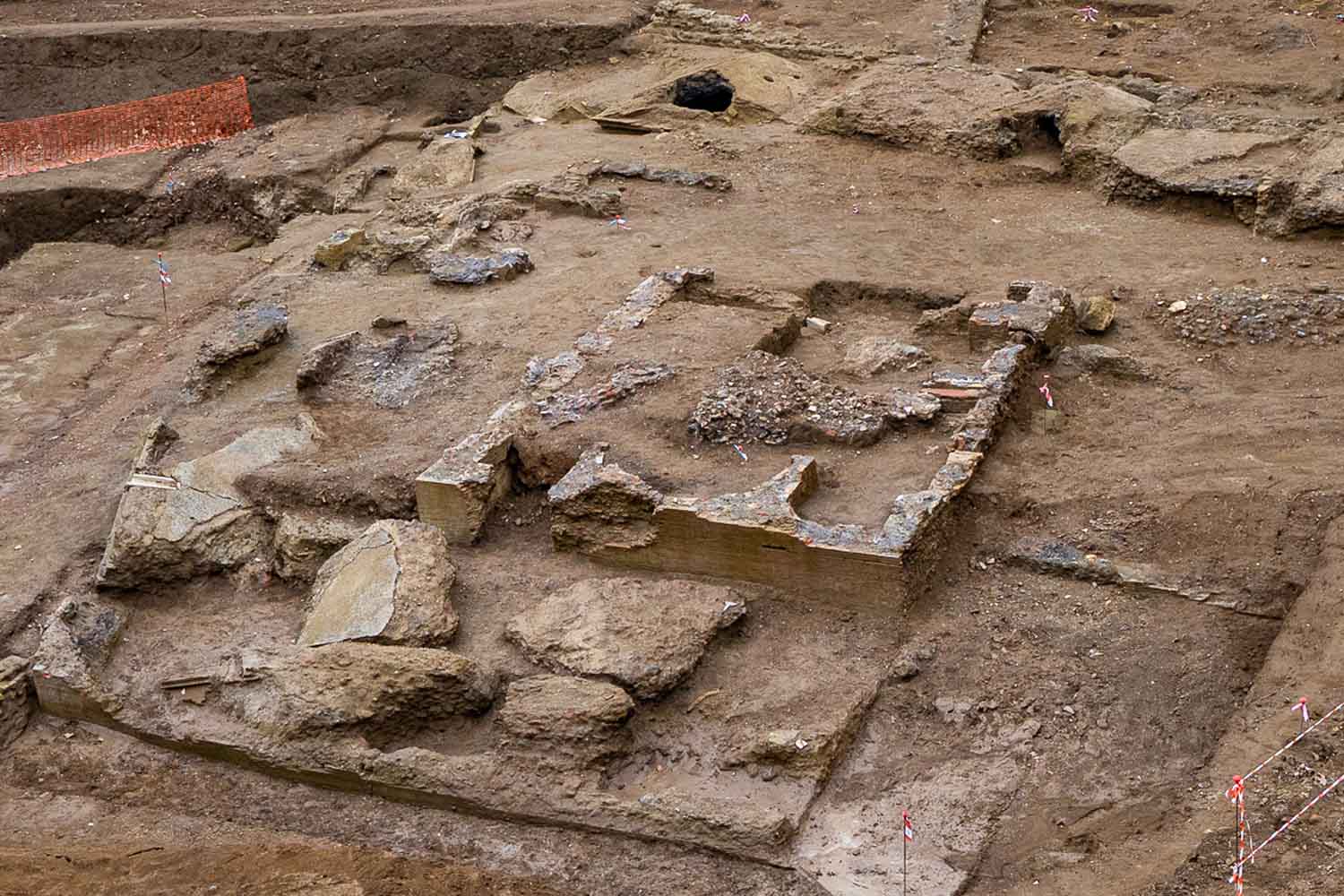
The excavation, directed by the archaeologist Diletta Menghinelloidentified a group of funerary structures dating back to the imperial age at a depth of about one meter. This is not a single grave, but a small one organized architectural complexcomposed of five funerary buildings with a quadrangular plan with vaulted roofs, arranged along a north-east-south-west axis and preceded by two smaller rooms.
Next to these structures another one emerged, oriented perpendicular to the first ones. The remains suggest that the entire system was organized around a central space, probably an internal courtyardaround which the various funerary rooms overlooked.
Archaeologists hypothesize that it is columbariathat is, funerary chambers with niches intended to house cinerary urns. Even in the portion of the excavation already visible, decorative elements of great interest emerge: walls with frescoed plaster, vegetal motifs, stucco and small aedicules embellished with symbolic figures of Roman funerary culture, such as Prayers and Winged Victories.
These are details that tell much more than a simple burial ritual. They talk about identity, religious beliefs, social status and the way the ancient Romans imagined the passage to the afterlife.
A funerary area that spans centuries of history
The archaeological investigation also revealed another interesting aspect: the site does not belong to a single historical phase. The area shows indeed different levels of use over timea sign that this funerary space remained active for centuries.
In the area closest to the road, further brick rooms emerged, including an apsed hall and a large space with remains of mosaic flooring. Their function still remains to be clarified and may be defined with the continuation of the excavation.
Behind the monumental imperial tombs, however, a much later phase appears. One was identified here late ancient necropolisseparated by a long wall made of tuff blocks. In this sector the burials appear decidedly simpler: pit tombs stacked one on top of the otheraccompanied by very few accompanying objects.
This passage tells of a profound cultural change. The monumental and decorated architecture leaves room for more essential burials, a sign of a social and religious transformation that runs through the history of Rome between the full imperial age and late antiquity.
Every construction site in Rome can become an archaeological discovery
The new funerary area is part of the large system of Necropolis of the Via Ostiensewhich developed between the late republican age and the late empire and of which some portions are visible today, such as the Ostiense burial ground and the St. Paul’s Cliff.
Discoveries like this remind us how the capital’s underground is still full of stories to tell. Under the streets, between buildings and construction sites, a stratified city survives that continues to re-emerge when we least expect it.
And this is precisely the fascinating paradox of Rome: while the future is being built, the past reappears and forces everyone to stop for a moment to listen to what it still has to say.
