
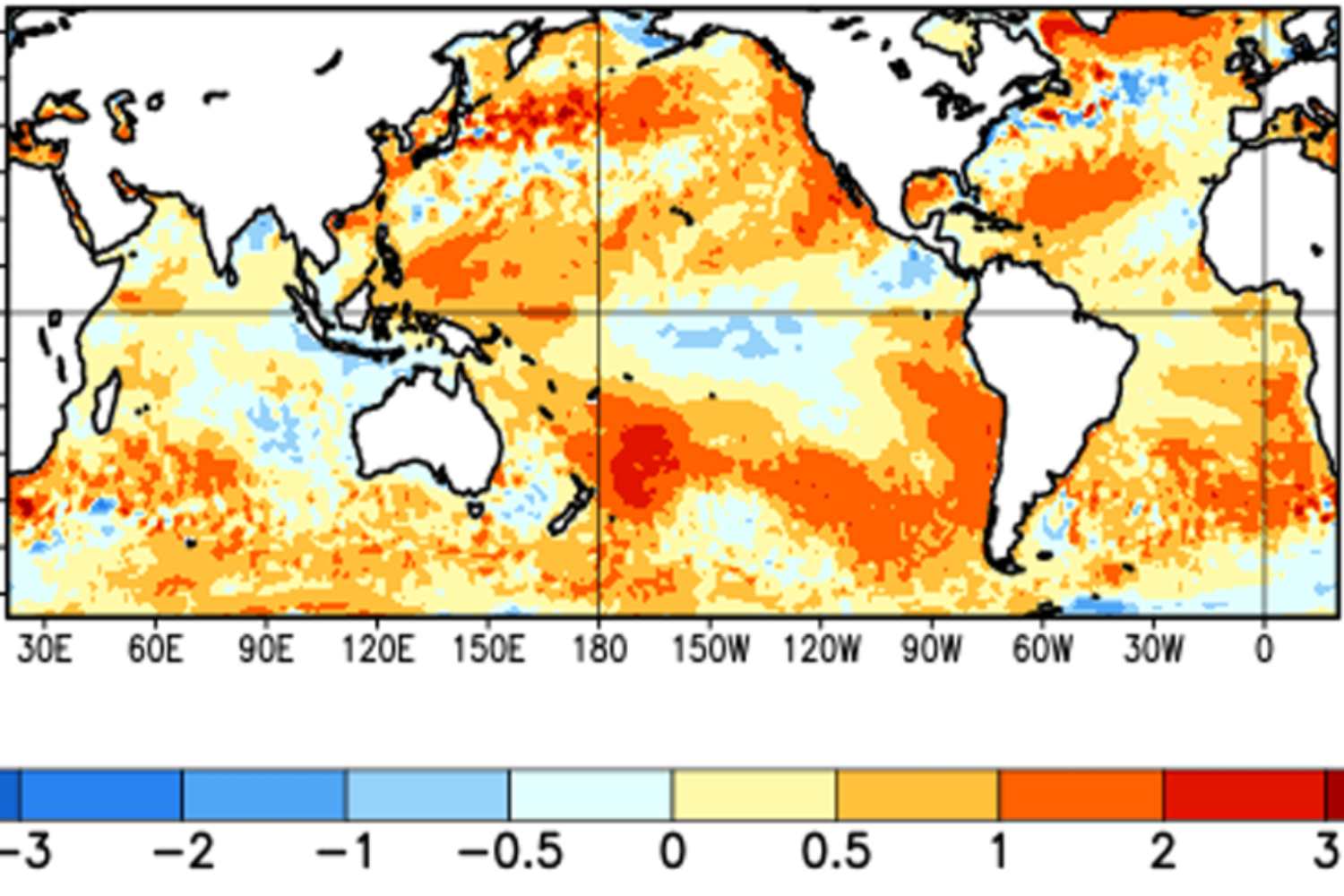
After months marked by abundant rainfall and low temperatures in some regions, the global climate could soon change direction again. Scientists are in fact carefully observing the evolution of the tropical Pacific, where conditions are forming that could favor the return of El Niño, one of the most influential climatic phenomena on the planet.
According to the US National Oceanic and Atmospheric Administration (NOAA), there is a 50% to 60% chance that this climate event will develop between July and September 2026. Before then, the climate system known as ENSO is expected to transition from the cold La Niña phase to a neutral phase between February and April. If these predictions come to fruition, the world could see a new increase in global temperatures and a weather season characterized by more extreme phenomena.
What El Niño really is
The El Niño phenomenon occurs when surface waters in the eastern and central equatorial Pacific become warmer than normal. This warming weakens trade winds, the winds that normally push warm waters toward the western Pacific. When this balance changes, energy stored in the ocean is transferred to the atmosphere and alters climate patterns on a global scale.
The result is a series of effects that can manifest themselves on different continents: drought in some tropical regions, intense rainfall in others and a general increase in global temperatures. Experts estimate that a typical El Niño event could temporarily raise the global average temperature by around 0.1-0.2°C. An apparently small value, but enough to push the world climate towards new records.
The areas most at risk are those of the Mediterranean, an area already vulnerable to chronic drought which could experience an increase in fire risk. In Italy in particular we would be faced with an opposite situation: dry and very hot periods especially in the South and on the islands, while in the North intense storm episodes with hailstorms and violent phenomena due to marked thermal contrasts.
An increasingly hotter planet
The context in which the next El Niño could develop is very different than in the past. In recent decades, human activities have already increased the average global temperature by around 1.3-1.5 °C compared to pre-industrial times. This means that a new episode of the phenomenon could further amplify the heat. Not surprisingly, El Niño years are often among the warmest on record. A recent example comes from the two-year period 2023-2024, when the climate event contributed to making 2024 the warmest year in the history of meteorological observations.
Because 2027 could be the decisive year
If El Niño develops in the second half of 2026, the peak effect on global temperatures could come a few months later. Generally, in fact, the maximum thermal increase is recorded approximately three months after the intensification of the phenomenon. For this reason, many climate scientists believe that 2027 could become a new record year for global heat.
The most recent observations already show worrying signs: in some areas of the eastern Pacific, near the coasts of Peru and Ecuador, water temperatures have reached values up to 1.5°C above average. It is not yet a certainty, but for scientists it is a signal that deserves attention. In an increasingly warmer planet, even a relatively small change in the oceans can become a factor capable of changing the global climate.
You might also be interested in:
