
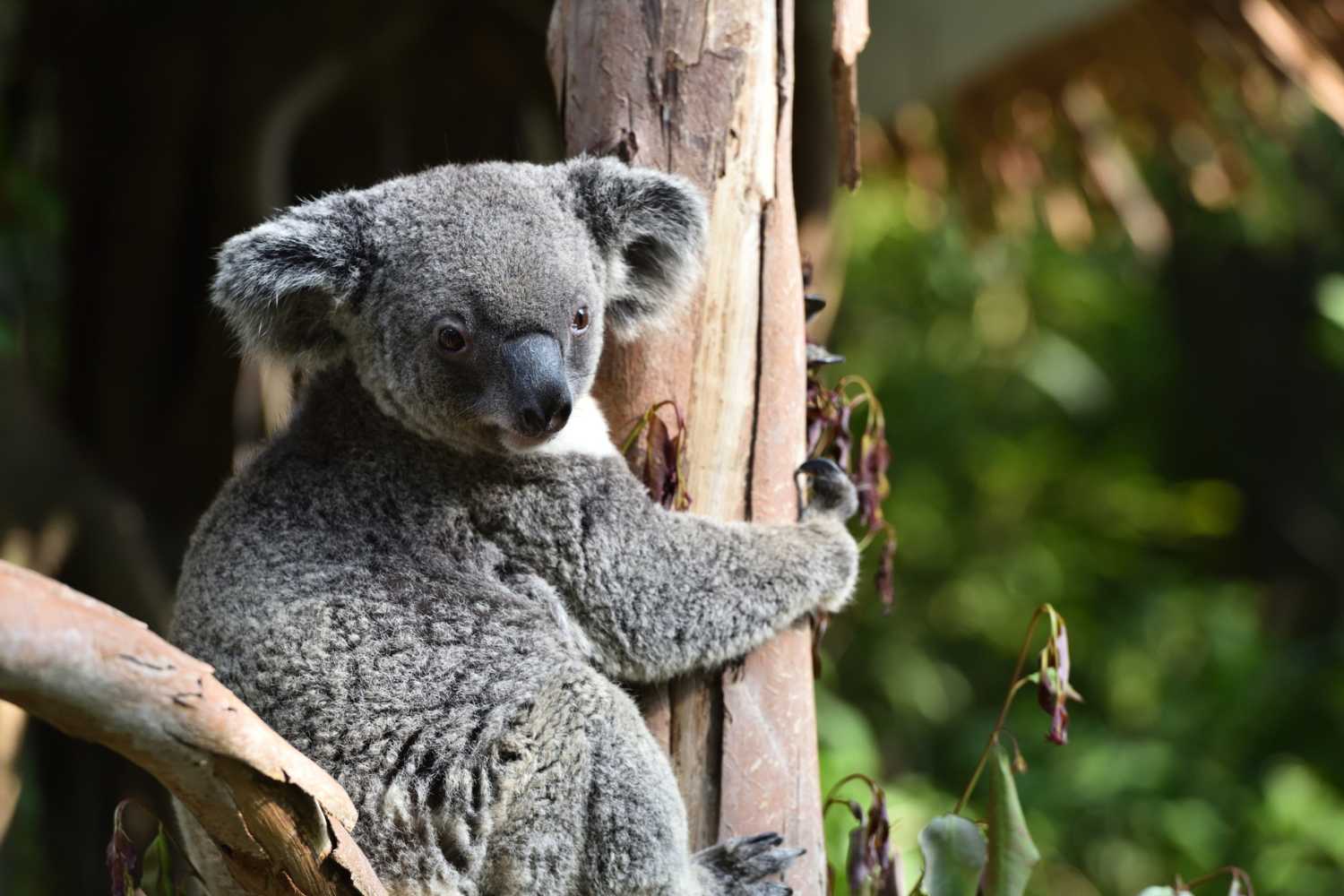
At the beginning of the twentieth century, Australian koalas were on the brink of extinction. Their fur fueled a huge trade and millions of animals were killed in a few decades. In the state of Victoria the population plummeted to a few hundred individuals. Today, however, something is changing the way scientists look at their history.
Research published in Science shows that Victoria’s koalas are recovering genetic variability faster than expected thanks to an often underestimated biological mechanism: DNA recombination during reproduction.
The study, based on the genomic analysis of over 400 individuals from 27 different populations, suggests that even species that have gone through a severe “genetic bottleneck” can recover some of their diversity over time.
From collapse to recovery
At the end of the 19th century, intensive hunting had reduced koalas to minimal numbers. To save them from extinction, some specimens were moved to islands off the coast of Victoria, where they were safe from hunters.
Those few animals became the nucleus of one of the longest repopulation operations in the history of conservation. During the twentieth century their descendants were reintroduced to the mainland. The result is surprising: in 2020 the state’s population had reached almost half a million individuals.
However, numerical growth does not automatically coincide with genetic health. Because all animals descend from very few founders, biologists have for decades feared that the population was genetically fragile.
The hidden role of recombination
The new study tells a more complex story. By analyzing koala genomes, researchers observed that population expansion has increased the frequency of genetic recombination: the process by which parental chromosomes shuffle, producing new combinations of genes in their offspring.
The more individuals reproduce, the more often this mixing occurs. Over time, natural selection tends to preserve favorable combinations and eliminate harmful ones.
The result is that rare genetic variants are appearing in Victoria’s koalas, indicating a gradual rebuilding of diversity. A signal that would not have emerged using traditional indicators alone.
The paradox of “healthy” populations
The research also calls into question some certainties of conservation genetics. The populations of Queensland and New South Wales, historically considered more solid because with greater genetic variability, are instead showing signs of decline.
Here the actual number of animals breeding is decreasing. Fewer births means less recombination and therefore fewer opportunities for the genome to generate useful combinations.
According to the authors of the study, evaluating the health of a species therefore requires observing not only the genetic diversity present, but also the demographic dynamics that produce it.
A lesson for conservation
The story of the koalas suggests that evolution can offer unexpected ways out even after profound crises. That’s no guarantee: fragmented habitats, urbanization and disease continue to threaten many Australian populations.
But the study points to a clear direction. Monitoring genomes and the actual size of populations allows us to understand if a species is really recovering or if the recovery is only apparent.
In other words, to save biodiversity we need to understand how animals reproduce, how their genes mix and what evolutionary future they are building.
