
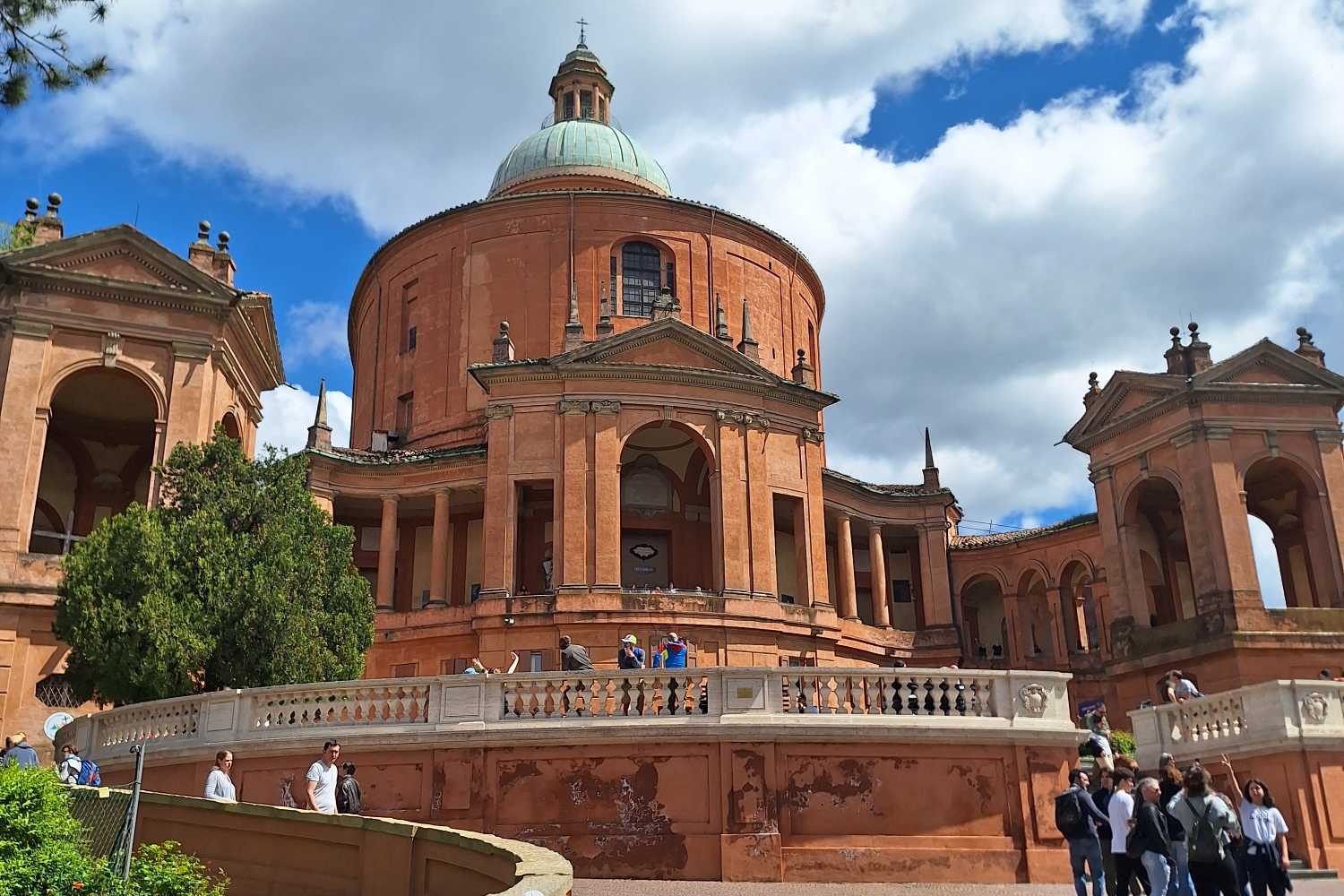
There are experiences that are not simple walks, but real rites of passage. Going up to San Luca on foot from the center of Bologna is one of these. A path that combines history, faith, sport and city identity through almost four kilometers of uninterrupted portico, the longest in the world.
To do this we started from Piazza Maggiore, the beating heart of the city. From here we walked along Via d’Azeglio, passing shops and historic buildings and continuing towards Via Saragozza up to Porta Saragozza. It is here that the horizon changes: the monumental corridor leading to the Guardia hill has opened up before us.
The Portico of San Luca: numbers, legend and wonder
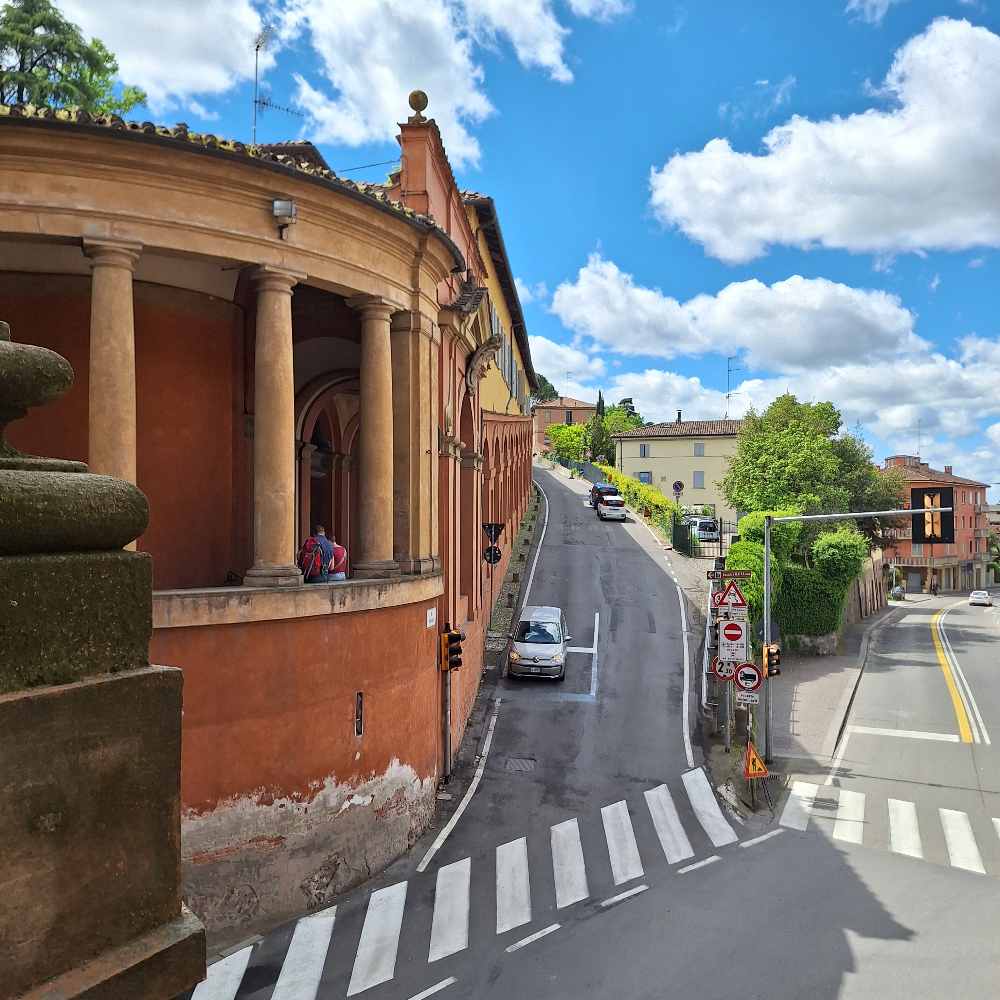
The Portico of San Luca measures 3,796 km and has 666 arches, a number that has fueled symbolic tales for centuries. According to legend, they represent the serpent, defeated by the Madonna kept in the Sanctuary. Suggestive or not, walking under this perfect sequence of ocher arches is hypnotic.
From the flat stretch to the Arco del Meloncello, an elegant baroque structure, the climb is gentle. Then begin the 489 steps and a difference in altitude of approximately 215 metres. The slope is felt, but you choose the pace: there are those who climb in silence, those who chat, those who even do it in a hurry, several times a day, to train. It is a covered, asphalted route and accessible all year round. In summer it offers shade and shelter on rainy days. Spring remains the ideal period, when the hills light up with green and the air is clear.
Between football and cycling: the Bologna stadium and the orphans’ curve
Among the most exciting details – for me, who loves football – is the view from above of the beautiful Renato Dall’Ara Stadium, home of Bologna. In my opinion the most beautiful stadium we have in Italy. And from halfway up the climb you can admire a unique view that combines sporting passion and music given that for years it has been the site of numerous summer concerts.
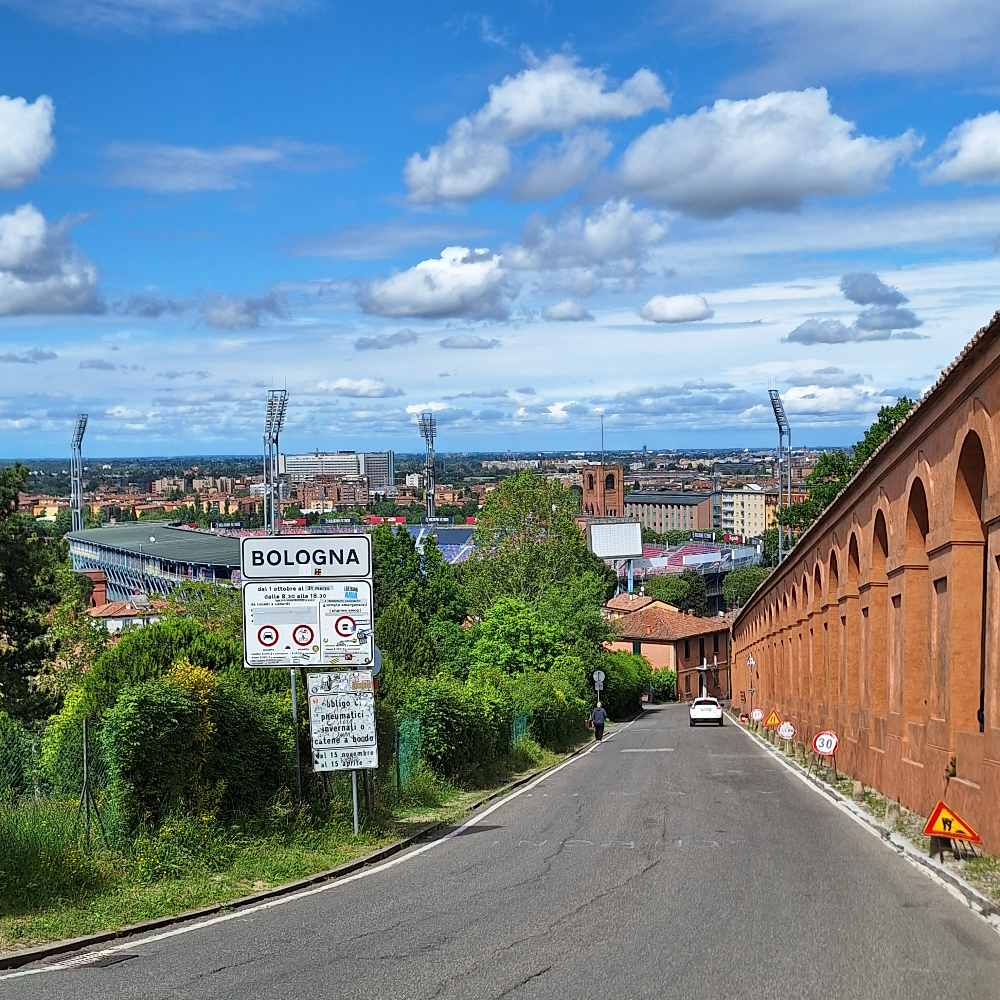
But if there is a sport that I love even more than football, it is cycling, which I have followed passionately since I was little. And the San Luca climb for me, but also for the people of Bologna and for cyclists, means only one thing: Giro dell’Emilia. In fact, this great two-wheel classic ends here every year, with five final ascents that break up the group.
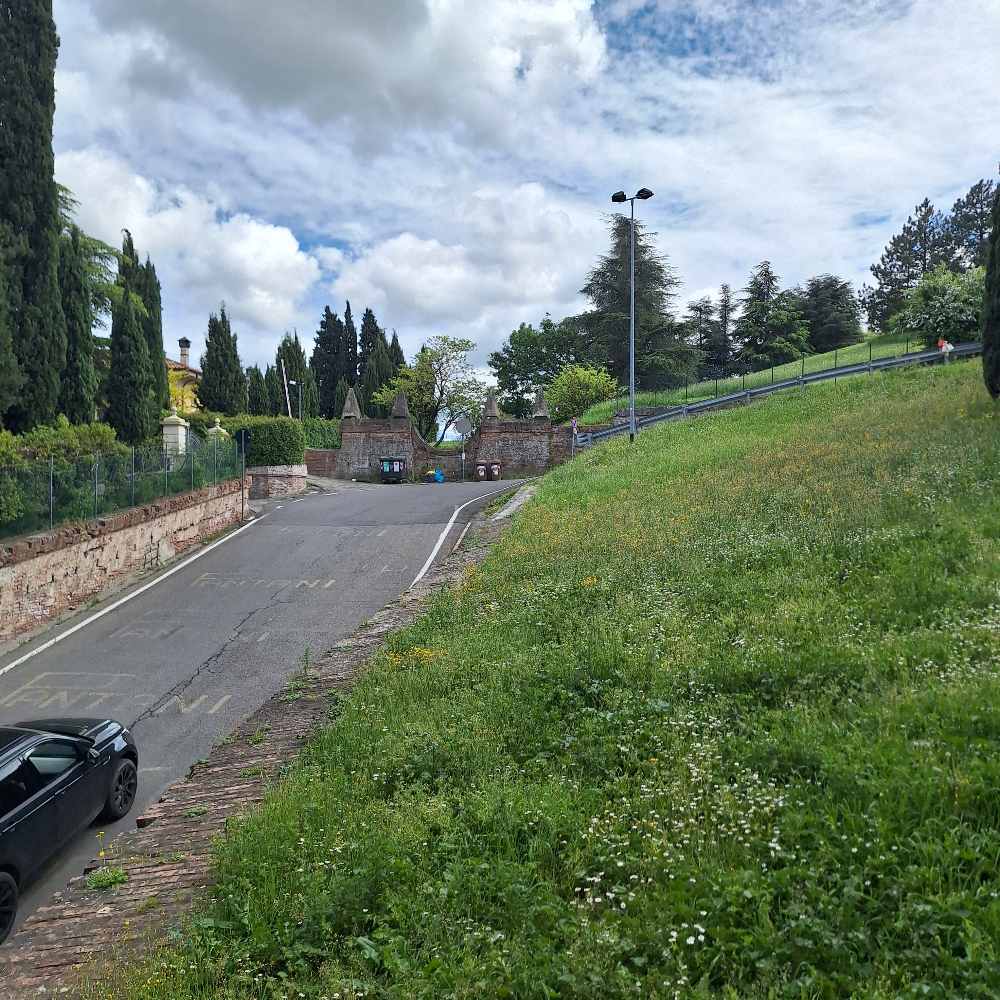
In the last kilometres, on a 9 km circuit, the gradients reach 18% at the Curva delle Orfanelle: a wall that selects the champions. It is on this climb – as demonstrated by the countless writings praising Pantani, but also Pogacar and the latest cycling phenomena – that the most beautiful victories were achieved, amidst the crowds and extreme effort. Seeing firsthand how hard it is and thinking that right from here they jump up on the pedals to “attack” is something extremely exciting that I still carry with me today.
The arrival: the Sanctuary of the Madonna di San Luca
When we emerged onto the square, the view repaid us for every step we took. Bologna seemed to stretch out at our feet, with a spectacular view of the Bolognese hills and the red roofs of the historic centre. And then there is the great gem, the one that attracts thousands of believers every year: the Sanctuary of the Madonna di San Luca.
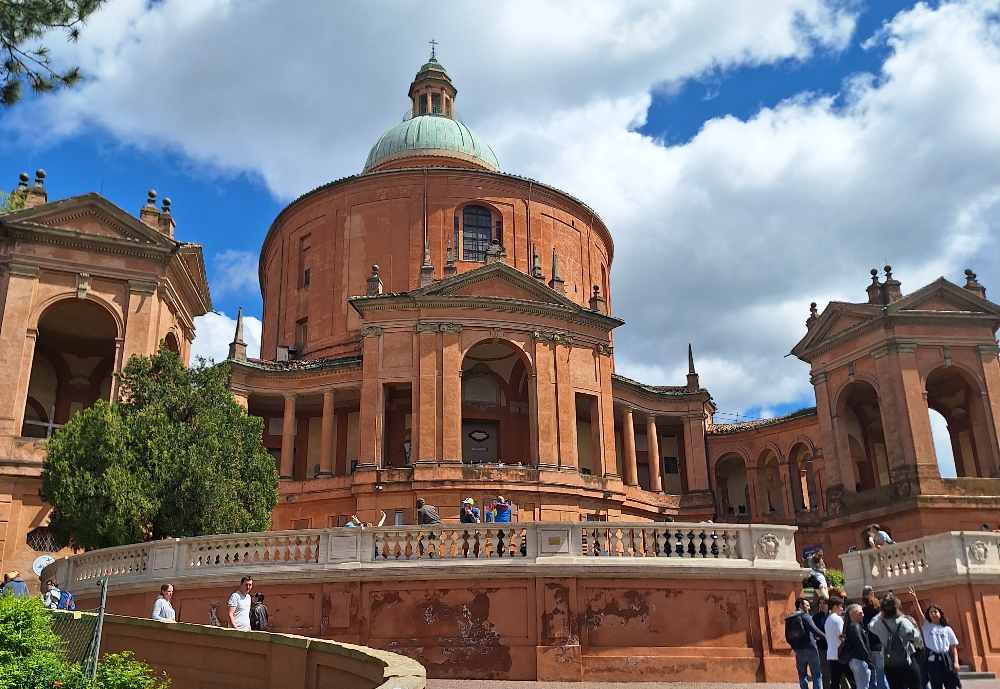
Consecrated in the eighteenth century, it is a place that, more than any other, defines the skyline and soul of Bologna. Perched on Colle della Guardia, at around 280 meters above sea level, it dominates the city and is visible from kilometers away, even from the motorway. The origins of the Sanctuary date back to 1194, when Angelica Bonfantini donated the land to build a church intended to house the icon of the Virgin and Child, known as the Black Madonna. According to tradition, the image was even painted by the evangelist Luke: a legend that contributed to strengthening its cult.
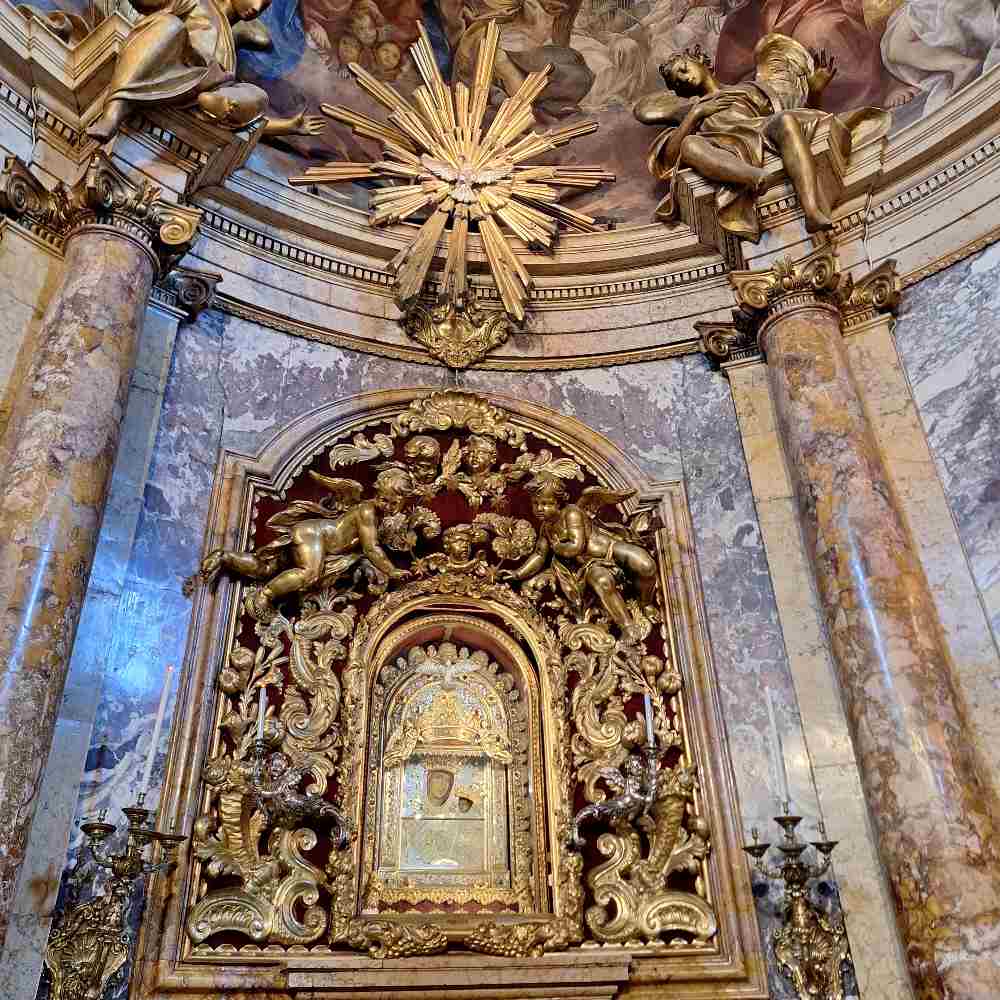
The so-called rain miracle in the fifteenth century was decisive: during a period of incessant rainfall that threatened the crops, the icon was carried in procession to the city. The rains stopped and the event consolidated popular devotion. Even today the Madonna descends in procession towards the Cathedral of San Pietro, keeping alive a ritual deeply felt by the people of Bologna. The current baroque appearance of the Sanctuary is due to the works of the seventeenth and eighteenth centuries, in particular to the intervention of the architect Carlo Dotti, who defined its harmonious and monumental form.
What to see inside the Sanctuary
Once you cross the threshold, your gaze is immediately captured by the elliptical plan of the building, an architectural choice that creates a sense of movement and solemnity. The large central dome filters natural light, illuminating the interior with a scenographic effect.
The heart of the basilica is the main altar, where the famous icon of the Madonna and Child is kept. From the presbytery you can admire the panel in all its intensity: a simple image but full of spiritual meaning. In the side chapels there are works of great artistic value signed by masters such as Guido Reni, Guercino and Donato Creti. Paintings and decorations tell sacred episodes with a style that combines pathos and refinement, making the visit interesting even for those who are not particularly religious.
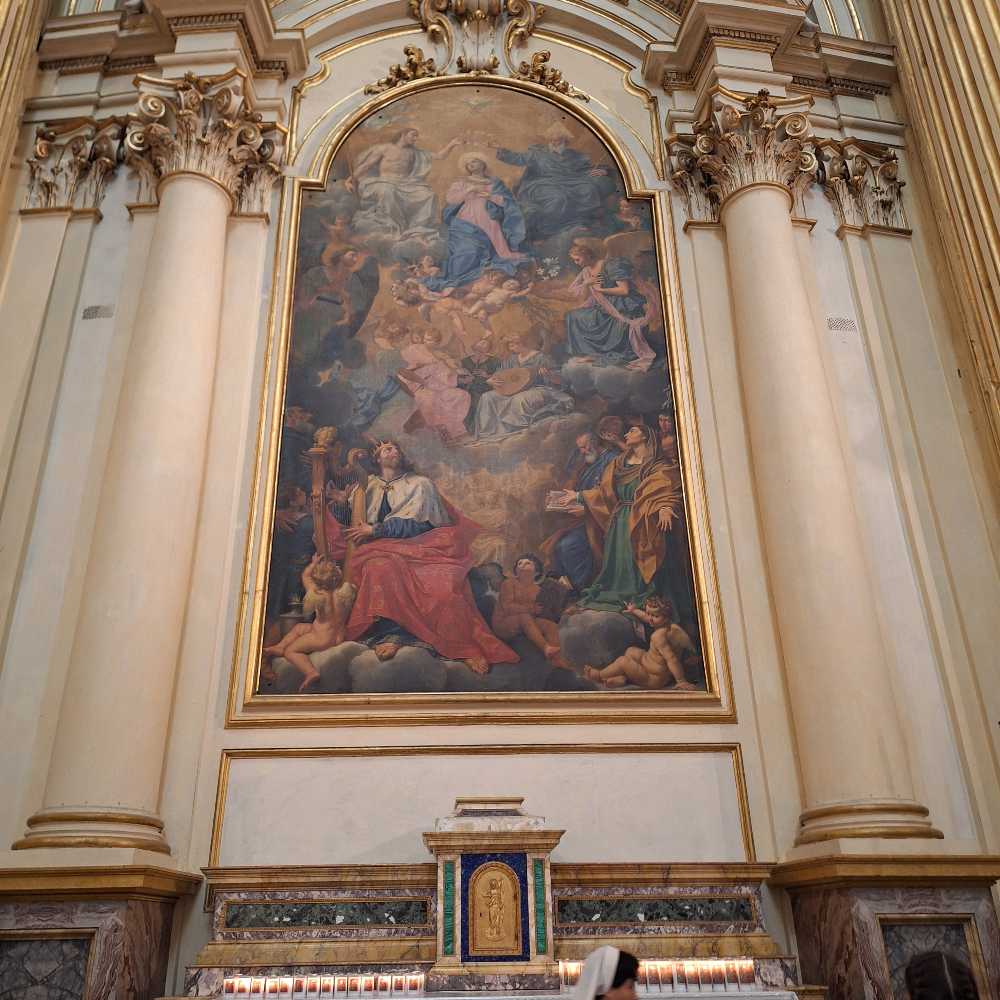
For all these reasons, visiting the Sanctuary of San Luca and walking up the longest portico in the world is not just a tourist stop: it is an experience that combines art, spirituality and landscape, capable of describing Bologna in a single glance. An experience that anyone who loves walking – or cycling, for the fittest – should do at least once in their life.
You might also be interested in:
