
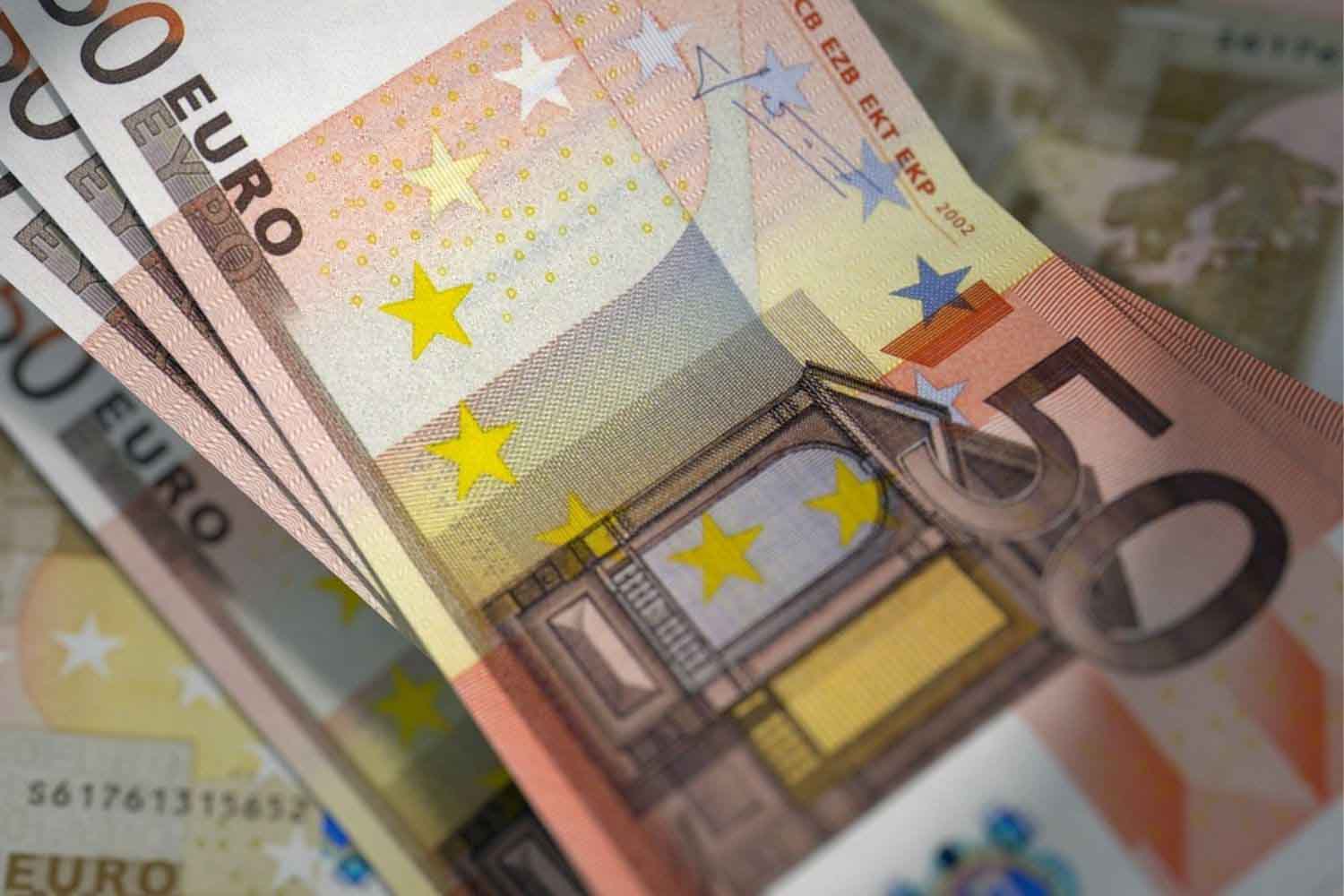
Trust in cash is based on a silent balance: every banknote that passes from hand to hand carries with it an implicit pact between those who pay and those who receive. When that pact breaks down, even just for a fake 50 euro note, the feeling is that of having been betrayed in something very everyday, almost intimate.
In recent days the reports have multiplied, with particular attention to the city of Pescara, but the phenomenon concerns the whole country. The numbers speak for themselves: according to the Bank of Italy, in 2024, 121,111 counterfeit banknotes were withdrawn from circulation and 87% of the cases concerned the 50 and 20 euro denominations.
The data is striking because it tells of a concrete reality, made up of payments at the bar, at the supermarket checkout, at the local market. And it also tells how important it is to learn to recognize an authentic ticket without the need for sophisticated tools.
Fake 50 euro banknotes: what the ECB says
To protect European citizens, the European Central Bank has developed a simple, accessible and immediate guide, summarized in three verbs that work like a small daily compass: Touch, look, move.
It is a method that does not require technical skills or professional equipment, but only attention and a minimum of familiarity with the security features of euro banknotes.
Touch: paper tells much more than we imagine
The first test starts with the hands, because the paper of authentic banknotes is made with pure cotton fibers and gives a very specific sensation: a compact consistency, a certain rigidity, a dry sound when touched or slightly folded.
Counterfeit reproductions, even when they appear realistic at first glance, are unlikely to imitate this tactile quality. Furthermore, some areas of the banknote have a relief print, obtained with an intaglio technique, which can be perceived by delicately passing your fingers over the main image and on specific areas of the front. It’s a subtle detail, but it’s one that really makes a difference.
Looking and moving: details that change in the light
When doubt arises, light becomes a precious ally. Just hold the banknote up to the light to observe elements that cannot be noticed at first glance.
The watermark, visible in the white part, shows a design obtained by varying the thickness of the paper. The image appears soft, nuanced, integrated into the structure of the card itself. In fakes it tends to be flat or printed superficially.
The security thread, embedded in the paper, appears as a dark line against the light, with the writing “EURO” and the number “50” in legible microwriting. It is a structural element, not a decorative one.
Then there is the holographic plate, which changes image by tilting the banknote: by rotating it, the nominal value and the architectural motif alternate. The digit “50” printed on the back also uses an iridescent ink that varies from purple to olive green or brown depending on the angle. It is a play of light designed to make counterfeiting extremely complex.
Those who have a UV lamp can carry out a further check. Under ultraviolet light, authentic paper remains opaque, while the fluorescent fibrils embedded in the material become visible, appearing red, blue and green.
The background and stars of the European Union flag take on specific shades, as do the map, bridge and face value on the back, which light up in yellow or green. Even the signature of the President of the ECB becomes fluorescent green. These are details that tell the technological complexity behind a simple banknote.
What to do if we receive a suspicious banknote
It may happen that you only notice the problem once you return home. At that moment the choice is crucial: a banknote suspected of being counterfeit must not be put back into circulation, because there is a risk of committing a crime.
Anyone who has doubts can contact a bank branch, a post office or directly to an office of the Bank of Italy. The ticket is collected and sent to the National Analysis Center for technical checks.
If the banknote is authentic, the amount is refunded in full. If the ticket is found to be false, it is destroyed and there is no refund, but simple possession in good faith does not entail criminal consequences for the citizen.
Fake 50 euro banknotes represent the largest share of counterfeits in Italy today. Informing yourself and learning to recognize the elements of security means protecting yourself and helping to protect collective trust in the economic system.
You might also be interested in:
