
Every day we walk, drive, cross streets and sidewalks without thinking that under our feet – or under the wheels of cars – an enormous amount of mechanical energy is released which is simply wasted. Pressure, vibrations, continuous compressions: an invisible heritage that, until now, we have rarely managed to transform into electricity in a truly effective and long-lasting way.
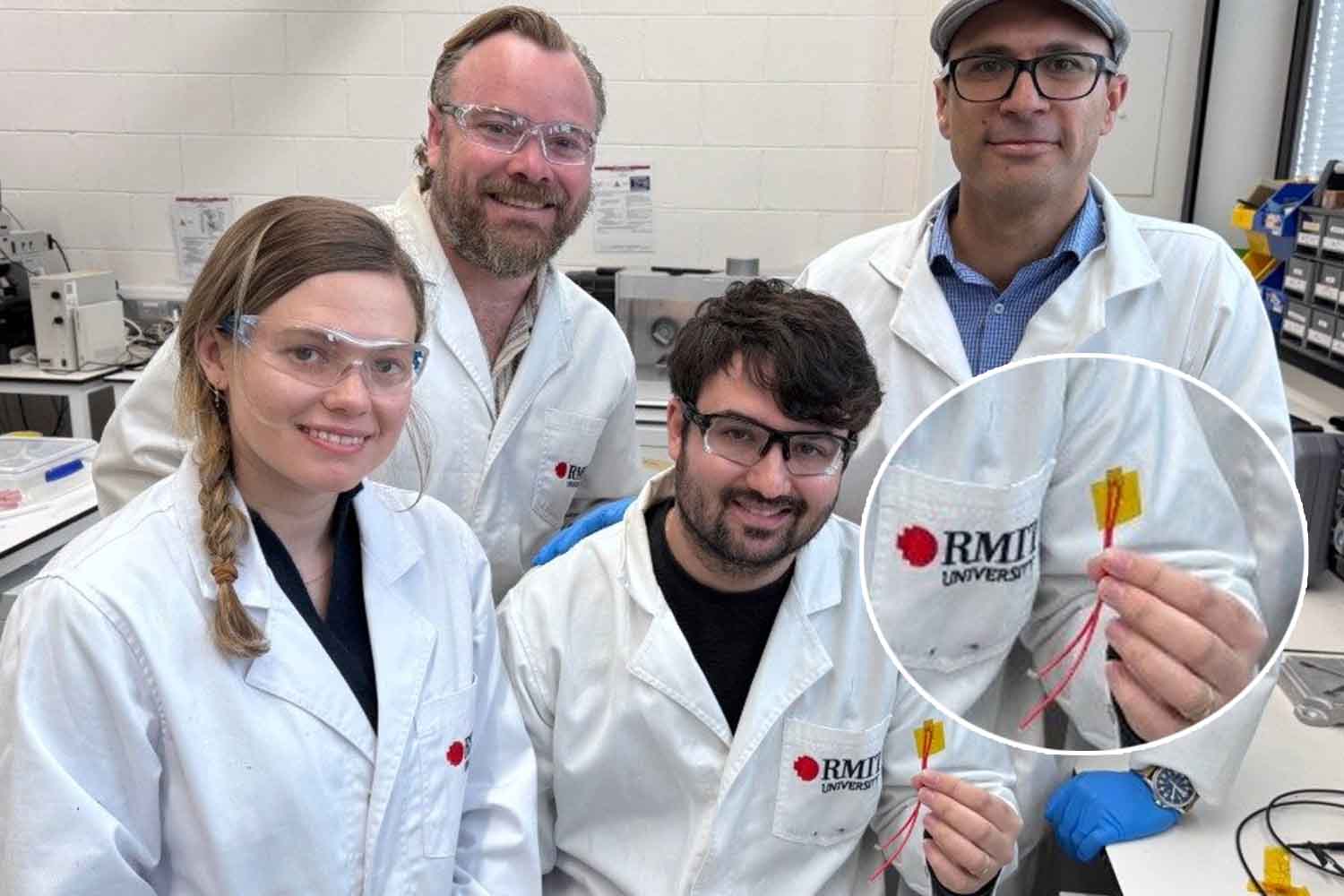
This is precisely where a discovery comes into play that could change the way we imagine things sustainable infrastructure and the materials of the future. A team from RMIT University has developed a film in piezoelectric nylon-11 capable of generating electricity when crushed, bent or subjected to vibrations, maintaining its performance even after being repeatedly compressed by the weight of a car.
Yes, you read that right: continues to produce energy even after a car passes by.
How nylon produces electricity
The technology is based on the principle of piezoelectricitya long-known physical phenomenon whereby some materials generate an electric charge when they are mechanically stressed. It is the same mechanism that we find in quartz, in some technical ceramics and even in the bones of our body.
The problem, up until now, has always been one: many plastic materials capable of transforming movement into energy are too fragile to withstand intense and repeated stress, such as that of a busy road or an urban surface subjected to continuous passage.
The group led by Distinguished Professor Leslie Yeo and Dr. Amgad Rezk decided to intervene directly on the molecular structure of the material. The choice fell on nylon-11a variant more suitable for generating electricity than the more common nylons, provided that its molecules are aligned correctly.
During the solidification phase, the researchers applied high-frequency sound vibrations together with a controlled electric field, managing to rearrange the molecules at a microscopic level. The result is a thin, flexible and surprisingly strong film, capable of producing energy every time it is compressed or folded.
The study’s first author, doctoral student Robert Komljenovic, explained that these films retain their ability to transform motion into electricity even after extreme stress, including repeated passing by a car.
Smart roads and self-powered wearables: what can change
The possible applications are anything but theoretical and speak directly to our present. Imagine sensors integrated into the asphalt capable of exploiting vehicle pressure to monitor traffic in real time, without external batteries and without the need for continuous maintenance. Each passage would become an energy microsource capable of powering detection and data transmission systems.
Likewise, this piezoelectric nylon it could find space in wearable devices, intelligent surfaces and urban infrastructures capable of capturing the energy generated by daily movements. Walking, running, vibrating: ordinary gestures that are transformed into concrete contributions to energy production.
The team highlights a crucial aspect for the ecological transition: the developed process is scalable and energy efficient, a fundamental requirement for large-scale industrial adoption. The research, published in Nature Communications, represents a step forward intelligent materials integrated into daily lifecapable of contributing to the reduction of carbon emissions without requiring invasive infrastructures.
This innovation invites us to reconsider the very idea of surface. Roads, floors, fabrics and objects could become active, productive, an integral part of a widespread energy network that enhances what we waste today.
