
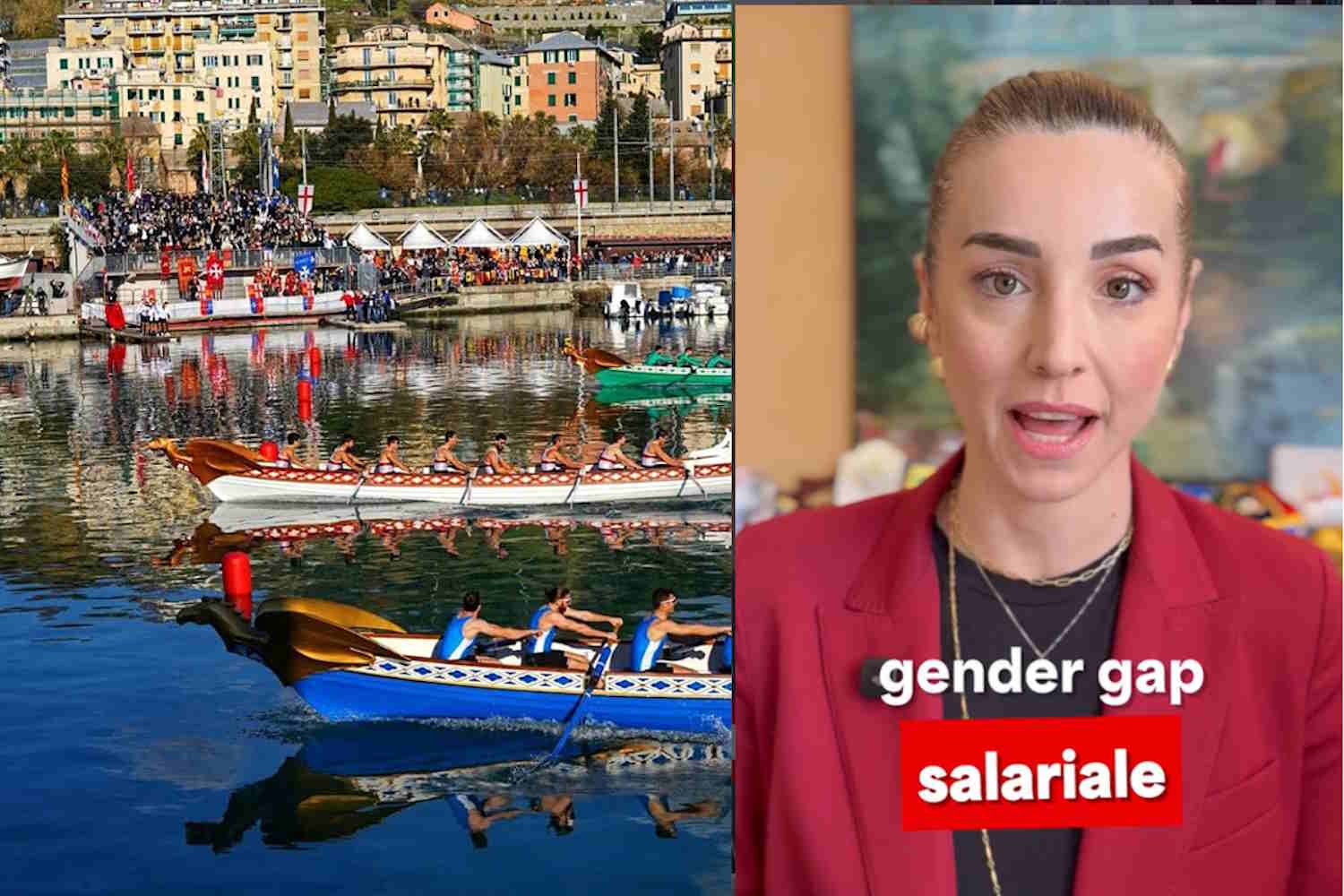
Starting from the 2026 edition of the Regatta of the Ancient Maritime Republics, female crews will receive the same compensation as male crews.
The announcement comes from the mayor of Genoa Silvia Saliswho decided to intervene after discovering a significant disparity in the compensation paid to male and female athletes in previous editions.
As the mayor herself says, the decision arises from a review of the event’s budgets. In fact, by analyzing the documents, a clear difference emerged between what the members of the two crews perceived. For the 2025 edition, the budget allocated to the men’s galleon – made up of eight athletes and a helmsman – was a total of 27 thousand euros, i.e. 3 thousand euros each.
For the female galleon, with eight athletes and a helmsman, the budget dropped to 9 thousand euros, equal to one thousand euros each. A similar situation also occurred in 2024.
View this post on Instagram
The difference was even more marked in 2023, when men received 2 thousand euros each plus a thousand bonus, while women received 200 euros plus 500 bonus. Numbers that have brought to light a clear gender pay gap within the competition.
For Silvia Salis, a former Olympic hammer throw athlete who has always been committed to fighting inequalities in sport, the choice was almost natural.
I have dedicated my life to sport and to overcoming all forms of wage inequality in sports competitions and management, he explained.
The mayor has already informed her colleagues from the other cities involved in the regatta – Amalfi, Pisa and Venice – through an official letter. The objective is clear: to equalize the salaries of female athletes with those of male athletes starting from the next edition, with the support of the municipal offices.
The Regatta of the Ancient Maritime Republics is much more than a rowing race. Every year the four cities that have dominated the Mediterranean for centuries – Genoa, Pisa, Venice and Amalfi – compete in a competition that celebrates their maritime history, including historical re-enactments, customs and traditions that recall a glorious past.
Precisely for this reason, the choice to eliminate wage disparity also takes on a symbolic value. In a competition that looks back at history, a space finally opens up for a more equal present, in which the talent and commitment of female athletes are recognized in the same way as those of their male colleagues.
A small but significant step towards greater equity in sport, which could contribute to changing perspectives also in other sporting contexts where the gap between men and women continues to be a reality.
