
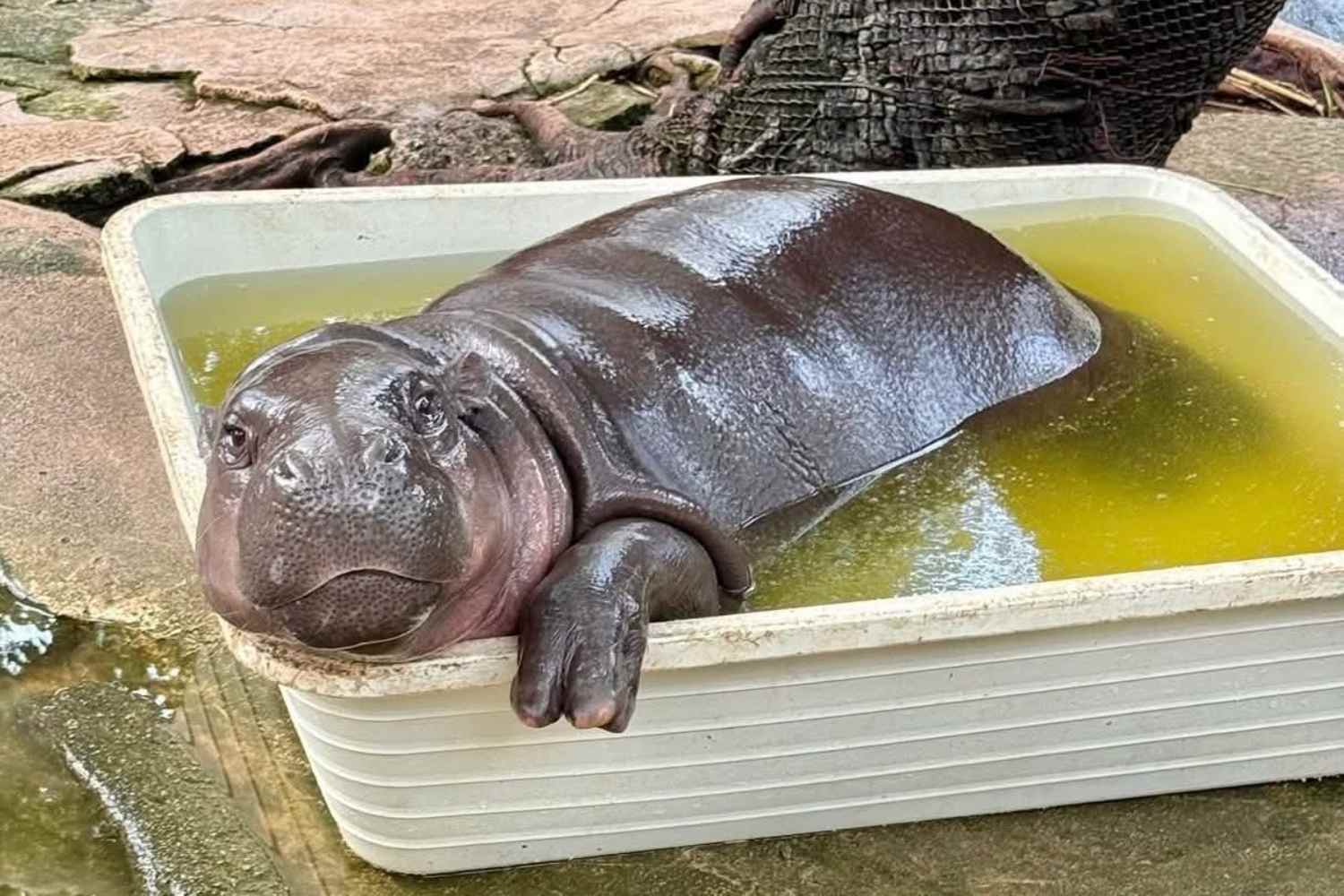
Moo Deng, the small female pygmy hippopotamus who “conquered” the web (but not those who pay attention to animal welfare) with her funny acrobatics, is back on trend, but for reasons that are anything but funny. The photos released by Siranudh Scotta Thai conservationist, have in fact shown feces and mud in the habitat of the small hippopotamus at the Khao Kheow Open Zoo, triggering concerns among the star’s fans.
Scott’s post on Online reactions were immediate, with numerous users expressing sadness and indignation at the conditions visible in the images.
วันก่อนเห็นภาพ สภาพกรง/ที่อยู่/สระ ของ Moodeng ในปัจจุบัน…. เศร้าจริงๆสภาพแบบนี้แม้ว่า เขาได้สร้างรายได้เยอะขนาดนั ้นสุดท้ายแล้วน้องเขาเป็นแค ่ธุรกิจในสายตามนุษย์รอบข้าง
— ทราย Ψ (@siranudhscott) February 15, 2026
The zoo’s response
Khao Kheow Open Zoo reacted promptly, clarifying that Moo Deng is managed according to international animal welfare standards. The mud and earth present in the enclosure are not signs of neglect: they serve to keep the skin hydrated and allow the hippo to express natural behaviors, such as digging, rolling and immersing himself in water.
As for visible feces, the zoo explained that hippos, including pygmies, naturally deposit them in water or on the ground to mark their territory, and that the team of keepers cleans up every morning according to the guidelines of WAZA, the World Association of Zoos and Aquariums.
สวนสัตว์เปิดเขาเขียว ขอบคุณทุกความห่วงใยที่มีให้ “น้องหมูเด้ง” ยันดูแลตามมาตรฐานสากล พร้อมกางแผน “ฮิปโปวิลเลจ” 10 ไร่
สวนสัตว์เปิดเขาเขียว ขอขอบพระคุณทุกความห่วงใยและ ข้อเสนอแนะจากแฟนคลับทั่วโลก ยืนยันยึดถือ “ความสุขและสุขภาพ” ของสัตว์เป็นที่ตั้ง… pic.twitter.com/sWSd4q4cnU
— สวนสัตว์เปิดเขาเขียว Khao Kheow Open Zoo (@KhaokheowZoo) February 16, 2026
The Hippo Village project
The zoo also announced the “Hippo Village” project, a 4-acre expansion that will house six pygmy hippos and seven large hippos. The goal is to offer more spacious and biologically suitable environments, increasing sustainability and animal welfare without interfering with their habits.
Management reiterated that the current conditions, including muddy and aquatic areas, are designed to simulate natural habitats and support Moo Deng’s physical and psychological health. The works will be carried out with caution, so as not to cause stress or discomfort to the animals during the construction of the new space.
Can a life lived in captivity really be said to be happy?
Despite the zoo’s scientific explanations and daily care, a disturbing question remains: can an animal really live well in an artificial space, far from its natural habitat, closed between fences and observed by visitors? Even with mud, water and plants, the reality remains that of a confined animal, deprived of the freedom and complexity of the ecosystems from which it comes. Moo Deng’s popularity on social media cannot replace the intrinsic need for space, movement and natural interactions.
Fame can never compensate for a life far from freedom, in fact it is nothing but harmful for an animal.
You might also be interested in:
