
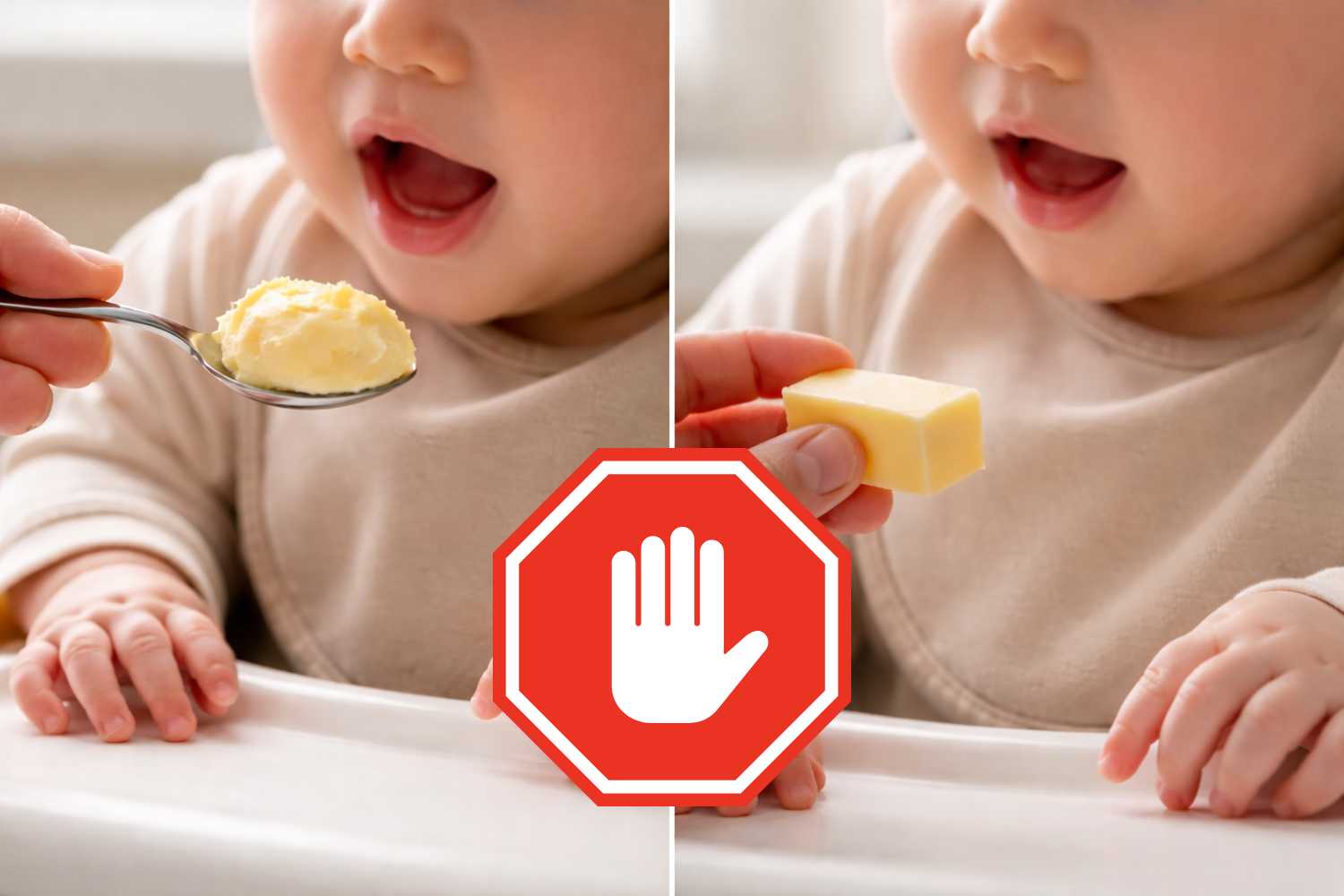
There are several videos circulating on TikTok of smiling mothers offering generous spoonfuls of butter – sometimes entire sticks – to their newborns. The basic idea is that the high fat content helps the baby sleep better and promotes growth. This trend, dubbed Butter Baby, is gathering millions of views and, unfortunately, quite a few imitators.
As often happens with viral health trends, the enthusiasm on social media does not go hand in hand with the scientific evidence. Indeed, in this case it goes exactly in the opposite direction.
Matteo Bassetti, infectious disease specialist and well-known face of the Italian scientific debate, has publicly reacted to this dangerous trend which is also spreading in Italy on social media, publishing a warning post:
Bassetti emphasizes that this practice has no medical basis and urges parents not to rely on social media and unverified online trends for their children’s food choices.
The expert advises not to give butter as a stand-alone snack, but to integrate small quantities of healthy fats – such as avocado, oily fish or a little butter mixed with vegetables – into a varied diet.
But does it really work?
The idea that a high-calorie meal before bed helps a baby sleep longer is not new. In the past, the same belief about rice cereals circulated, but was later disproved by research. Now it’s the butter’s turn.
According to experts interviewed by CNN, such as dietitian Amy Reed and pediatrician Molly O’Shea, there is no scientific evidence that feeding large amounts of fat or calories to newborns actually improves sleep. Reed explains that although fats are critical for brain growth and development in children ages 6 months to 2 years, excessive consumption of butter as an isolated meal or snack does not constitute a balanced diet.
O’Shea adds that nighttime awakenings in young children are completely normal and depend on age, satiety and development, not what they eat, and that most newborns wake up at least once, often as many as three times a night, in the first year of life.
@brandalynannx If your not doing this, your going to need to. #babygirl #goodnightsleeptight #fypシ #fyppppppppppppppppppppppp
♬ Rugrats Theme (From “Rugrats”) – Just Kids
@alexialarose71 We don’t do this every night, if she didn’t get much healthy fats or protein I’ll give her some and she has transitioned from 2 wakes to 1 (last 3 nights in a row; we started last week) We use grass fed butter and she loves this! Has this worked for anyone else? #butter #baby #hack #sleep #crunchymom #healthyfats #grassfedbutter
♬ Cute – Aurel Surya Lie
The risks
The main problem is that butter, despite being very energy dense, does not have all the essential nutrients. Administering it in large quantities risks taking away space from those fundamental foods that contain iron, proteins, zinc and vitamins, which are important for the brain and physical development of the child in the first years of life.
The situation becomes even more worrying for newborns under six months, for whom the WHO recommends exclusive breastfeeding: introducing butter at this stage can significantly alter the intestinal flora, making them more vulnerable to infectious diseases at a time when their immune defenses are still fragile.
Once the six-month mark has passed, children need a broad and varied diet, which includes foods rich in iron, fruit, vegetables, whole grains and animal proteins. Using butter as a stand-alone snack simply means taking away space for all this, impoverishing the diet instead of enriching it.
Finally, there is a question of quality as well as quantity. Fats are necessary for children, this is true, but large doses of saturated fats administered without any nutritional balance are not a dietary strategy.
However, there is one aspect that it would be wrong to ignore: behind this trend there are desperate and sleep-deprived parents. Research suggests that just two nights of interrupted sleep can make people feel physically older.
It’s understandable that we’re looking for a quick fix, whether it’s an expensive crib or a spoonful of butter. But it is precisely this vulnerability that unverified viral trends exploit, often irresponsibly.
The answer isn’t in the butter. It lies in correct information, in support for parents and – when necessary – in pediatric sleep professionals.
