
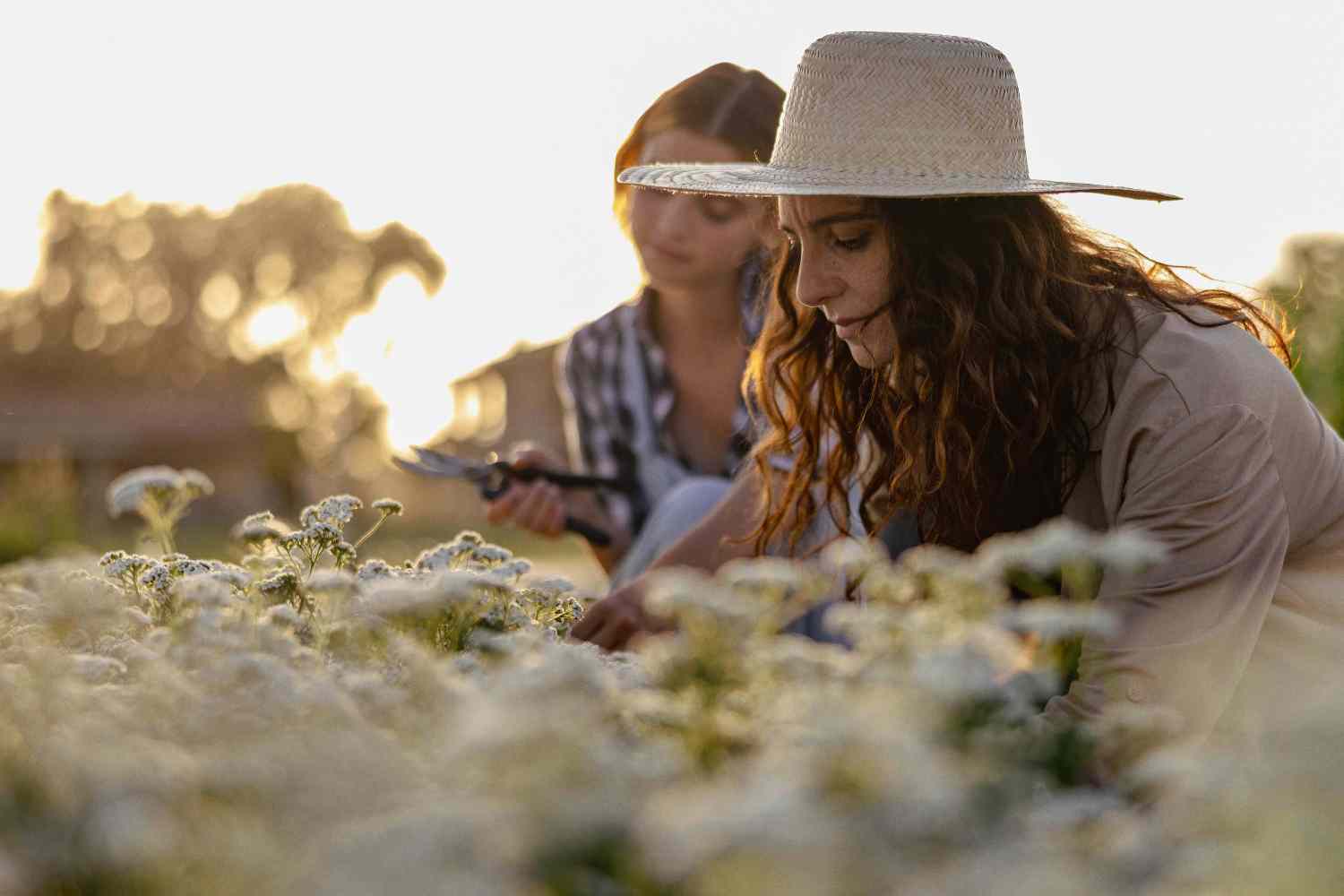
In a historical moment in which the need to make production systems more sustainable is increasingly evident, regenerative agriculture is establishing itself as one of the most concrete answers. The initiative of the Davines Group, a professional cosmetics company certified B Corp since 2016, which together with the Foundation for Sustainable Development has announced the opening of applications for the third edition of “The Good Farmer Award” 2026, fits into this scenario. The award, the only one of its kind in Italy, aims to identify and support young farmers capable of experimenting with healthier, more resilient agricultural models in balance with ecosystems.
An award for regenerating agriculture
The objective is not only to offer economic support, but to encourage agroecological practices that go beyond traditional organic. The approach promoted considers the agricultural system in its entirety: the health of the soil, the protection of biodiversity and also the social effects of agricultural activities. This perspective also includes the opening of the tender to companies involved in extensive breeding, recognizing the role that integrated management between crops and pastures can have in improving animal welfare and reducing the use of veterinary drugs, for example through open grazing.
Who can participate
The award is aimed at farmers who are no more than 35 years old as of 31 July 2026 and who manage companies with valid organic certification. However, it is not enough to respect organic standards: candidates are required to demonstrate a concrete commitment to regenerative organic farming and agroecology, applying at least three agricultural practices considered fundamental to improve soil fertility and the resilience of agricultural ecosystems.
These include, for example, crop rotation to maintain soil fertility and limit parasites and diseases, the reduction of soil cultivation to preserve its structure and microbial life, the use of organic fertilizers and the introduction of agroforestry systems that combine trees, fields and pastures. Other practices include the use of cover crops, such as legumes, to protect the soil from erosion and enrich it with nutrients, and mulching with organic material to maintain moisture and contain weeds.
The prize and how to apply
Among the projects presented, two will be selected to receive a contribution of 10,000 euros each made available by the Davines Group. The resources will be used to support concrete interventions, from the purchase of materials to the development of new agroecological activities, with the aim of transforming promising ideas into operational and replicable projects.
Applications will be open from 10 March to 15 May 2026 and can be sent by completing the dedicated online form. For information or assistance you can write to thegoodfarmer@susdef.it. The selection will be entrusted to a jury made up of eight experts in agriculture, agroecology and sustainability, chaired by Edo Ronchi, president of the Foundation for Sustainable Development. The awards ceremony will be held on November 27, 2026 at the Davines Group Village in Parma.
The winners of previous editions
In the first two editions, in 2024 and 2025, The Good Farmer Award has already awarded five young farmers, four in Italy and one in the United States, also thanks to the collaboration with the Rodale Institute, a pioneer of regenerative organic agriculture. Each of the winners received 10,000 euros, used to develop innovative environmental and social projects.
Among the 2024 winners is Marta Galimberti from Cascina Bagaggera, in the province of Lecco, who has built a multifunctional agricultural model capable of combining agroecology and social inclusion together with the Corimbo Onlus Association. The funding was used to expand the garden, strengthen inclusion projects and develop educational activities. In the same year, Filippo Laguzzi of RAM – Radici A Moncalieri, in the Turin area, was also awarded, who combined organic and regenerative agricultural production with an intense environmental dissemination activity such as an educational farm. The contribution received was invested in manual equipment to improve daily work.
In 2025, Alessia Mazzù of the Co.r.ag.gio agricultural cooperative in Rome was awarded for her work to recover 22 hectares of abandoned public land, while Luca Quirini of the Quira agricultural company, in Liguria, was recognized for his commitment to protecting local biodiversity and the Cabannina cattle breed. His project included the construction of a “stable in the woods” and the purchase of a multifunctional laboratory van. In the same year, in the United States, the award went to Clarenda “Farmer Cee” Stanley, who used the funds to improve the management of perennial crops and create a tunnel greenhouse dedicated to the cultivation of hibiscus and moringa.
The role of research: the European Regenerative Organic Center
Also supporting this path is the European Regenerative Organic Center (EROC), founded in 2021 by the Davines Group together with the Rodale Institute. The centre, the first in Europe dedicated to research and training on regenerative organic agriculture, is located within the Davines Group Village in Parma and extends over an area of 17 hectares.
After three years of experiments, the data collected shows significant results. Agricultural systems managed with regenerative organic practices have achieved levels of productivity comparable to those of conventional agriculture, but with clear benefits for the soil and the environment. An increase in soil biodiversity was observed, with a greater presence of microbes and earthworms, and an improvement in the nutritional quality of crops, particularly regarding minerals such as magnesium, calcium and zinc. Regenerative practices, such as reduced tillage, cover crops and rotations, have also shown a greater ability to accumulate organic carbon in the soil and increase the resilience of soils to climate stress.
EROC has also achieved Regenerative Organic Certified (ROC), one of the most advanced international standards for soil health, animal welfare and social equity. In addition to research, the center accompanies several Italian agricultural companies on the path towards this certification and participates in international networks such as the FAO Technical Advisory Group and the Global Soil Partnership Working Group.
An investment in the future of agriculture
The Good Farmer Award therefore aims to be more than a prize: it represents an investment in a new way of doing agriculture, capable not only of producing food but also of regenerating the soil, protecting biodiversity and strengthening rural communities. In this sense, the future of agriculture increasingly depends on the ability of young farmers to experiment with different and more sustainable models.
