
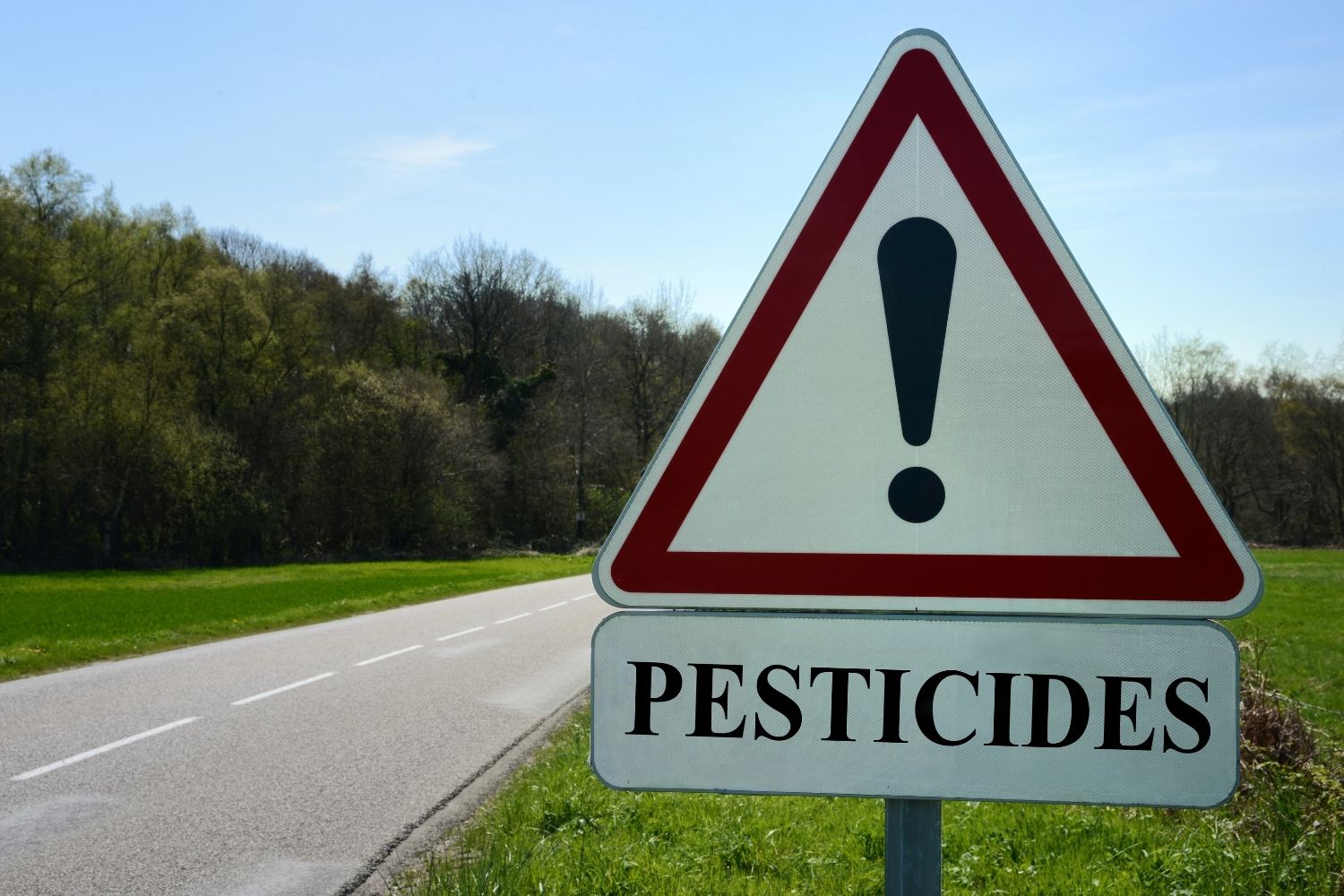
An alternative that is not an alternative. This, in summary, is the judgment that currently weighs on Flupyradifurone, the systemic insecticide approved by the European Union in 2015 and marketed by Bayer under the name Sivanto. Presented at the time as a less dangerous substitute for classic neonicotinoids, already under fire for their devastating action on bees, Flupyradifuronesi reveals an identical problem on a different label a decade later.
In recent days, the organizations PAN Europe and Générations Futures sent a formal letter to the European Commission, asking for an urgent review of its authorization in light of the most recent scientific evidence.
The reasons? The mechanism of action of Flupyradifurone is the same as the best-known neonicotinoids: it acts on the nervous system of insects, blocking the nicotinic acetylcholine receptors. Despite the distinct chemical classification, scientists agree in considering it, in all respects, a further representative of this controversial family of pesticides. Its approval was justified precisely by the promise of less toxicity for pollinators, a promise that the facts are denying with increasing clarity.
The latest EFSA review, conducted in 2022, had already highlighted serious risks to wild bees. Yet, despite that alarm, the European Commission has not adopted any restrictions. Worse, in 2024 the ten-year authorization was simply extended by three and a half years, until June 2029, as if nothing had happened.
What science has discovered about Flupyradifurone
While European institutions postponed decisions, independent scientific literature multiplied. From the 2022 EFSA review to today, 72 new studies have been published on the effects of Flupyradifurone on non-target organisms, that is, on all those living beings that the pesticide should not affect, but does.
Of these 72 works, 44 specifically concern bees and bumblebees. And the data that emerges is unequivocal: the vast majority report documented toxic effects, often recorded at environmental exposure levels, i.e. at the concentrations that insects and other organisms actually encounter in the treated fields.
The problem is that none of these studies have so far been evaluated by EFSA and therefore none have changed the fate of the authorization.
The risks for children
The problem is not limited to insects. Like all neonicotinoids, Flupyradifurone is capable of crossing the blood-brain barrier and placental barrier in mammals. This means that it can reach the developing brain of the fetus, with possible neurological consequences still to be clarified in their extent. And this is not an abstract fear given that something similar has already been seen with acetamipyrid, another neonicotinoid whose maximum residue levels in foods were significantly reduced in 2025, after research had demonstrated some risks for neurological development.
The case of Flupyradifurone follows the same pattern, but the European Commission seems not to want to learn from the previous story.
A change is possible
However, there is a glimmer of change. In April 2024, the Court of Justice of the European Union issued two rulings that could rewrite the rules of the game: the judges declared that the pesticide evaluation method currently in use in member states does not comply with the law. The process was started by PAN Europe itself, and the principle that emerges is potentially revolutionary: it is no longer possible to systematically ignore the most recent independent scientific literature, building authorizations almost exclusively on studies commissioned by the industry. It is with this legal leverage in hand that PAN Europe and Générations Futures are now knocking on the Commission’s door, asking that the Flupyradifurone case be one of the first to deal with the new reality.
In the background of this story there is a structural problem that PAN Europe has been reporting for years: the guidelines used to evaluate the impact of pesticides on biodiversity date back over twenty years ago, and were co-drafted with the active contribution of pesticide industry personnel. A system that evaluates itself, with its own criteria and studies, cannot be a guarantee of neutrality.
The organization carries out the campaign “Restore Biodiversity, protect Bees and Insects“precisely to push towards guidelines that truly protect non-target insects. The case of Flupyradifurone is, in this sense, emblematic: it is not just the story of a problematic pesticide, but the mirror of an approval mechanism that continues to work, ignoring inconvenient science, postponing difficult decisions and extending authorizations that perhaps should not have been granted.
