
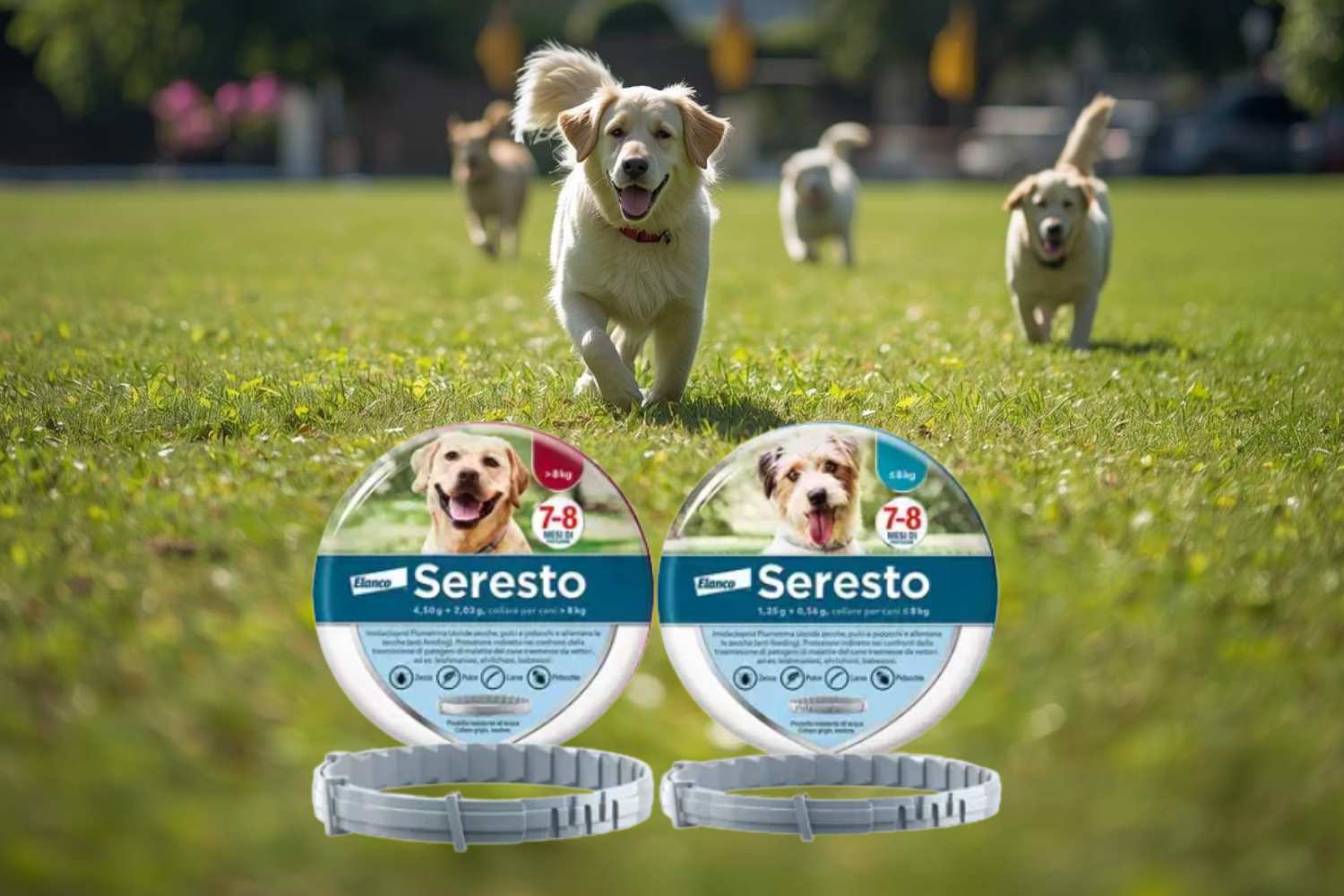
The story of the Seresto anti-parasitic collar is not new to GreenMe readers. We had already started talking about it in 2021, when the first reports arrived from the United States: tens of thousands of cases of adverse effects recorded by the EPA, the American federal environmental protection agency, with numerous deaths among dogs potentially linked to the use of the collar, lawsuits, class actions and congressional hearings.
In July 2023, the American Agency confirmed that the Seresto anti-parasitic collar can remain on the market, however imposing further transparency requirements on risks and reporting of adverse effects and requiring annual reports on the monitoring of cases until at least the registration expires in 2028.
A story that, seen from Italy, might have seemed distant, but is not at all given that it concerns a product that is also widespread in our shops and veterinary pharmacies.
It is no coincidence that at the end of 2025, the topic became highly topical in our country too following a report from the broadcast Guess who’s coming to dinner? on Rai 3, which turned the spotlight back on the product by also bringing to TV some Italian testimonies of dogs who developed epilepsy or tumors after wearing the collar. Isolated cases, without a proven causal link, but sufficient to reopen a series of questions.
To offer readers as complete a picture as possible and also give space to the company’s position, we decided to contact Elanco Animal Health directly, which today produces the collar.
From pre-marketing tests to monitoring adverse effects, from the issue of imidacloprid being banned in agriculture to precautions for families with children: here’s what the company responded to us.
What tests and checks were carried out before the Seresto collar was marketed and how are they updated over time?
It is important to clarify first that the Seresto collar it is a veterinary medicinal product regularly authorized in Italy by the Ministry of Health. This means that, before arriving on the market, its scientific dossier was subjected to an extremely rigorous evaluation to validate its safety, quality and effectiveness.
Over 10 years of scientific data, produced both during registration and after marketing, analysis and continuous monitoring confirm Seresto’s safety profile. Like all veterinary medicines, Seresto has gone through a rigorous regulatory approval process. Strong scientific evidence – including data generated pre-approval to date, as well as post-market surveillance data – and widespread use of more than 140 million collars in more than 80 countries worldwide further support Seresto’s safety profile.
Safety is a dynamic process: through our pharmacovigilance activity, we constantly monitor the product in accordance with current regulations. In Europe, the European Medicines Agency (EMA) and national authorities carry out periodic reviews of the available data and, if necessary, require updates to the package leaflet to always reflect the most advanced scientific knowledge. All available data supports Seresto’s safety profile.
Elanco continuously monitors the effects of the Seresto collar on the market? How is consumer data and reports collected and analyzed, and how are these results shared with European and international regulatory authorities to ensure safety and timeliness of updates?
Absolutely yes. Animal health and welfare are our top priority. Elanco carries out constant and rigorous monitoring through its pharmacovigilance activity. Every single report of potential side effects we receive from dog or cat owners or veterinarians is collected and evaluated by a group of specialized experts. This process is extremely structured: the data is analyzed to promptly identify any signs of adverse events and is shared transparently with the competent regulatory authorities, both at a national (Ministry of Health) and international (EMA) level. This continuous flow of information ensures that the safety profile of the medicine is always updated and under control.
In 2024, the incidence of adverse events in Italy was 0.0057%, which is equivalent to approximately 1 animal with an adverse event reported for every 17,500 collars sold in Italy, the majority of which concern non-serious events such as itching or redness localized at the collar application site. These are known reactions, for which we provide clear and complete instructions in the information leaflet present in each package, so that the owner is always correctly informed.
Numerous cases of adverse effects related to the use of the Seresto collar have been reported in the United States. In Italy the situation seems more contained: are there similar protocols for collecting and evaluating any reports of problems in our animals? What factors may contribute to these differences between countries?
It is crucial to clarify this point for the United States. In July 2023, the United States Environmental Protection Agency (EPA), with support from the Food and Drug Administration (FDA), completed a comprehensive, multi-year review of the Seresto parasite collar. As part of the EPA’s scientific review process, the agency analyzed data on reported adverse events, including those already evaluated by third parties, and compared the data to other, similar pet products registered by the EPA.
According to the EPA, Seresto continues to meet all EPA standards for registration under current US law. The EPA’s conclusions found that the most frequently reported episodes were mainly dermatological in nature, such as itching or redness around the collar application site, in line with previous findings and what is known in our country.
It is a well-established pharmacovigilance and regulatory principle that reports of adverse events or incidents should be verified and do not in themselves indicate a causal link between the adverse effect and the use of the product. Numerous studies and data analyzes of reported cases have concluded that Seresto It has a strong safety profile and meets regulatory requirements in the US, which is why the American Veterinary Medical Association has expressed support for Seresto’s continued EPA registration.
The EPA’s findings are in line with those of authorities around the world. In the European Union and Italy, where among other things the number of dogs is much lower than in the United States, we have an extremely structured pharmacovigilance system, coordinated by the European Medicines Agency (EMA) and, at a national level, by the Ministry of Health. This system does not simply collect data, but these are periodically analyzed to determine whether there is a real correlation between the drug and the event reported from time to time.
The Seresto collar formula — in particular the combination of imidacloprid and flumethrin — is the same in all countries where the product is marketed?
Yes, the active ingredients of the Seresto collar they are identical in all countries where the product is authorized and marketed. The combination of imidacloprid and flumethrin is a very important point of its protective effectiveness. Also, what makes Seresto particular is not only the choice of active ingredients, but its patented Polymer Matrix technology. This special polymeric matrix allows the active ingredients to be enclosed inside the collar and released onto the animal’s skin extremely slowly, continuously and in minimal doses for a period of up to 8 months. This controlled release system is fundamental: it guarantees constant protection against parasites and disease vectors (such as leishmaniasis in dogs), while maintaining a high safety profile for the animal and for those who live next to it.
Considering that imidacloprid is banned in agriculture in the EU due to its environmental impact, Elanco has evaluated the possibility of replacing it with alternative active ingredients in Seresto collars? If so, what are the prospects or technical difficulties of a possible replacement?
It is essential to make a scientific distinction between the use of a substance in agriculture and its use in a veterinary medicine. Comparing these two areas is completely misleading. The European ban on the use of Imidacloprid in agriculture, for use during field spraying, was imposed by the EFSA (European Food Safety Agency) in 2018, in order to protect pollinating insects such as bees.
For Serestothe situation is completely different: imidacloprid is enclosed within a polymeric matrix which releases the substance in a slow and targeted manner exclusively into the lipid layer of the skin and fur of pets. Furthermore, pet dander is not at all attractive to bees and there is no realistic exposure scenario resulting from the use of Seresto that may impact bees or other pollinating insects.
The Seresto collar Can it also be used on newborn puppies or is it only recommended from a certain age?
No, the use of the Seresto collar it is not suitable for newborn puppies. Use is authorized starting from the seventh week of the puppy’s life, as expressly indicated in the medicine leaflet.
This indication derives from rigorous safety studies conducted on puppies of this age which confirmed the excellent tolerability of the product. It is essential that owners always respect the age and weight indications given on the package, to ensure that anti-parasitic protection takes place in full respect of the health and development of the puppy.
The information leaflet for the Seresto collar contains a series of precautions for correct use, but in daily practice pet owners do not always read them carefully. What are the main indications that Elanco believes are essential for every owner to know before applying the collar? Are there categories of people or domestic situations — families with young children, pregnant women, people with particular pathologies — in which greater caution is necessary?
As with any medicine, whether human or veterinary, correct use is the key to maximum safety. The most important indication is to carefully read the information leaflet before application and to consult your trusted veterinarian for any doubts.
As regards living together at home, especially in the presence of small children, it is essential to observe some common sense precautions which are indicated on the Seresto packaging: before application, the collar must be kept out of sight and reach of children (it is important to prevent children from playing with the collar and, even more so, from putting it in their mouths); It is preferable not to allow pets wearing collars to sleep in the same bed as their owners, and this recommendation is particularly important if children are present.
Furthermore, people with a known hypersensitivity to the components of the collar should avoid direct contact with the product.
By following these simple but fundamental rules of use, it is possible to guarantee our animals effective protection against parasites and diseases carried by them, maintaining a peaceful and protected home environment for everyone.
