
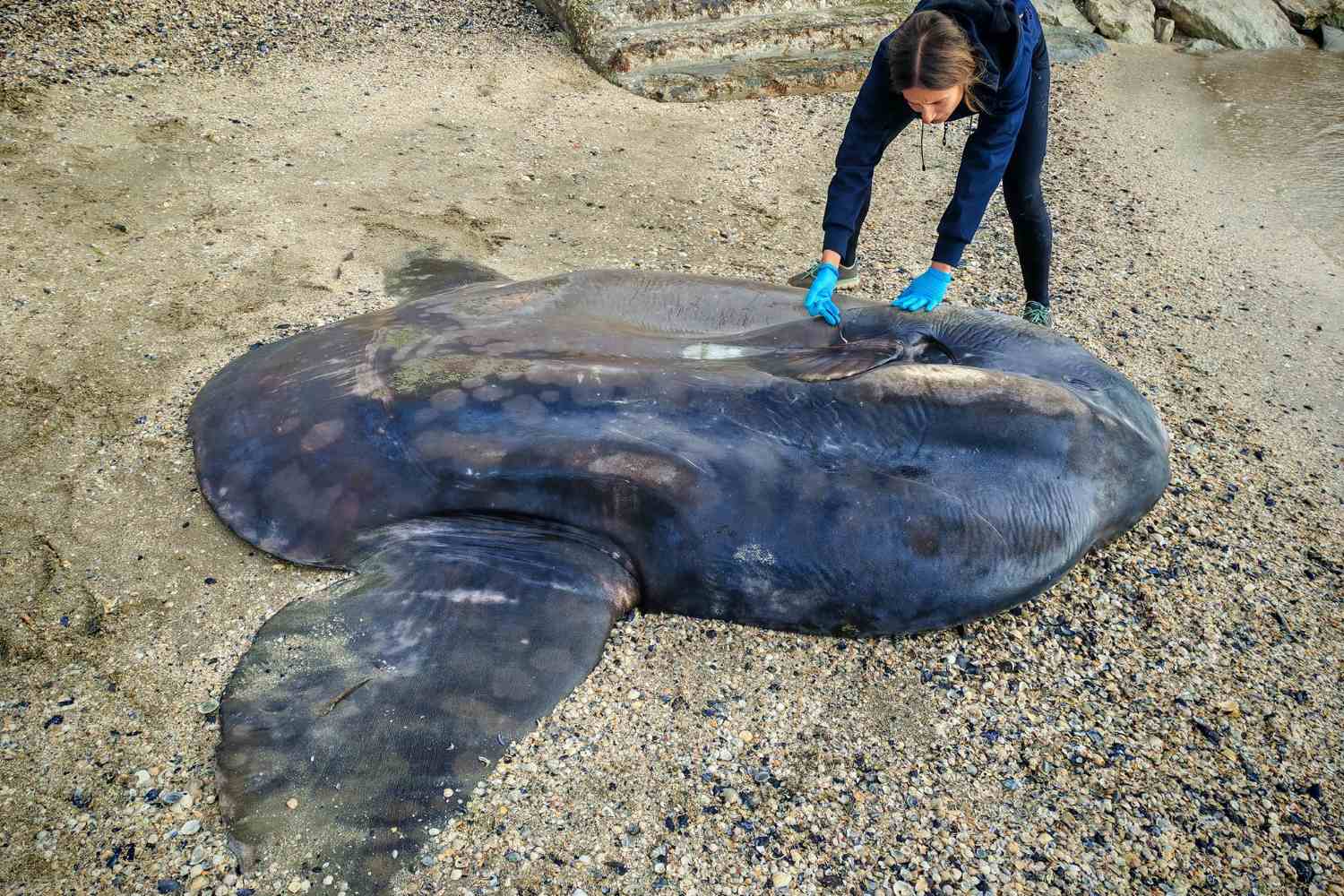
A sunfish of extraordinary proportions was found dead this morning along the Adriatic coast, near the Marina di Ravenna palisade. The specimen, approximately 2.5 meters long and with an estimated weight of 400 kg, attracted the attention of swimmers and marine wildlife enthusiasts, immediately becoming a protagonist on social media and among experts.
The discovery comes a few days after a sighting of the same fish in obvious difficulty in the same stretch of sea, suggesting that its condition was already compromised. The discovery triggered a joint recovery operation between CESTHA and CERT, with the support of the Port Authority, to allow in-depth investigations into the state of health and possible causes of death.
The death does not appear to be due to human activities
From initial observations, the carcass does not show lacerations from propellers or abrasions attributable to fishing nets, excluding for now direct involvement of human activities. Experts will now be able to collect precious data to better understand this species, still largely mysterious, and delve deeper into aspects of its biology and behavior in the Mediterranean Sea.
The sunfish, belonging to the Mola genus, is known for being the heaviest of bony fish. The largest specimens can weigh more than 2 tons, reaching up to 4 meters in height and 3 meters in length. Its ovoid shape, compressed laterally and similar to a full moon, makes it immediately recognisable, as does its truncated caudal fin called clavus, which replaces the actual tail.
A peaceful and vulnerable giant
These fish feed mainly on jellyfish, zooplankton and small marine organisms, using their dorsal and anal fins to swim slowly in coastal and open sea waters, between 30 and 1515 meters deep. Despite its imposing size, the sunfish is peaceful and poses no danger to humans, but the species is classified as Vulnerable by the IUCN. The main threats are accidental capture (bycatch), ingestion of plastic bags mistaken for jellyfish and the lack of regulations and adequate conservation sites.
An opportunity for research and conservation
The recovery of the carcass by CERT and CESTHA will allow detailed analyses, from tissues to organs, to obtain information on the health of the local population and on any factors that can lead to strandings. Each data collected contributes to building a scientific map of the species, fundamental for protection and awareness strategies. Known for their slowness and peaceful character, sunfish are true symbols of marine biodiversity, and each discovery, although sad, represents a step forward for the research and conservation of these fascinating inhabitants of the sea.
You might also be interested in:
