

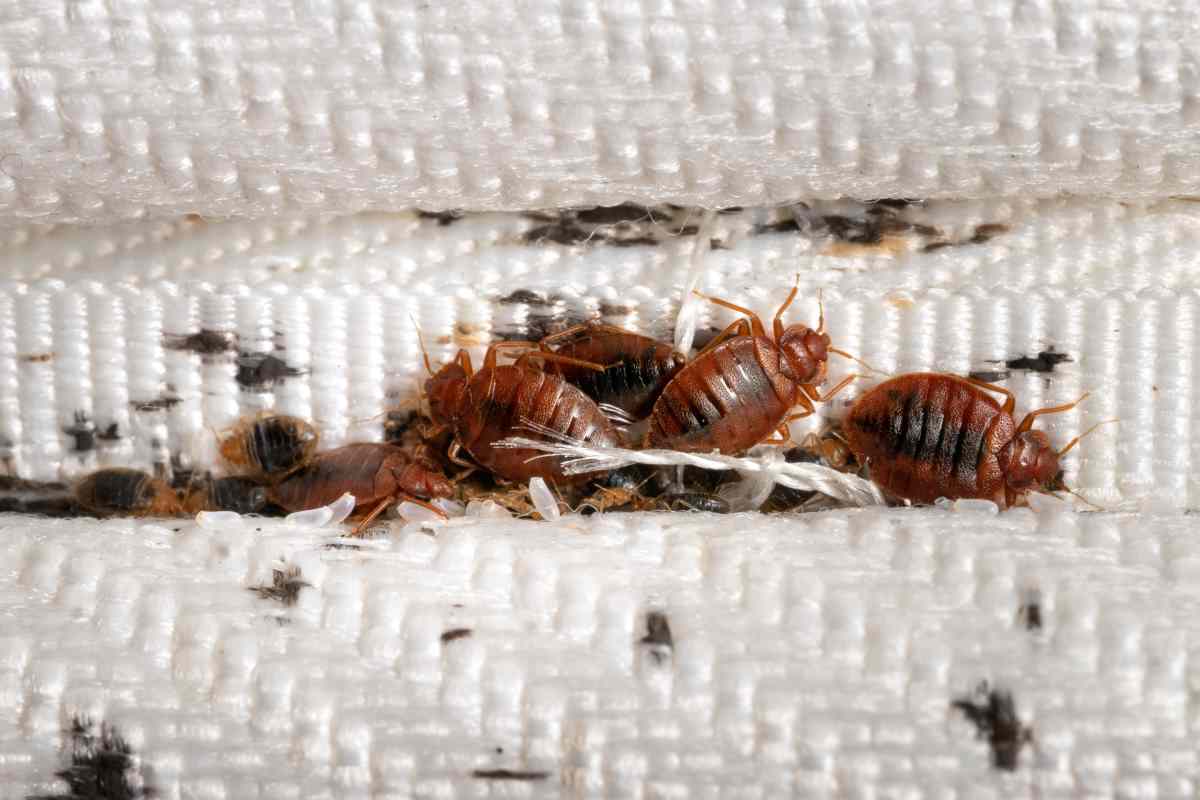
We have all heard about it, on television, in the newspapers, in conversations between neighbors on the landing. Yet, until it happens to us personally, it is difficult to imagine how these little insects can become a daily nightmare. Bed bug — scientific name Cimex lectularius — is a small, flat, mahogany-colored parasite that feeds on human blood at night. It does not transmit serious diseases, but its presence turns the nights into torment and can generate persistent anxiety that affects the entire quality of life.
When you discover the first suspicious puncture, or worse, the first dark marks on the mattress seams, the natural reaction is panic. And panic, as we know, is never a good advisor. You act on impulse: you spray an insecticide, you wash the sheets, you look for quick solutions on the internet. The problem is that many of these instinctive reactions are not only useless, but risk making the situation worse. Bedbugs are extraordinarily adaptable, resistant and clever insects at hiding. Fighting them requires method, patience and, above all, the ability not to fall into the most common mistakes.
Here they are, one by one.
Mistake #1: believing that a simple supermarket insecticide is enough
It’s almost everyone’s first reflex, you go to the store, buy some insecticide spray, treat your mattress and bed, and wait for the problem to go away. Unfortunately, things don’t work that way. Bed bugs hide in paper-thin cracks — the seams of the mattress, the corners of the box spring, the seams of furniture — places that are virtually inaccessible to a general spray. Furthermore, and this is the crucial point, many bedbug populations have developed significant resistance over the years to the most common molecules found in over-the-counter products. The result is frustrating: you spray, you think you’ve solved it, and after a few days the bites start again, promptly.
Mistake #2: Thinking that bedbugs only live in beds
The name “bed bug” is, in a sense, misleading. Yes, they tend to stay close to where we sleep — because that’s where they find their meals — but they’re by no means limited to bedding. These insects can nest anywhere: behind skirting boards, in cracks in walls, in electrical sockets, between the pages of books, in rideaux, in sofas, in bags, in luggage. They are capable of traveling several meters in the night to reach their host, and then returning to their hiding place before dawn. Concentrating treatment only on the bed means leaving ninety percent of the problem intact.
Mistake #3: Not looking for the source of the infestation
One of the most underestimated aspects is understanding as bedbugs have entered the house. They do not generate spontaneously: they always come from outside. A trip with an overnight stay in a hotel, even a luxury one, may be enough. A used piece of furniture purchased online or at the flea market. A visit from someone who, without knowing it, has an ongoing infestation. Or again, in condominiums, the propagation through the walls from one apartment to another via pipes or electrical sockets. If the source is not identified, the risk of reinfestation is very high: you eliminate the problem in your own home, but the “front door” remains open.
Mistake #4: Relying on essential oils and natural remedies
The Internet is full of miraculous recipes: lavender, tea tree, mint, eucalyptus, cloves. Natural, economical, scented products. The problem is that their effectiveness against bed bugs is practically zero. At most, they can slightly disturb the insects, push them to hide in a different place — paradoxically worsening the situation. They don’t kill the eggs, they don’t reach the deep hiding places, they don’t solve the problem. The danger of relying on these remedies is that, in the meantime, the bedbugs continue to reproduce undisturbed, and the infestation expands.
Mistake #5: Forgetting eggs during treatment
This is perhaps the most serious technical error, and the one that explains why so many people think they have solved the problem, only to find it lying around their heads weeks later. Bedbug eggs are tiny, whitish, almost invisible to the naked eye, and are extraordinarily resistant. Most chemical treatments cannot penetrate them. Even a perfectly executed treatment can eliminate all the adults present, but leave dozens or hundreds of eggs intact. When these hatch – and they do so in a week or two – the new generation is already ready to start again. This is why any serious treatment involves multiple interventions spaced over time.
Mistake #6: Throw away the mattress and furniture immediately
The emotional reaction is understandable: you want to throw everything away and start from scratch. But it is almost always counterproductive. First of all, many elements can be treated effectively with heat (bedbugs die at temperatures above 50°C), with special anti-bedbug covers or with professional treatments. Throwing away an infested mattress means dragging it throughout the house – and potentially the common areas of the condominium – spreading the bedbugs into new environments. If you decide to get rid of it, it should be wrapped and sealed hermetically before being moved, and should be marked with a sign to warn anyone who might pick it up.
Mistake #7: Underestimating the health consequences
Bed bugs do not transmit infectious diseases, that’s true. But to say that they are harmless would be wrong. Their bites cause intense itching and sometimes cause significant allergic reactions. The resulting chronic sleep deprivation has real effects on physical and mental health: tiredness, difficulty concentrating, irritability, anxiety. Many people develop a real phobia related to going to bed. Furthermore, the products used to combat them — if handled poorly, without adequate protection and without respecting the time limits for re-entry into the treated environment — can be toxic to humans and pets.
Mistake #8: Calling the first company that comes along
The rush to solve the problem pushes many people to contact the first exterminator found online, without checking their credentials. It is a mistake that can cost you dearly, in every sense. There are unserious companies that offer ineffective treatments at exorbitant prices, or that perform a single operation when at least two or three would be necessary. Before relying on a professional, it is important to ask for references, verify that an accurate preliminary diagnosis is made, and that the treatment plan includes multiple sessions with defined times. A good exterminator is transparent about the methods used and offers guarantees on the result.
Mistake #9: Believing that one treatment is enough
Even the best of professional treatments rarely resolve the problem in a single session. As mentioned, the eggs are resistant and the hiding places of the bed bugs are multiple and difficult to reach all at the same time. Serious protocols generally involve two or three interventions, spaced one or two weeks apart, to also target bedbugs born after the first treatment. Anyone who thinks they can get by with a single step almost certainly risks having to start all over again.
Mistake #10: Having too limited a view of possible hiding places
Cracks in the parquet. Joints between the wall and the ceiling. The inside of a wall clock. The plug of a battery charger. An adult bedbug can squeeze into any space as wide as the edge of a credit card. Searching only in the seams of the mattress or under the bed means missing ninety percent of potential shelters. An effective treatment must cover the entire environment: every corner, every crack, every object. It is a meticulous operation that requires experience and time.
What to really do
The good news is that a bedbug infestation, no matter how annoying, can be resolved, but it requires method. The first step is the diagnosis: identifying the presence of bedbugs with certainty (not all nocturnal bites depend on them), understanding the extent of the infestation and identifying its origin. The second is to rely on qualified professionals, who work with a structured protocol and involve multiple interventions. The third is patience: even the best treatment takes weeks to give definitive results.
In the meantime, some precautions help: wash clothes at high temperatures, vacuum regularly (immediately emptying the bag outside the house), use protective covers for mattresses and pillows, and do not bring objects from untreated areas into the bedroom.
Bed bugs are not invincible, but to beat them you need to know about them — and above all avoid the mistakes that, too often, turn a manageable problem into an endless odyssey.
You might also be interested in:
