
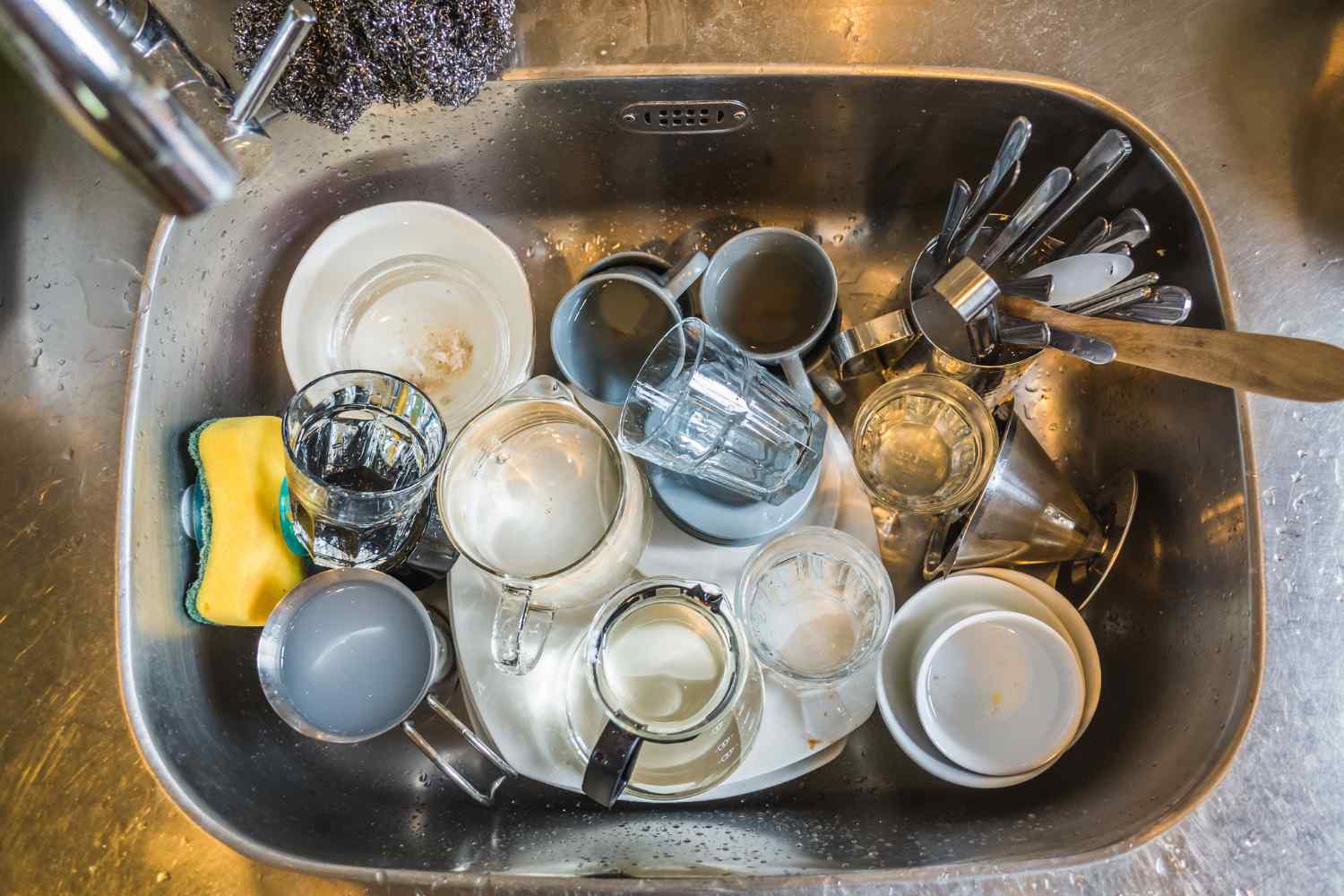
The sink is one of the places in the kitchen where dirt nests undisturbed and where the risk of pathogenic proliferation is very high.
Food residues from dirty dishes, traces of pesticides and soil that are deposited every time we wash fruit and vegetables, detergent residues, and even the dirt that accumulates on the sponge that should guarantee the hygiene of this corner of the kitchen.
All these sources of dirt, put together, can lead to the formation of a real biofilm on the internal surface of the sink, in which bacteria and germs proliferate (with dangerous consequences for our health).
In particular, it is the bacteria E. Coli, listeria and salmonella (sometimes present on raw meat, fish and eggs) that are of greatest concern and can turn into dangerous enemies.
But food residue and dirt are also dangerous for another reason: they can clump together and form blockages in pipes that can impede the flow of water and give rise to bad odors.
How to clean the sink
The solution to minimize the risk of bacterial contamination inside the sink, which could affect the healthiness of our food and the entire kitchen environment, is to adopt effective hygiene practices. Here is some practical advice.
Cleaning after each use
After cooking and washing the dishes or even after having dealt with eggs or handled raw meat, remember to carefully clean all kitchen surfaces – including the sink – with a specific product with disinfectant properties.
Sodium bicarbonate against bad odors
As we have said in several articles, bicarbonate does not clean or disinfect, but it can prove to be a valid aid in combating bad odors.
If we smell an unpleasant odor coming from the sink drain, pour a cup of baking soda down the sink drain followed by a couple of glasses of very hot water.
Cleaning the ventilation screen
Since the ventilation window in our sink is connected directly to the drain, it is possible that traces of dirt and food residues hide in this point too.
This is why it is essential to also clean this area from time to time. Unscrew the ventilation screen from the tap, immerse it in a solution of hot water and citric acid for half an hour, then rinse it under running water before putting it back in place.
The sponge: the true invisible enemy
If the sink is one of the most contaminated areas in the kitchen, the sponge is probably the most contaminated object of all — more than the toilet, according to some microbiological research. Its porous, moist structure is an ideal habitat for bacteria such as E. Coli, salmonella and listeria, which multiply rapidly between uses. Yet we continue to use it to “clean” dishes and surfaces, unaware that we are spreading dirt rather than removing it.
The first rule is to change the sponge every one or two weeks, without waiting for it to change color or smell — by then the damage is already done. In the meantime, it is possible to sanitize it daily in a simple way: just wet it well and put it in the microwave for two minutes at maximum power, or immerse it in a solution of hot water and white vinegar for about ten minutes. Both methods significantly reduce the bacterial load, even if they do not eliminate it completely.
A more hygienic and long-lasting alternative is the brush with a handle, which dries much faster and does not retain organic residues in the same way. Even microfibre cloths, if replaced frequently and washed in the washing machine at high temperature, represent a better choice than the classic synthetic sponge.
Different materials, different risks
Not all sinks behave in the same way when faced with the formation of biofilm, and knowing the characteristics of yours can make the difference in the choice of products and cleaning frequency.
The stainless steel sink is the most widespread and, if kept dry after each use, it is also the one that offers greater resistance to bacterial proliferation. The problem arises when you use abrasive sponges or aggressive products that scratch the surface: bacteria find refuge in microscopic scratches and become much more difficult to eliminate. Better to opt for soft cloths and neutral detergents.
The ceramic or porcelain sink has a more porous surface than steel and tends to absorb grease and food residues over time, especially if the enamel deteriorates. It must be cleaned with delicate products – too aggressive acidic products can damage the surface – and it must be dried well to avoid humidity stagnation.
Sinks made of composite material, highly appreciated for their aesthetics, are generally made with resins and quartz or granite: they resist impacts well but are sensitive to whitening products such as bleach, which can alter their colour. For disinfection it is preferable to use diluted citric acid or specific products indicated by the manufacturer.
Finally, porcelain stoneware is among the most robust and least permeable materials, but the joints and joints, if present, can become critical points for the accumulation of dirt and humidity. Periodic cleaning with a toothbrush and a disinfectant product in these areas is essential.
The area around the sink
We focus on the sink, but we often forget that bacteria know no boundaries. Faucets — and handles in particular — are among the most touched surfaces in the kitchen, often with hands dirty from raw food, and are rarely disinfected with the same attention given to the tub. The tap spout, with its internal aerator, can accumulate limescale and organic residues which favor bacterial growth: dismantling it and cleaning it every month is a good habit that few people practice.
The soap dish is another critical point: the stagnant water that forms at the base is a breeding ground for mold and bacteria. Better to choose it in non-porous material, empty it and wash it regularly, or opt for a wall dispenser that reduces contact with wet surfaces.
Finally, the area under the sink top deserves a separate mention. It is a dark space, often damp due to small leaks or condensation on the pipes, and frequently used to store cleaning products, bags and rags. This combination makes it vulnerable to mold formation and the proliferation of insects. Checking it periodically, keeping it tidy and checking that there are no infiltrations is essential for the healthiness of the entire kitchen.
How often do you really clean?
The honest answer is: more often than we think. After each intense use – cooking raw meat, washing vegetables with soil, degreasing pans – the sink should be cleaned and dried immediately, without waiting for the end of the day. Leaving wet residue even for just a few hours is enough for the bacteria to begin to multiply.
A more thorough cleaning, with a disinfectant product on all surfaces including taps and handles, should be done at least three times a week, ideally every evening. The drain deserves weekly attention: pouring very hot water followed by bicarbonate helps prevent bad odors, while cleaning with enzymatic products or citric acid once a month dissolves the deposits that form in the pipes. The tap ventilation screen, as we have seen, must be dismantled and soaked once a month. Finally, the sponge must be sanitized every day and replaced every one or two weeks.
What to use and what to avoid
Confusion between detergent and disinfectant is very common, but the distinction is fundamental. A cleaner removes visible dirt — grease, food residue, limescale — but does not eliminate bacteria. A disinfectant, on the other hand, acts on the microbial load but is only effective on already clean surfaces. For truly effective cleaning you need to do both things, in this order: first you clean, then you disinfect.
Among natural products, citric acid is excellent against limescale and has a discreet antimicrobial action, while white vinegar is useful for neutralizing odors and as a light degreaser. Bicarbonate, as already mentioned, deodorizes but does not clean or disinfect. 70% isopropyl alcohol is an effective disinfectant and compatible with most surfaces. Diluted bleach works well on stainless steel, but should be used with caution on composite materials and never on deteriorated ceramic.
What to avoid: abrasive sponges on any surface, as scratches become a haven for bacteria; products that are too aggressive or acidic concentrated on the composite and stoneware with joints; and the bad habit of mixing different products — bleach and vinegar, for example, produce irritating vapors and do not improve the cleaning effect at all.
Other useful tips
We also recommend:
