
Where they really are
Tumpak Sewu waterfalls, which became iconic after the transition to Beijing Expressare found in eastern Java, Indonesia. The area is that of the regency of Lumajang, in the district of Pronojiwo, close to the border with Malang. It is still a wild territory, immersed in the jungle and dominated by Mount Semeru, the highest on the island. The location is not random: the whole area is shaped by volcanic activity and erosion, and it is precisely this that creates such extreme scenarios.
Because they are considered among the most beautiful in Indonesia
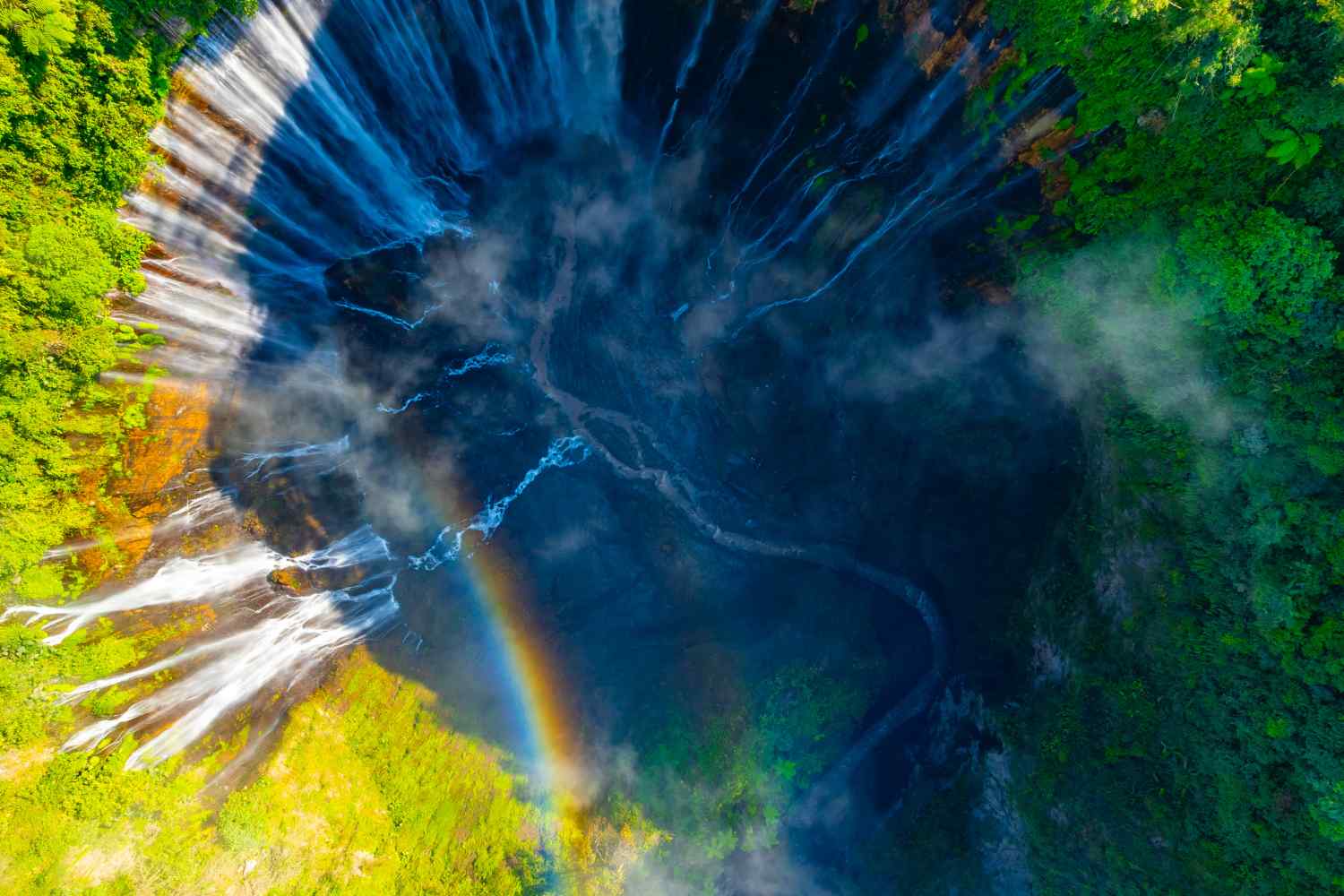
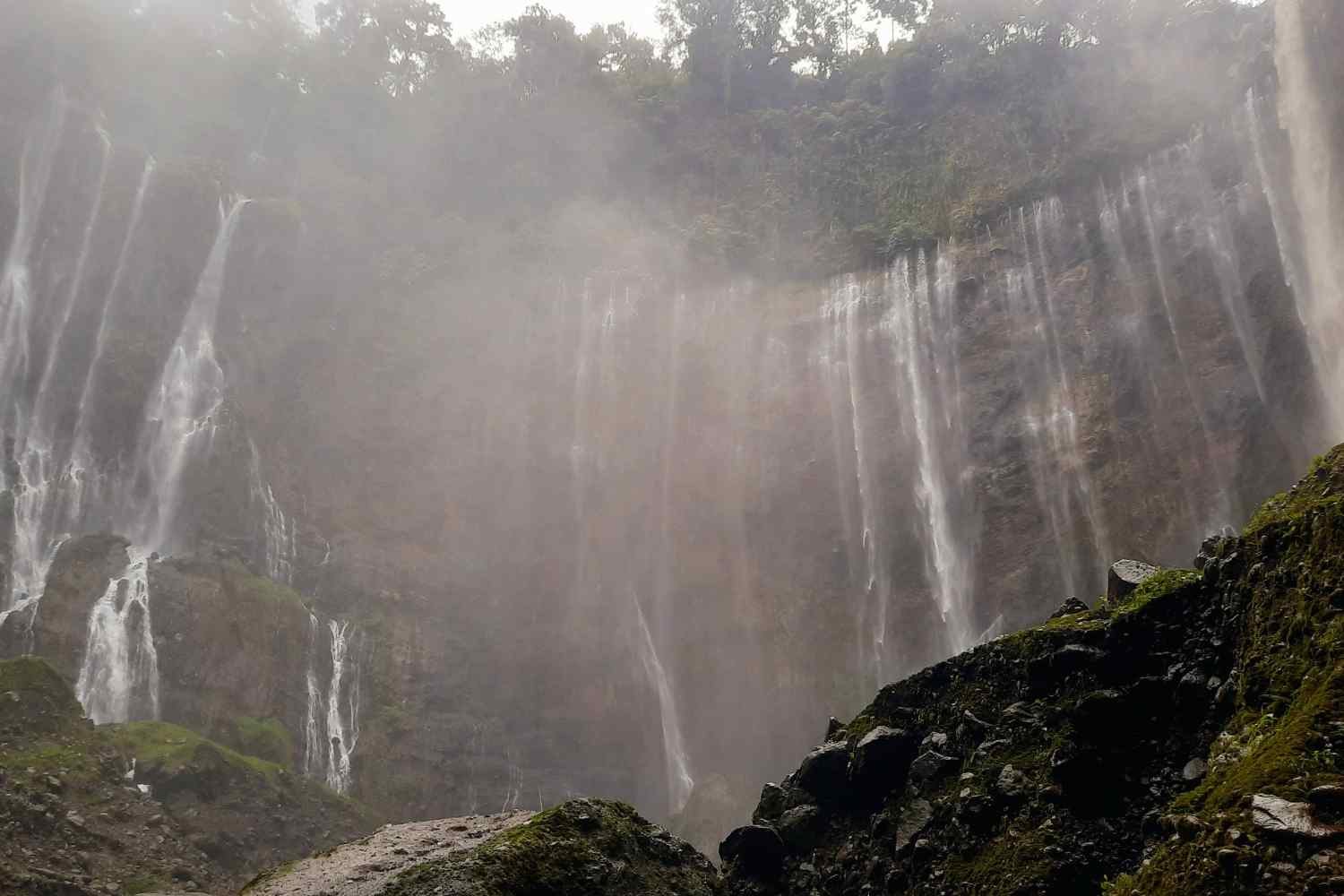
Tumpak Sewu, also called Coban Sewu, means “thousand waterfalls”. Here there is not a single waterfall, but a semicircular wall from which dozens and dozens of flows descend and unite in a single basin. The effect is that of a perfect natural amphitheater, where the water creates a continuous curtain that shatters on the rocks and turns into steam. The perception changes completely depending on the observation point: from above it is a geometric and almost unreal vision, from below it is an immersive, noisy and humidity-saturated environment.
How to get there
The base point for organizing the visit is Pronojiwo. Those arriving from the west usually pass through Malang, one of the cities most used by travellers; those who travel from the east or Bali tend to refer to Lumajang. From there you continue by car or scooter until you reach the entrance to the area. It is not a “passage” destination: adequate planning and time is needed, especially because connections are not always immediate and the roads, in some sections, can be slow.
The path to reach the waterfall
Once you arrive, you have to choose: stop at the panoramic point or go down to the base. The viewpoint is relatively accessible and offers the most famous view, the horseshoe view. But it’s the descent that makes the difference. The path is steep, with irregular steps, muddy sections and passages where you need help with ropes. The humidity is constant and the ground can be slippery. It is not a technical route for mountaineers, but not even a walk: it requires attention, adequate shoes and a minimum of training. The ascent, then, is the most tiring part.
When to go (and when to avoid)
The best period is the dry season, between April and October. In these months the path is more stable and the water clearer. During the rainy season, between December and March, the waterfall becomes even more powerful and scenic, but the risks increase: the ground becomes unstable, the water becomes cloudy and it is not uncommon for access to be closed for safety. The transition months, such as April and November, are often a good compromise: fewer tourists and still favorable conditions.
How difficult is it (and how safe)
The question that many ask themselves after seeing it on TV is simple: is it dangerous? The answer is that it is not an “easy” place. The risk is not extreme if you remain cautious, but it is real if you underestimate conditions. Rain, mud and difference in altitude make the route challenging, and for this reason many choose to rely on local guides. It’s one of those experiences where behavior makes the difference: going prepared or improvising changes everything.
Why it hits so hard (even on TV)
Tumpak Sewu works perfectly in a program like Beijing Express because it represents the opposite of glossy tourism. It is not an “easy” waterfall to photograph and that’s it: it is a physical place, which you cross with effort, heat, humidity and constant noise. From above it is spectacular, from below it is almost overwhelming, with water falling from all sides and the jungle closing off the space.
Is it really worth the trip?
Yes, but with correct expectations. It is not a destination to be hastily included in an itinerary. It requires time, organization and a certain willingness to make effort. In exchange it offers something that is increasingly rarely found: a landscape that is still authentic, not domesticated, which is not limited to being seen but must be experienced. And this is precisely what makes it different from all the others.
