
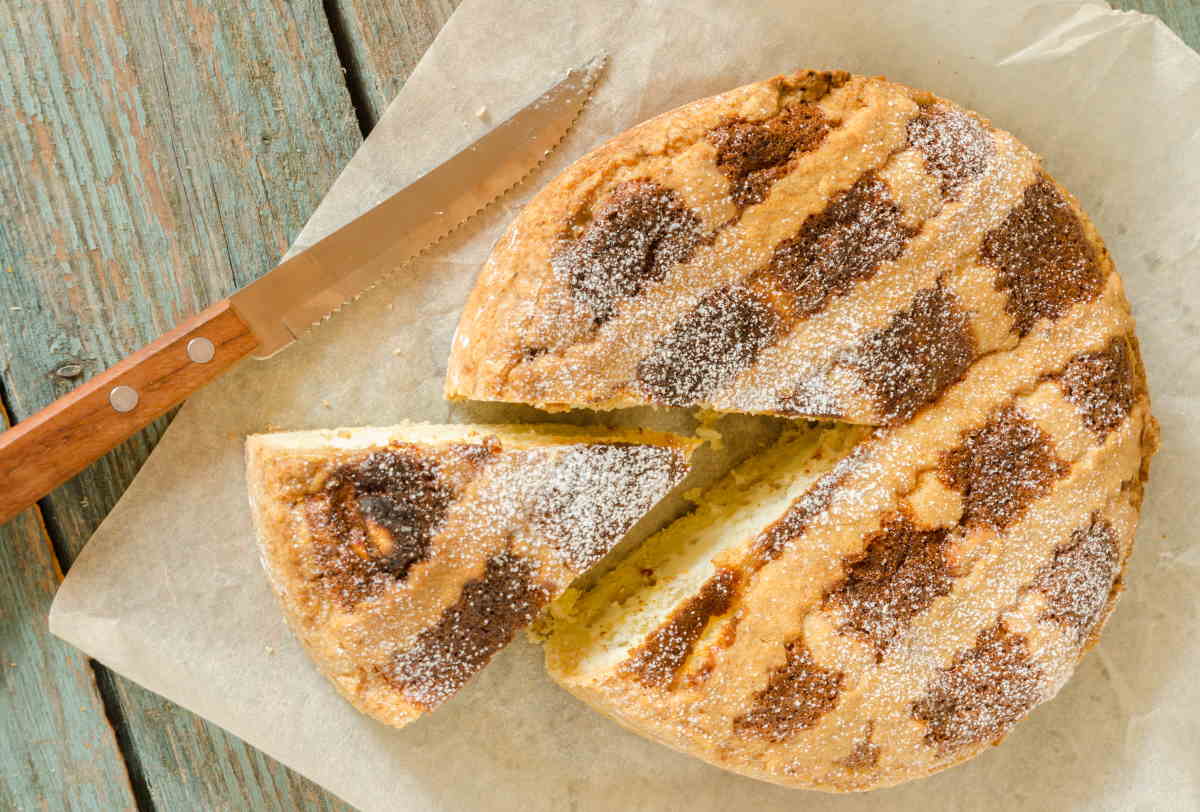
Vegan pastiera recipe. Legend has it that the creator of this delight was the mermaid Partenope herself. It is pastiera, the Neapolitan Easter dessert par excellence. There are different schools of thought on his recipe. There are those who use already cooked corn in a jar, those who prefer to make it themselves, those who love it without candied fruit, those who don’t.
Here then, for those who want to celebrate a cruelty-free Easter that celebrates life in every sense, the recipe for vegan pastiera (without candied fruit). So arm yourself with a great desire to be in the kitchen and roll up your sleeves: it will be worth it. Cook to believe!
Ingredients for the shortcrust pastry
Ingredients for the filling
Preparation
Shortcrust pastry
Arrange the flour in a mound, place the oil and sugar in the centre. Work by first combining the sugar and oil, then gradually incorporating the flour. Add the milk and finally the bicarbonate of soda. Knead well and carefully until you obtain a homogeneous and smooth mixture. Form a ball and leave to rest in the fridge for 40 minutes.
Vegan custard
Mix 2 tablespoons of potato starch and 50 g of brown sugar in a non-stick saucepan. Place on a low heat, adding 200 g of soy milk little by little, continuing to mix with a wooden spoon. Add the zest of half a lemon and bring to the boil over a low heat, stirring continuously. When the cream thickens, turn off and let cool.
Cream of wheat
Pour the pre-cooked wheat, 200 g of soy milk, 30 g of soy butter, the zest of half a lemon and the vanilla into a pan. Boil everything over a gentle heat, stirring until you obtain a thick cream without lumps. Once ready, let it cool.
Tofu cream
Pass 250g of natural tofu through a food mill and mix with a whisk (also electric) together with 250g of brown sugar, working the mixture well. Then add a teaspoon of cinnamon, 1 vial of orange water and a sachet of vanillin.
Now gently combine the custard with the tofu cream until blended. Add the mixture thus obtained to the cream of wheat (optionally also incorporate 100 grams of candied fruit).
Once the cream of wheat has cooled, add the tofu cream to it and mix well. Then roll out the shortcrust pastry, taking care to keep a small amount aside to prepare the strips that will be used for decoration. Line a 28cm diameter round baking tray with the shortcrust pastry disc. Pour the filling into the pan and smooth the edges of the shortcrust pastry.
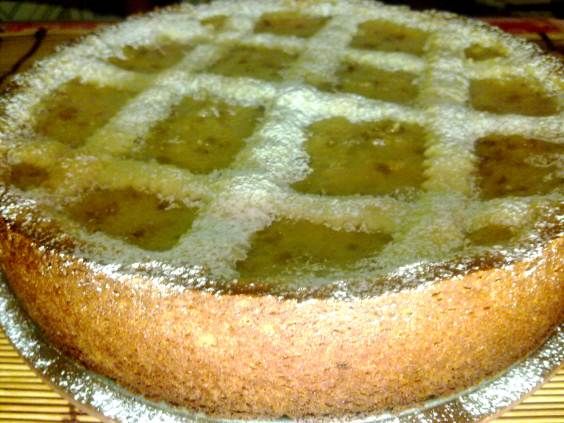
With the dough kept aside, cut strips about 1.5 cm wide using a pastry cutter with a serrated blade. Decorate the surface of the pastiera, intersecting them.
Gently brush the strips with soy milk and bake everything at 180° for about an hour or so, and in any case until the surface is golden. At the end of cooking, remove from the oven and leave to cool in the cake tin itself. Only once cool, gently turn out and dust with icing sugar. I recommend preparing it a few days in advance to allow all the aromas to blend well. In fact, after three or four days, its flavor noticeably improves.
And here is the vegan version of the emblem of Neapolitan cuisine par excellence, the pastiera, a delicious and indispensable dessert with the unmistakable scent of citrus fruits.
Frequently Asked Questions about Vegan Pastiera
Can it be frozen?
Yes, vegan pastiera freezes very well. Once completely cold, cut it into slices and wrap them individually in cling film, then place them in a food bag. It can be stored in the freezer for up to 2 months. To defrost it, transfer it to the fridge the night before and let it defrost slowly: the flavor will remain intact. The microwave is not recommended, as it tends to soften the pastry too much.
How long does it keep?
The vegan pastiera can be stored at room temperature, covered with a bell or with cling film, for 3-4 days. It lasts up to 6-7 days in the fridge, even if the pastry tends to lose a little crunch. As anticipated in the recipe, the golden advice is to prepare it 2-3 days before serving it: the aromas of cinnamon, vanilla and orange water blend together and the result is clearly superior. It’s not a flaw in the recipe — that’s just how pastiera works, vegan or not.
Can I use almond milk instead of soy milk?
Absolutely yes. Almond milk is one of the most successful substitutions in this recipe, and gives a delicate scent that goes very well with citrus fruits. Some tested alternatives:
Variations of the Vegan Pastiera
With soy ricotta
If you can find soy ricotta (available in many organic and online stores), you can use it as a partial or total replacement for tofu. The result is a softer and more delicate cream, very similar to the traditional pastiera with cow’s milk ricotta. Use the same quantity (250 g) and whisk the mixture together with the sugar exactly as indicated for the tofu. There’s no need to put it through a food mill.
Gluten free
For a version suitable for celiacs, replace the 00 flour in the pastry with a mix of:
Gluten-free pastry is more fragile to roll out: use two sheets of baking paper and a rolling pin. The flavor is not affected by the substitution.
With spelled instead of wheat
Spelled is the most rustic variant with the most pronounced flavour. Use pre-cooked pearled spelled in the same quantity as wheat (250 g). It has a grainier texture that some really appreciate, and an almost nutty flavor that pairs surprisingly well with cinnamon. Keep this in mind if you want a pastiera with character.
Which tofu to choose (and where to buy it)
This is one of the most common questions among those approaching vegan cuisine for the first time. There are mainly two types of tofu and they are not interchangeable:
Firm (or solid) tofu — this is what you usually find in blocks immersed in water. It has a firm consistency, it can be pressed and crumbled. It’s not the right one for this recipe: it would be lumpy and tiring to work with.
Silken tofu (silken tofu) — this is the one to use for the pastiera. It has a creamy consistency, almost similar to a thick yogurt or a soft panna cotta. It mixes perfectly with sugar and spices giving a smooth and velvety cream. It comes in tetra pak packages (it does not require refrigeration until opened) and is the one that best replicates the consistency of ricotta.
Where to buy it:
Satonoyuki Shiki Tofu 300 gr
Farmhouse silken tofu: Asian Japanese tofu smooth and firm texture ideal for savory or sweet dishes – Compatible with Mori-Nu Morinaga 307g
Practical tip: if you can’t find silken tofu, you can blend firm tofu with 2-3 tablespoons of non-dairy milk until smooth. The result is slightly less refined but still excellent.
