
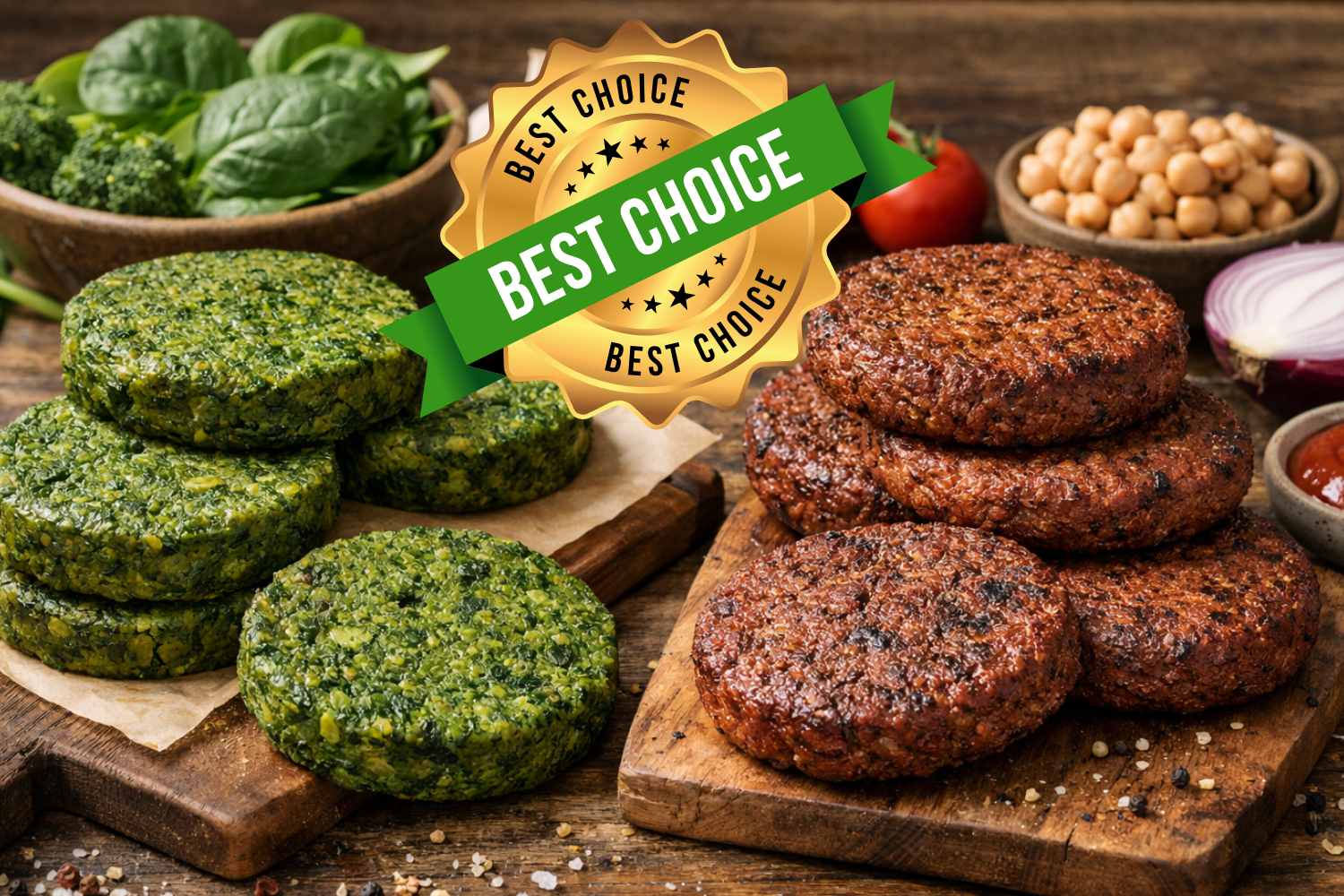
“Plant based” meat alternatives are making their way not only among vegetarians and vegans, but also among omnivores who are more sensitive to environmental issues. Reducing meat consumption, in fact, is a winning choice, as long as you pay close attention to what you choose as an alternative.
The vegetable options in the supermarket are increasingly rich and varied, but not all are equally valid. They range from the classics based on vegetable proteins (soya or peas) – designed to recall the meat burger – to products that enhance a specific ingredient such as spinach, up to the infinite variations based on legumes (chickpeas, lentils, beans) or vegetables (courgettes, aubergines, pumpkin, cauliflower). Then there is the seitan burger, made from wheat gluten.
To shed some light on veggie burgers, the latest test has just arrived Altroconsumo which focused on 14 products from two specific categories: classic burgers based on vegetable proteins and spinach burgers. But the criteria used to evaluate them are valid as a compass for orienting oneself in the entire universe of veggie burgers, ready-made or homemade.
But let’s now discover the product ranking.
The ranking of veggie burgers
Here are all the burgers analyzed, from best to worst in terms of quality:
The most interesting and somewhat surprising result is that the winner of the test is not one of the most famous or expensive brands, but the Kioene Burger with Spinach, which with only €2.05 per pack wins both the title of best in the test and that of best purchase. A clear signal that the high price or the brand are not always synonymous with quality. The Beyond Burger, for example, is among the most expensive (€4.73) but stops at 43 points, in the “medium quality” area tending towards low.
In general, spinach burgers seem to fare better than classic ones, probably due to a less “processed” nutritional profile. Products with low quality (below 40 points) are almost all in the classic category, which invites greater caution when choosing products designed to closely imitate meat, often richer in additives and ultra-processed ingredients.
How the test was conducted
To draw up the ranking, Altroconsumo analyzed each product by evaluating various parameters:
The products were purchased in October 2025 and tasted in November 2025. The prices were recorded in December 2025 in 40 stores in Milan, Naples, Rome and Turin.
