
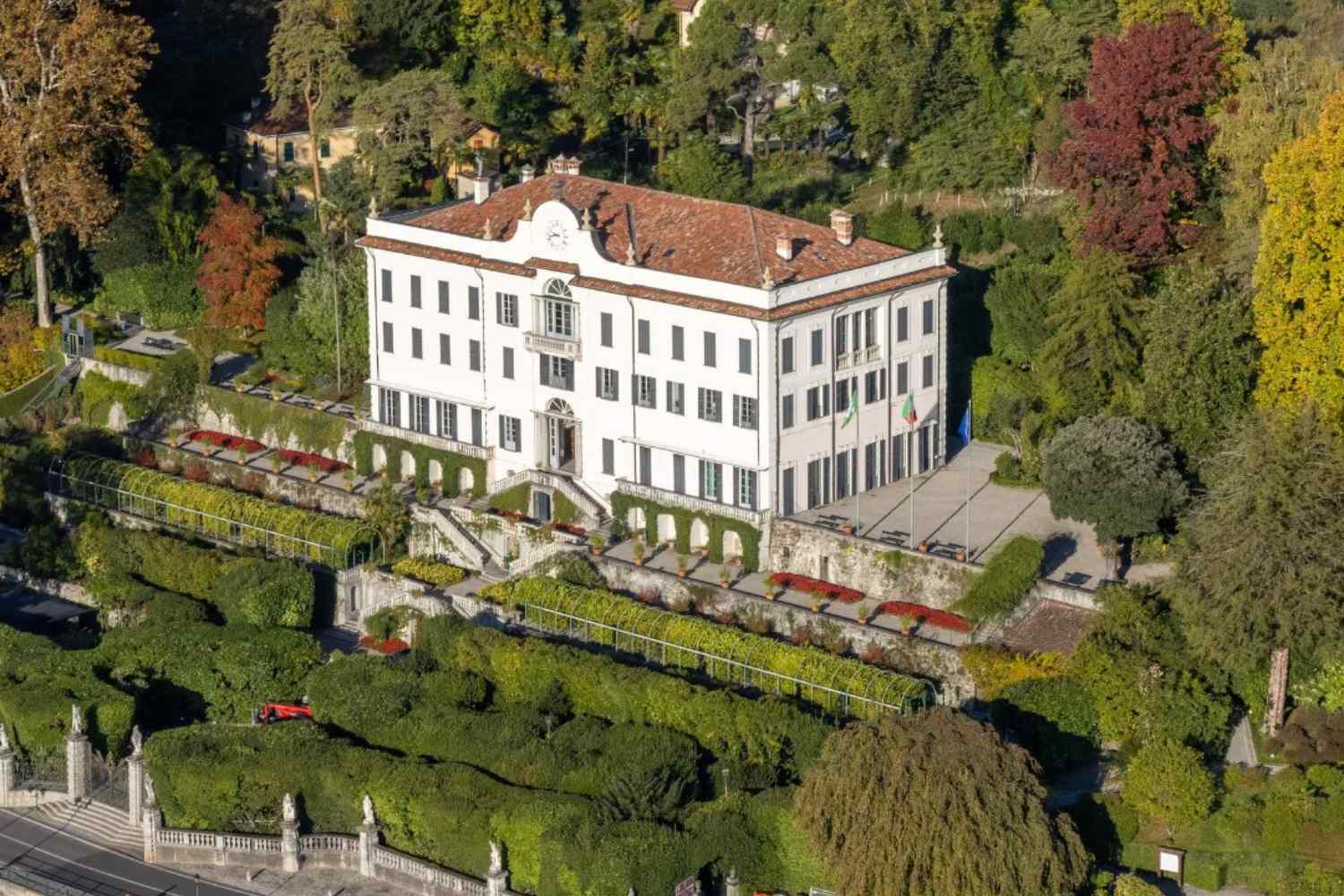
A historic home with three centuries of history
From March 20th Villa Carlotta welcomes visitors again. The historic residence in Tremezzina, overlooking the waters of Lake Como, comes back to life after the winter restoration and pruning works, ready to show its most spectacular face: that of the summer. It was the Marquis Giorgio II Clerici who had it built in 1690 as a symbol of his family’s prestige. During the nineteenth century it passed from hand to hand – from the Milanese collector Gian Battista Sommariva, who transformed it into a European cultural reference point, up to Princess Marianna of Orange-Nassau, who in 1847 donated it to her daughter Carlotta, from whom it takes its name. Today it is managed by the Villa Carlotta Moral Institution.
View this post on Instagram
Sculptures, paintings and private rooms: nineteenth-century art
Inside there are works of art of great value, including sculptures by Antonio Canova and the famous canvas by Francesco Hayez with Romeo’s last kiss to Juliet, as well as the private rooms of Princess Carlotta, which have remained intact in their period furnishings. But the real beating heart of the visit is the botanical garden: a park awarded with the Gold Leaf and part of the Grandi Giardini Italiani circuit.
The azaleas and rhododendrons: the show that made Villa Carlotta famous
In spring the garden explodes with colour. The azaleas are the most famous collection, the one that has made Villa Carlotta known throughout the world: every year they produce an intense and chromatically overwhelming flowering, which transforms the park’s paths into corridors of red, pink and orange. Tree rhododendrons flourish next to them, probably planted at the beginning of the twentieth century at the behest of Duke George of Saxony Meiningen, a passionate botanist and last private owner of the villa. With their sinuous trunks with red-brownish bark and flowers gathered in large corymbs, they create one of the most evocative landscapes of the entire park. There is no shortage of camellias – evidence of a fashion that pervaded Europe in the first half of the nineteenth century – and hydrangeas, which liven up the season until late autumn.
From the Italian garden to the Valle delle Felci: the many faces of the park
The garden is divided into areas with very different character. The Italian garden, dating back to the eighteenth century, reflects the Enlightenment philosophy in which reason dominates nature: hedges shaped with geometric precision, fountains, water features, boxwood flowerbeds and balustrade terraces connected by stone staircases develop along an axis of symmetry that goes from the entrance gate to the clock on the roof of the villa. A completely different expressive register in the romantic garden, designed to amaze and excite: here monumental plane trees, sequoias, centenary cedars and beeches – many of which were inserted by Duke George himself – create almost theatrical scenography. The Valle delle Felci, created from a natural depression once called “valley of brambles”, completes the picture with the sound of a stream flowing along the bottom and an atmosphere suspended in time.
The citrus tunnels and the most curious collections
Among the most photographed wonders are the citrus tunnels, located on the terraces in front of the villa: already in the times of the Clerics the collection was so vast that it deserved the name “Selva cedrina”. Not far away, a rock garden hosts succulent plants – euphorbias, cacti, agaves and aloes – arranged in pockets dug into the rock, while on the east side of the villa a small flowerbed hosts tropical species such as bromeliads, Kentie palms, ficus and orchids, coexisting with useful plants such as cinnamon, clove and patchouli. Finally, on the western border of the park, there is a collection of aromatic plants, grown in parallel rows along a slope near a fake romantic ruin.
View this post on Instagram
Hours, prices and events for the 2026 season
The visit is possible every day from 10am to 7pm until 8 November 2026, at a cost of 17.50 euros per person, with a ticket including museum and garden. During the season, events are scheduled such as breakfasts in the garden, musical walks among the lakeside villas and guided tours with the gardeners. Comfortable shoes are recommended for the numerous uphill routes. The park is almost entirely accessible to disabled people, dogs are allowed on a leash and there is a café, bookshop and picnic area available.
