
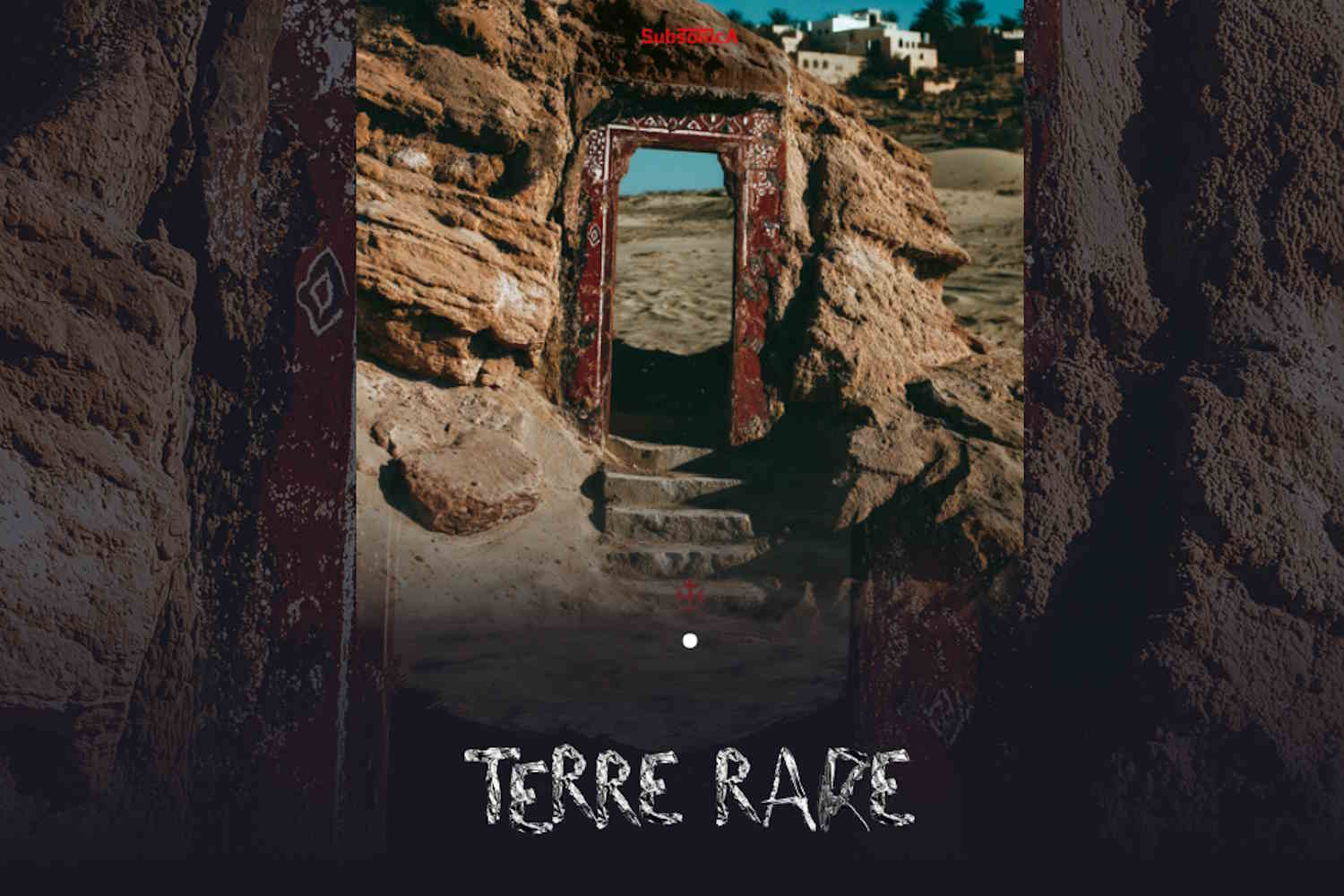
Today, March 20, 2026, is the day on which Subsonica decide to celebrate their first thirty years of career by giving us “Terre Rare”, an album that is much more than a celebration. It is a political, environmental and human manifesto that resonates perfectly with the chords of us who, here at GreenMe, try every day to talk about a more sustainable and just world.
I grew up with Vicio’s basses and Boosta’s synthesizers that vibrated in my bones during the sweaty concerts of the late nineties, I went through my thirties with the rhythm of Amorematico and now, on the threshold of my fifties, I find myself here discovering that my trajectory and that of Subsonica are still perfectly parallel, united by a common thread made of coherence, urgency and, above all, respect.
Thirty years of career for them, almost fifty of life for me: we grew up together, changing our skin without ever betraying our gaze on the world. And this new album is proof that you can grow old while remaining “organic” in a world that requires algorithms. It is not just a return to the scene, but a real journey that connects the dots between the ecology of the environment and that of the heart. Starting from the title.
Rare Earths, the manifesto we needed
Rare earths are those minerals that allow our smartphones to exist, but whose extraction too often means environmental devastation and inhumane exploitation far from our eyes. Samuel and his companions take this concept and turn it on its head, suggesting that even authentic feelings, empathy and a sense of community are becoming precious minerals, increasingly difficult to find in a society that seems to be rushing towards cold and sterile digitalisation. It’s a record that talks about extraction, yes, but about the good things we can still bring out of ourselves. Because the ability to remain human in an age of emotional disconnection is one of the invaluable resources that we have ferociously mined and that we must now learn to regenerate.
Track after track it’s as if the sound of the Essaouira desert mixes perfectly with the mechanical beat of Turin. There is a sonic ecology in this work that I find wonderful: the instruments seem to breathe together with nature, almost as if the dust of Morocco and the wind of Ghibli had physically entered the synthesizers, in a sort of sonic metaphor of our climate crisis. In this passage, the Ghibli is no longer just an atmospheric phenomenon, but becomes the metaphor of a desertification that is not only geographical, but above all internal. The choice of sounds so “dirty” that they almost seem to scratch the skin like sand carried by the wind, is as if it made the music both matter and messenger at the same time.
Songs like Transhumanism or On the Border they are a constant invitation not to lose our organic component. The criticism of technological consumerism here is not trivial, but transforms into a search for a new balance: the Turin band does not reject the future, but asks that a future on a human scale remain, where the heartbeat is still the dominant rhythm above every algorithm.
But it is in the beating heart of Foreignerthe song created together with TÄRA, that the album reaches heights of humanity that are needed today more than ever. And this is how the voice of this Palestinian artist becomes a bridge between Turin and the Mediterranean. The song addresses the theme of being in the world today: we are all a bit like foreigners in a land that we are mistreating, but above all we are brothers of those who cross the sea looking for a dignified life. The text is an indictment against the walls, however launched with a disarming sweetness. Subsonica remind us that sustainability cannot just be “green”, it must above all be human. There is no point in saving a forest if we then remain indifferent to a shipwreck or the cancellation of a cultural identity. This is the respect that we try to promote every day: an integral ecology that puts life in all its forms, animal, plant and human, at the centre.
Ultimately, this album is a journey that starts from the earth to reach the spirit, passing through the open wounds of our society. It is a courageous work that speaks of forgotten minorities, of animals losing their habitat and of people searching for meaning amidst the noise. “Terre Rare” is proof that music can still be a lighthouse, a compass that shows us the direction towards a world where respect is not an exception, but the basis on which to build tomorrow. It is an invitation to remain sensitive, to protect what is fragile and to sing, even when the wind rises and the dust seems to obscure the view.
“Rare Earths”, in short, is the manifesto we felt we needed. A manifesto of poetic resistance that I am sure will resonate strongly with anyone who believes that another world is not only possible, but necessary. Because at the end of listening, what remains is a sense of urgency but also of hope.
And this is why I am deeply grateful to this band that taught me to dance thirty years ago and that today teaches me to stay awake, with my eyes wide open and my heart ready to get excited again.
